
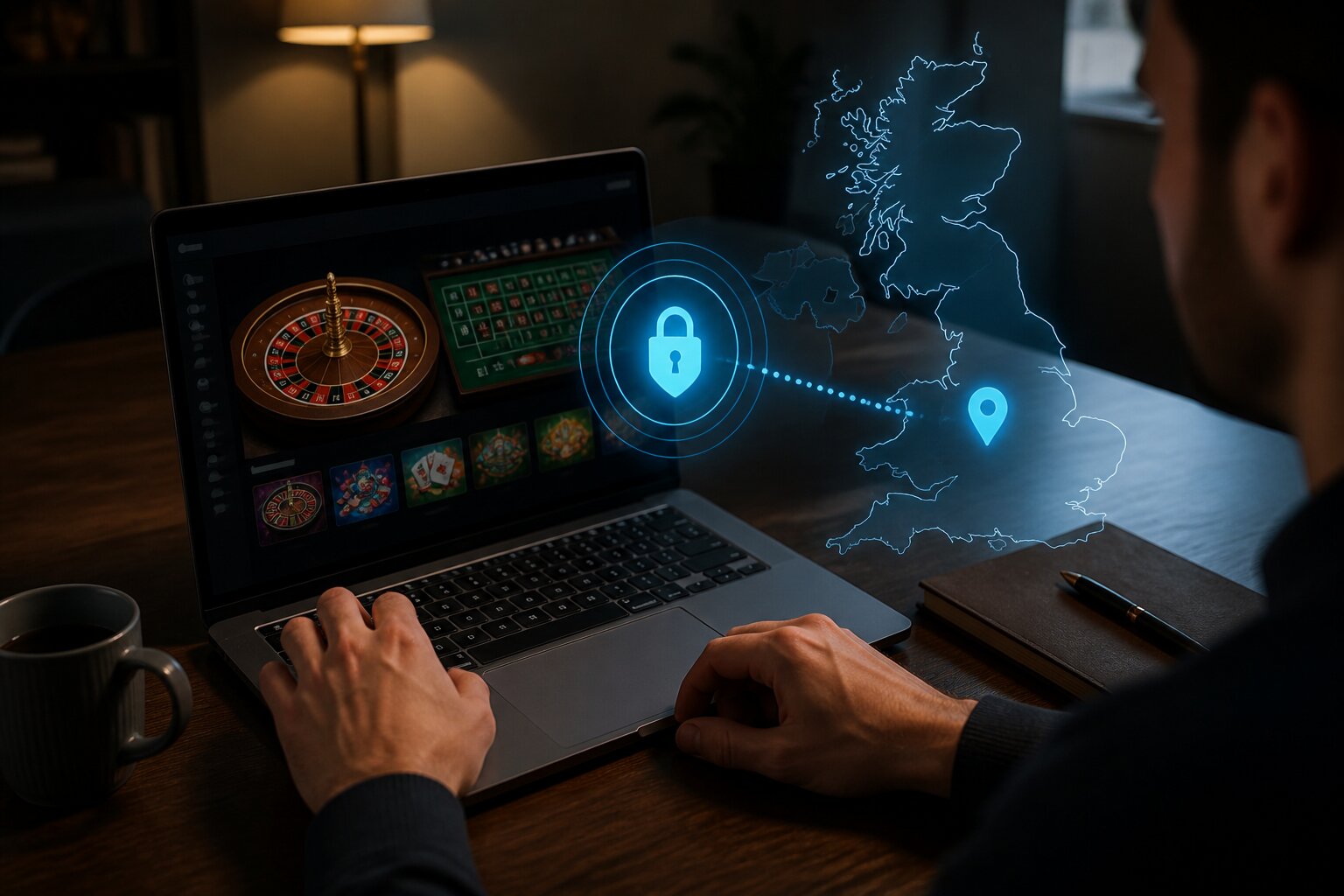
Worried about what online casinos actually know about you? You’re not alone—privacy and security are top concerns for anyone using their personal details online.
From the moment you sign up to the point you withdraw funds, operators need to balance keeping your account safe with following legal obligations. That often involves checking technical details such as your IP address.
If you want to understand what IP checks show, why they happen, and what safeguards are in place, this article walks through the key points in clear terms so you can feel confident about how your data is handled.
How Do Online Casinos Use Your IP Address?
Online casinos use IP addresses primarily to protect accounts, prevent fraud, and meet legal obligations. The address acts as a basic technical signal about where a connection originates and helps systems spot unusual activity.
One common use is account security. If a login suddenly comes from a very different location, automated systems may flag that session for extra checks or block access until the player’s identity can be verified. This reduces the chance of unauthorised access.
IP checks also help detect attempts to create multiple accounts from the same internet connection, which can be used to abuse bonuses or promotions. By identifying patterns across accounts, operators can investigate and apply appropriate safeguards.
Finally, IP addresses are one of several tools used to confirm a player’s eligibility to use the service. This includes ensuring access complies with licensing conditions and regional rules on who can play which games or claim certain offers.
These checks are not meant to intrude into ordinary user activity; they are part of keeping the site secure, legal, and fair.
Why Do Online Casinos Need to Track IP Addresses?
There are several practical and legal reasons for tracking IP addresses, and they generally relate to safety, fairness, and regulatory compliance.
Preventing abuse is a clear example. When multiple accounts appear from the same IP, operators can investigate whether the accounts are linked inappropriately. This protects genuine customers and keeps promotional offers working as intended.
Security is another driver. IP checks help spot suspicious access attempts, such as logins from unexpected countries. When combined with other signals—like device type or account behaviour—this gives a fuller picture of whether an account is at risk.
Regulatory duties also require location verification and transaction monitoring to help prevent financial crime. IP data contributes to those checks, alongside identity documents and transaction records.
Tracking is not a standalone solution; it works with other safeguards to create a layered approach to safety and compliance.
Can Online Casinos Identify Your Location Through Your IP Address?
Yes, but with limits. An IP address typically indicates a general geographic area or country rather than a precise street address.
Casinos use this information to confirm you are connecting from an allowed jurisdiction. For example, many licensing rules require operators to ensure players are located within a particular country before offering certain products or payment methods.
If an IP suggests you are outside a permitted area, access to some services or games may be restricted until your location is verified by additional means. This is part of meeting legal and licensing conditions and protecting both players and operators.
Because IP‑based location can sometimes be imprecise—due to internet routing or shared networks—operators often combine it with other checks to reach a reliable conclusion.
What Data Do Online Casinos Collect Besides Your IP Address?
IP addresses are just one piece of the puzzle. Operators gather a range of data to run accounts safely and meet legal requirements.
This includes personal details you provide when registering, such as name and contact information, and verification documents used for identity and age checks. Transaction histories record deposits and withdrawals, which are monitored for unusual patterns as part of anti-money laundering checks.
Gameplay data is also collected: which games you play, session duration, and bet sizes. Analysing these patterns helps spot irregular activity or technical issues and supports game integrity.
Technical details about the device and browser you use help with fraud prevention and diagnosing problems. All of this is handled in line with data protection law, and only relevant information is retained for the purposes set out in an operator’s privacy policy.
Are There Risks to Your Privacy When Gambling Online?
As with most online services, there are inherent risks if data is mishandled or exposed. The main concerns are unauthorised access, data breaches, or misuse of personal information.
Operators mitigate these risks through technical defences, access controls, and regular security checks. They are bound by data protection rules that limit how information is used and require clear privacy notices explaining those uses.
You also have rights over your personal data, such as the ability to request access or correction. Reading the privacy policy and contacting customer support if you have questions helps ensure you understand how your information is processed.
Taken together, these measures aim to reduce privacy risks and provide transparency about data handling.
How Do Online Casinos Protect Your Personal Information?
- Encryption & Security Measures Explained
Security relies on several established technologies and practices that work together to protect data.
Encryption is used whenever you send sensitive information. It converts data into a form that cannot be read by unauthorised parties while it travels across the internet. Operators typically use industry-standard protocols such as TLS to secure connections and strong algorithms like AES to protect stored data. These are the same kinds of protections commonly used by banks and other financial institutions.
Once data reaches the operator, secure storage practices limit who can access it. Access rights are typically granted only to staff who need the information to perform their role. Systems also log who views or changes records, creating an audit trail that helps spot and investigate unusual activity.
Operators also run regular security assessments and independent audits to identify weaknesses and verify that controls remain effective. These reviews typically include vulnerability scanning, penetration testing and checks that procedures meet regulatory expectations, including data protection rules.
Other safeguards include multi-factor authentication for staff accounts, firewalls and intrusion detection systems, secure backups and tokenisation of payment details. Staff training and clear policies on data handling further reduce the chance of accidental disclosure. Together, these measures form a layered defence designed to protect personal information throughout its lifecycle.
Can You Hide or Change Your IP Address When Using Online Casinos?
Some tools can alter how your connection appears to the internet, but using them to hide location or bypass restrictions is problematic for gambling sites.
Operators rely on accurate information to meet legal and safety obligations. If a connection suggests a player is concealing their true location, the account may be subject to additional checks or restrictions, and continued attempts can result in account closure.
Beyond the contractual risks, masking your location reduces the operator’s ability to enforce safeguards designed to protect both the player and the wider community.
The safest approach is to use services in line with their terms and from an appropriate location so the necessary protections can be applied correctly.
Is Using a VPN for Online Gambling Legal & Safe in the UK?
Using a VPN to access gambling services with the intent to misrepresent location or age conflicts with licensing requirements and operators’ terms. Regulators require operators to have confidence in a player’s location and identity, and deliberately concealing that information undermines those checks.
Consequences can include account restrictions and forfeiture of funds if access rules are breached. Because of that, operators treat VPN use with caution and may block connections that appear to be routed through such services.
If you have a legitimate reason to use a VPN for privacy on other sites, make sure it does not interfere with compliance checks for gambling services, and communicate with customer support if needed.
What Are the Implications of IP Tracking for Responsible Gambling?
IP tracking contributes to a wider set of tools aimed at protecting players. It can highlight patterns—such as repeated registrations from the same network—that warrant further review.
When combined with account activity and spending patterns, these signals help identify customers who might benefit from added protections, whether that is targeted communications, account limits, or referral to support services.
IP checks alone are not a full solution; they are most effective as part of an integrated approach that includes transaction monitoring and behaviour analysis. Together, these measures allow operators to respond proportionately and support players who may be at risk.
Common Myths About Online Casino Tracking
There are a few persistent misconceptions about how tracking works and what it means for users.
One myth is that operators collect every possible personal detail for marketing or sale. In practice, data collection is limited to what is needed for account management, legal compliance, and service improvement. Selling personal data is prohibited under data protection laws and would breach licensing terms.
Another false belief is that IP tracking reveals precise home addresses. As explained earlier, IPs indicate a general location and are combined with other checks to build a reliable picture when required.
Clearing up these misconceptions helps set realistic expectations about the balance between privacy and necessary safeguards.
Tips to Protect Your Online Privacy When Gambling
Below are practical steps you can use to complement the security measures operators provide.
- Use strong, unique passwords and consider a reputable password manager to keep them secure.
- Sign out after each session, particularly on shared or public devices, to prevent unauthorised access.
- Keep your computer or mobile device updated with the latest security patches and antivirus software.
- Review the site’s privacy policy and account settings so you understand what is collected and how it is used.
These actions work with the operator’s protections to reduce the chance of data loss or unauthorised access.
Your privacy is taken seriously by operators and regulated through law. By combining sensible personal habits with platform safeguards, you minimise risk and maintain control over your information.
**The information provided in this blog is intended for educational purposes and should not be construed as betting advice or a guarantee of success. Always gamble responsibly.