
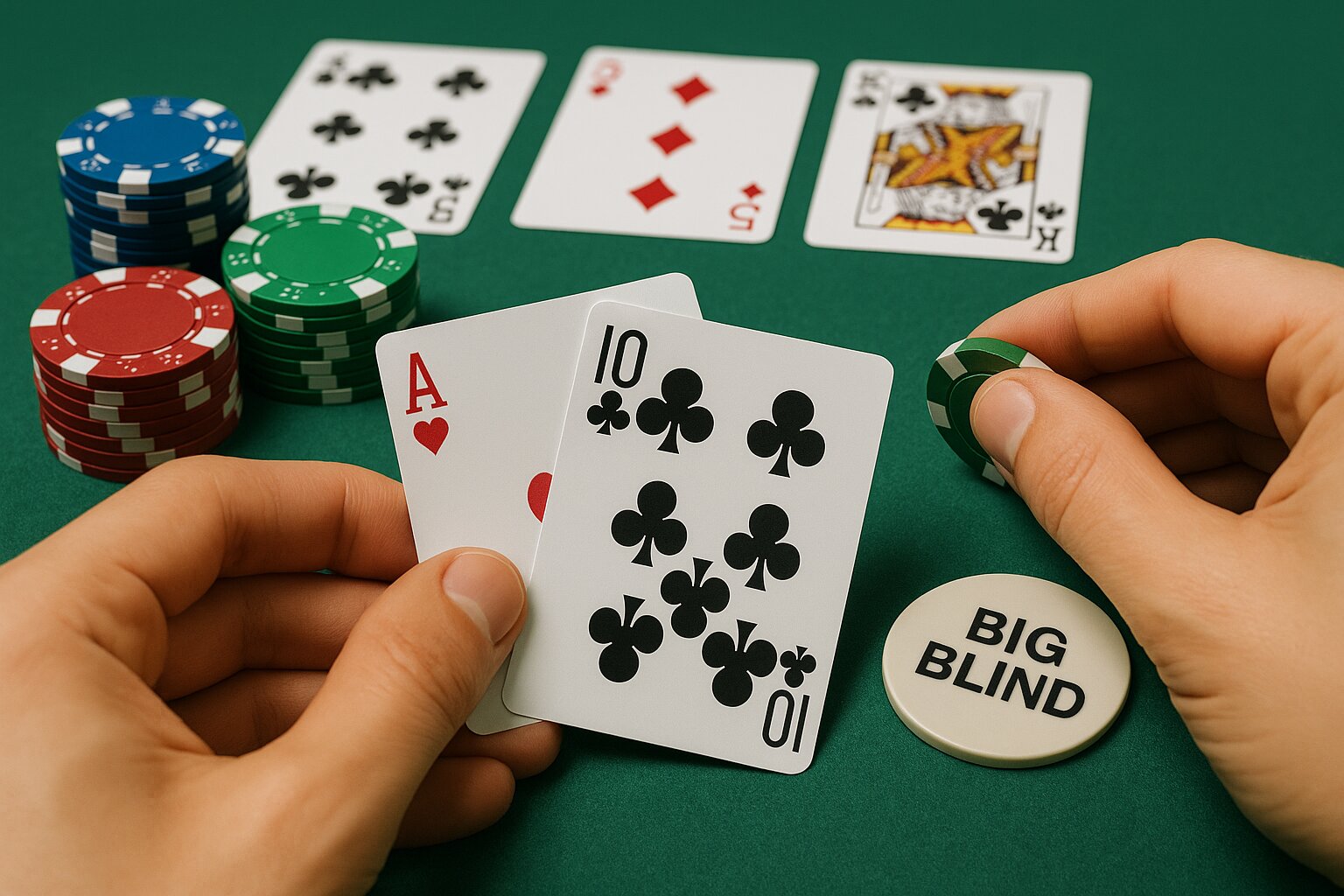
If you've ever sat down at a poker table, you may have wondered what the "big blind" actually means for your chips and choices. It’s a core part of most poker games, and understanding it makes the rest of the action much easier to read.
This guide explains when you must match the big blind, what options you have when facing it, and clears up common misconceptions so you can play with confidence. Play within your limits and set them before you start.
What Is the Big Blind in Poker?
The big blind is a forced wager posted before the cards are dealt. Its purpose is to create an initial pot so there is something to win, which drives the hand’s competitive choices. In many popular forms of poker, such as Texas Hold’em, two players post forced bets: the small blind and the big blind, with the big blind generally being twice the small blind.
Because the big blind is posted before seeing any cards, the player who puts it up is acting out of position for much of the round. The blind positions rotate one seat to the left after every hand so every player shares the obligation equally over time. That rotation is a simple but important part of table fairness and game rhythm.
If you’re unsure about amounts or how a table handles a late arrival, ask the dealer or check the posted rules at the table beforehand.
When Must You Match the Big Blind?
You must match the big blind when you want to take part in a hand and there is a current outstanding bet you haven’t covered. Practically, that means if it’s your turn to act and the big blind has already been posted, you need to call the amount required to continue—unless you choose to fold.
Arriving at a table that’s already in progress brings an additional consideration: many games expect late arrivals either to post the blind immediately or to wait until the blinds have rotated to them. That keeps contributions fair and avoids sudden shifts in the pot’s composition.
If another player raises above the big blind during the first betting round, the amount you must match increases accordingly. Those changes happen within the same hand and determine whether you stay involved or step out.
What Happens If You Do Not Match the Big Blind?
Opting not to match the big blind means you don’t participate in that particular hand. You fold and receive no cards for the rest of the hand, so you cannot win the pot. Choosing to sit out or fold is a normal and accepted part of play—there’s no penalty beyond missing that hand’s opportunity.
In some organised games and tournaments, there are rules about extended absences or repeatedly sitting out, so it’s sensible to be aware of any local house policies. Otherwise, skipping a hand is simply a way to manage your stake level or take a short break from active play.
Who Posts the Big Blind in Poker?
The big blind rotates around the table so each player will post it in turn. At the start of a hand, the big blind is posted by the player two seats to the left of the dealer. After the hand concludes, the dealer button and blind positions both move one seat to the left, ensuring the duty is shared.
When you join a table mid-game, you may be required to post the blind before being dealt into an active hand, depending on the house rules. This arrangement keeps contribution consistent across players and prevents an imbalance in pot commitments.
These conventions are standard across cash games, home games and most online tables, though the exact mechanics for late arrivals can vary slightly, so it’s helpful to clarify on arriving.
It’s worth noting that posting the blind is simply part of the structure rather than a strategic advantage or disadvantage in itself.
Difference Between Calling, Raising, & Folding to the Big Blind
Knowing the options you have when facing the big blind makes decisions clearer and helps you follow the flow of a hand. Each action produces a different consequence for your standing in the round, and understanding those consequences helps you control risk and spot advantageous situations.
Calling the Big Blind
Calling means matching the current highest bet and remaining in the hand. When you call the big blind, you pay the amount required to see the next stage of the betting or the community cards. It keeps you involved while conserving the current pot structure, which can be useful when you have a drawing hand or want to see how other players act before committing more chips.
Calling also keeps the pot size predictable, which can make post-flop decisions easier. It is often used to control losses when you are uncertain about the strength of your hand.
Raising the Big Blind
Raising increases the stake above the big blind. By raising, you change the required amount for everyone else to remain in the hand. Raises alter the dynamics at the table, creating pressure on opponents to match or fold and potentially reshaping subsequent betting rounds.
A well-timed raise can earn the pot immediately, isolate a weaker opponent, or build the pot when you hold a strong hand. However, raising commits more chips and can invite re-raises, so consider position, opponent tendencies, and stack sizes before doing so.
Folding to the Big Blind
Folding removes you from the current hand; you make no further contribution and await the next deal. Folding is a legitimate choice and a standard way for players to manage their exposure when a required call or raise exceeds their preferred stake.
You should fold when the risk outweighs the potential reward, when your hand has low showdown value, or when you would be putting a large portion of your chips at unnecessary risk.
Can You Check in the Big Blind?
Checking is possible from the big blind only if no raise has been made during the first betting round. If players before you merely call the big blind, you may check and continue without adding chips. If a raise occurs, then checking is no longer an option; you must fold, call the new amount, or raise further.
Checking can be a defensive play to see a flop for free or to control pot size when you have a marginal hand.
These choices form the basic toolkit for navigating blind pressure and deciding how to allocate your chips in any single hand. They are:
- Call: match the current bet to stay in the hand.
- Raise: increase the bet to force opponents to call more or fold.
- Fold: relinquish the hand and concede any chips already contributed.
- Check: pass the action without adding chips, only available if no raise has been made.
Does the Big Blind Change Throughout the Game?
Whether the big blind changes depends on the game format. In cash games the blind normally stays fixed unless the table agrees to change stakes. By contrast, in tournament play the blinds increase at scheduled intervals to keep the event progressing.
Tournament blind increases are organised into levels, with each level lasting a defined period. As blinds grow, they exert increasing pressure on players’ chip stacks and often encourage more decisive play to maintain chip parity. That mechanism accelerates the pace of elimination and directs the tournament toward a conclusion.
Being aware of the blind schedule or the table’s stake structure helps you plan how long your current chip stack will buy you and adapt your approach as the levels shift.
Common Myths About the Big Blind Explained
There are several recurring misunderstandings about the big blind that can mislead newer players. Clarifying these helps you avoid misconceptions and approach decisions more rationally.
Myth 1: The Big Blind Is an Advantage
The big blind is not an inherently favourable position. It is a mandatory contribution that moves round the table; like every seat, it has situational pros and cons depending on hand strength and table action.
Myth 2: You Have to Match the Big Blind Every Hand
You are never forced to play a hand simply because you would eventually sit in the big blind position. Folding remains an option whenever the required bet does not suit you, though arriving late to a table may require a posted blind before you can sit in an active hand.
Myth 3: The Big Blind Never Changes
While a static blind is common in cash tables, tournaments use rising blinds to ensure steady progress. Knowing which format you are in prevents confusion about whether blind amounts will increase.
Clearing up these points makes the game easier to understand and avoids poor choices based on misunderstandings. Keep your limits in mind and make decisions that suit your bankroll and the game format.
This wraps up the essentials: the big blind is a structural part of poker that creates the pot, rotates fairly, and requires you to make a deliberate choice each hand about how to respond. With this understanding you can participate at the table more confidently and comfortably.
**The information provided in this blog is intended for educational purposes and should not be construed as betting advice or a guarantee of success. Always gamble responsibly.