
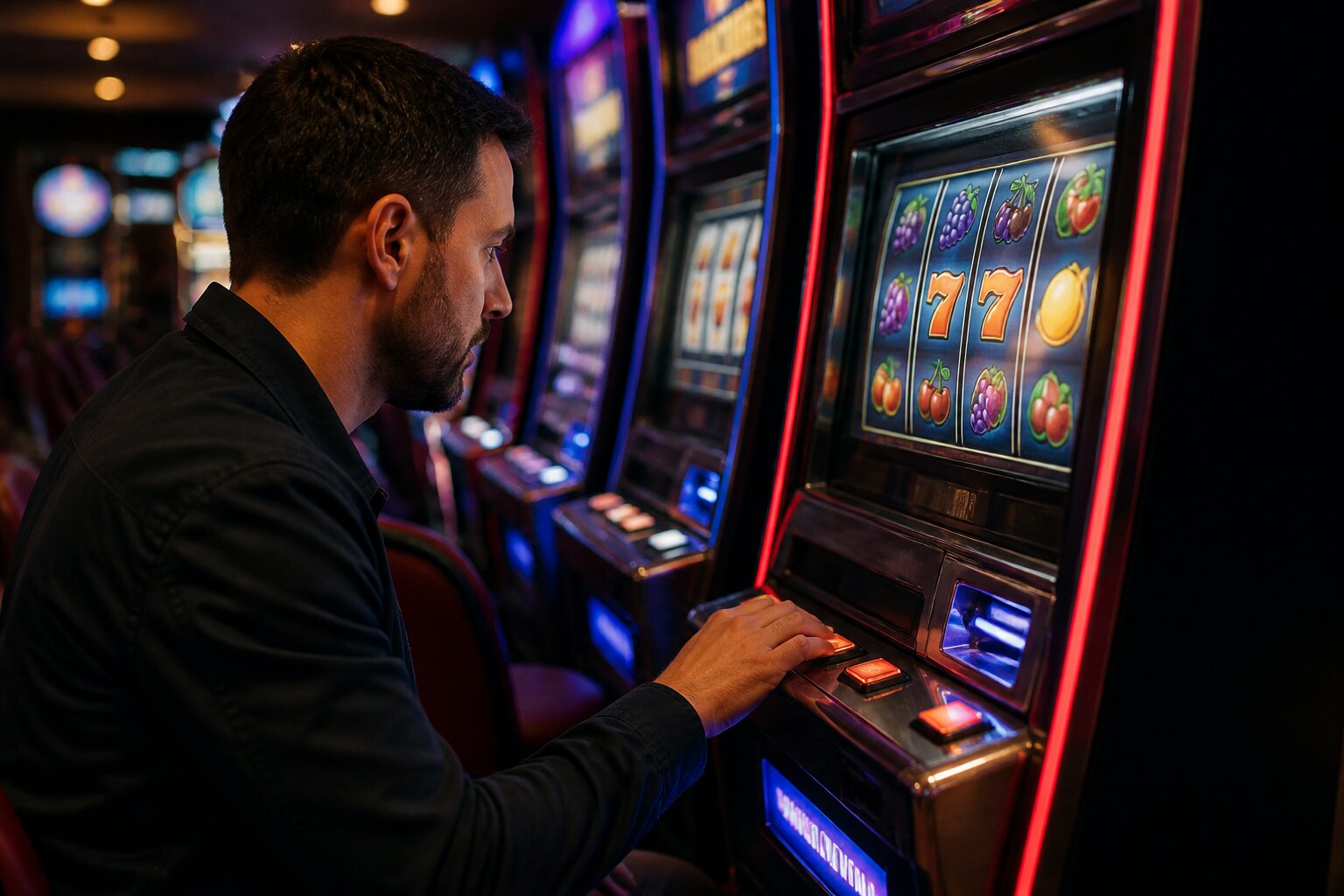
Ever wondered how fruit machines (or slots) actually decide when to pay out? You’re not alone. These games are packed with mystery and heaps of misconceptions that lead many players to believe there are hidden clues or secret methods to boost their returns.
In this article we look beyond the flashing lights and catchy tunes to examine what really happens with fruit machine payouts. We’ll separate fact from fiction, point out the useful indicators to understand, and expose some common myths that often catch players out.
Whether you’re a beginner or an experienced player, the explanations that follow will make these games easier to understand and help you play more sensibly. Ready to start? First, we’ll cover how payouts are determined.
Understanding Fruit Machine Payouts
Modern fruit machines use software to generate outcomes, ensuring each spin is independent of the last. Central to this are two concepts that explain how a machine behaves over time: the Random Number Generator (RNG), which produces unpredictable results for every spin, and Return to Player (RTP), which describes the long-run percentage a game returns to players.
RTP is a theoretical figure expressed as a percentage. For example, an RTP of 95% means that over a very large number of spins the machine would return, on average, £95 for every £100 wagered. That is a statistical average, not a promise about short sessions; individual play can vary widely from that number. The RNG ensures those short-term results remain unpredictable and unrelated to previous spins.
Regulatory standards require fairness and transparency, so games must meet technical requirements and be independently tested. Think of RTP as a long-term benchmark and the RNG as the mechanism that makes each spin an independent event. With that in mind, the next section looks at how RTP and volatility help you understand a game’s behaviour.
What Are RTP and Volatility on Fruit Machines?
RTP and volatility describe two different aspects of a game’s behaviour over many plays. RTP gives the average return over time, while volatility indicates the size and frequency of wins.
High-volatility games tend to deliver larger prizes but less often; low-volatility titles usually pay smaller amounts more frequently. Choosing a game with volatility that matches your tolerance for swings in your balance helps you manage how a session will feel, though it does not change the underlying randomness of each spin.
These measures are calculated from millions of spins and should be treated as descriptive, not prescriptive. They help set expectations: RTP shows the long-term payout rate and volatility shows the likely pattern of wins and losses during shorter play. Next, we’ll look at the kinds of indicators players often notice and why they don’t predict a payout.
Key Indicators That Suggest a Fruit Machine May Pay Out
Players often point to signs such as sound effects, certain symbol clusters, or long stretches without a win as evidence a machine is about to pay. These cues are part of the game’s design and atmosphere, not signals from the mechanics that determine outcomes.
Machines are programmed to entertain as well as to play, so flashing lights and celebratory sounds may respond to small wins or bonus triggers rather than heralding a big payout. Equally, seeing a machine idle for a while is simply random variation in results. Because every spin is independent, none of these outward signs can reliably predict what will happen next.
If you’re curious about how those sounds and visuals are used, the next section examines why players misread them as patterns and what really lies behind perceived streaks.
Are Fruit Machine Patterns Real or Imagined?
Perceived patterns are a natural human tendency: the brain looks for order in random events. That makes it easy to believe a machine is following a hidden sequence when, in reality, the apparent pattern is a coincidence created by independent outcomes.
The technology that governs outcomes prevents predictable sequences from forming. Where players see patterns, they are usually observing short-term clustering of results that occurs naturally in random processes. This misunderstanding can prompt risky choices, such as changing stakes based on a presumed trend, which won’t affect the machine’s behaviour.
Nowhere is this more relevant than with the sensory cues players notice, so the following part breaks down those visual and audio elements and explains their role.
Spotting Visual and Audio Cues
Designers use graphics and sound to make play engaging and to highlight wins or bonus events. Those cues are effective at creating excitement, but they’re not indicators of future results. A bright animation or a build-up of noise may follow a small prize or a feature activation, and the intensity of those effects varies between games.
Players sometimes attach meaning to a particular melody or animation, believing it to be a prelude to a big win. In truth, these elements are layered on top of the RNG and RTP mechanics to enhance the experience, not to communicate anything about upcoming outcomes. Understanding that keeps expectations grounded and helps avoid chasing imagined signals.
With a clearer sense of cues, it helps to revisit common myths and see why they persist despite being false.
The Role of Random Number Generators
Random Number Generators are the technical foundation that makes each spin an independent event. The RNG continuously produces sequences of numbers, and each spin maps one of those numbers to a combination of symbols. Because the process is automated and not influenced by prior results, there is no mechanism for “catching up” or for timing wins.
This explains why perceived streaks or suggestions that a machine is “due” have no technical basis. Recognising the RNG’s role removes the mystery and places emphasis on correct expectations about variability and chance during any session. The next section dispels some of the most persistent myths that arise from misunderstanding these systems.
Debunking Common Myths About Fruit Machine Payouts
A range of myths circulates among players, from the idea that machines are “due” after a dry spell to claims that certain times of day affect payouts. These beliefs stem from misreading random outcomes as meaningful patterns.
The “due” machine misconception assumes past inactivity increases the chance of a win; it does not. Similarly, tales of hot and cold machines reflect short-term clusters of outcomes rather than any lasting change in behaviour. Time-of-day theories also have no basis in the way outcomes are produced; the software does not track hourly patterns or adjust payouts according to player numbers.
Accepting the reality of how machines work helps keep play within reasonable expectations and reduces the temptation to chase losses based on false assumptions. If gambling ever becomes a concern, organisations such as BeGambleAware provide confidential advice and support. With an understanding of these mechanics and a sensible approach to play, players can get the entertainment they want without misunderstanding how payouts actually operate.
**The information provided in this blog is intended for educational purposes and should not be construed as betting advice or a guarantee of success. Always gamble responsibly.