
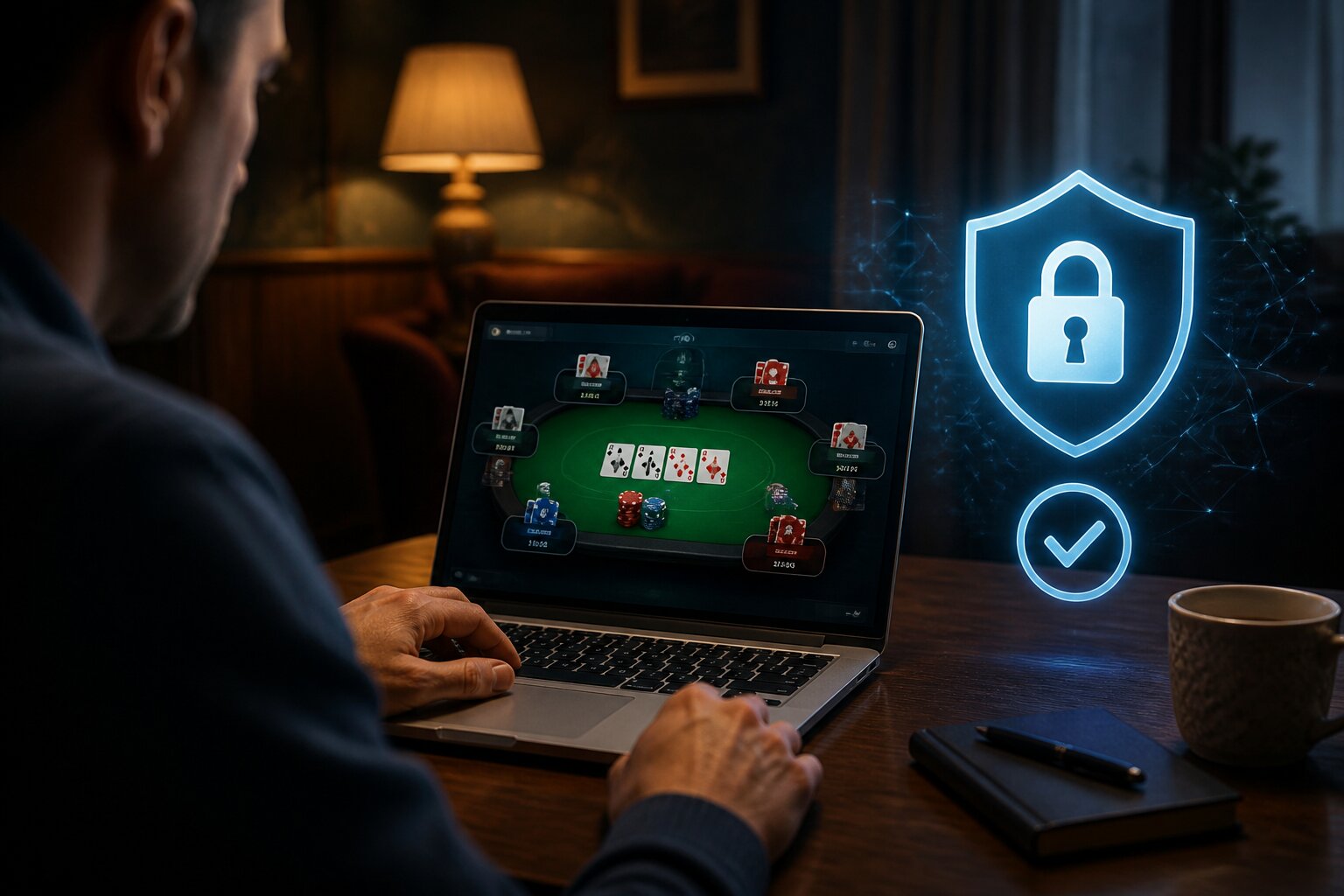
At the heart of our online poker experience is a firm commitment to keeping the game fair, secure and enjoyable for everyone. We take player protection seriously and work behind the scenes to uphold strict standards for safety and integrity.
Concerns about cheating and fairness are natural, so this article explains the technology, checks and procedures that reduce risk and keep tables honest. Read on to see how we preserve a level playing field and protect the community.
Why Is Security Important in Online Poker?
Security underpins every aspect of a trustworthy poker site. Without robust safeguards, players would be exposed to unfair play, data breaches and financial fraud. That is why protecting accounts, personal details and funds is treated as a core responsibility.
Strong security also preserves the integrity of each hand. When systems are in place to detect manipulation or collusion, the outcomes reflect the rules of the game rather than outside interference. For players this means the same basic expectations that apply at a live table: transparency about how hands are dealt and confidence that the platform is actively monitored.
Alongside technical defences, responsible play tools and support form part of a responsible operator’s offer. These measures help players manage their activity while the platform focuses on preventing abuse and enforcing fair play.
What Anti-Cheating Technology Do Poker Sites Use?
Multiple layers of technology work together to protect the game. Encryption keeps personal and financial data private. Monitoring software analyses game activity in real time to spot unusual patterns. Anti-bot systems identify automated programmes trying to participate.
Monitoring tools look for signals such as repeated pairing of the same players, irregular bet sizes or sequences that differ from typical player behaviour. When the software flags a concern, a human review team examines hand histories and account activity to assess whether anything improper occurred.
These systems are regularly updated and independently tested to make sure they remain effective as new threats emerge. While no technical solution is infallible, a combination of automated detection and expert oversight makes it far harder for cheating to go unnoticed.
Here’s a quick picture of the main layers at work:
- Encryption and secure account protocols to protect data.
- Behavioural monitoring to detect suspicious patterns.
- Anti-bot measures to keep automated programmes out.
- Human review to interpret and act on flagged activity.
How Do Operators Identify and Stop Collusion?
Collusion involves players coordinating to gain an unfair edge and is treated with high priority. Operators use pattern-recognition algorithms to flag likely cases, then rely on trained investigators to verify the findings.
The automated systems surface anomalies such as consistent folding or raising patterns between particular accounts, repeated seatings together, or stake behaviours that do not match normal competitive play. Once an alert is generated, investigators review detailed game logs and any linked account information to build a clear picture.
If collusion is confirmed, a range of responses may follow: warnings, account suspensions, confiscation of ill-gotten winnings or permanent bans. Serious incidents can also be reported to the appropriate authorities. Combining machine detection with human judgement reduces false positives and ensures action is proportionate and fair.
The Role of Random Number Generators in Fair Play
Random Number Generators (RNGs) are the software that determines card order for online dealing. Their purpose is to make every shuffle unpredictable and unbiased, mirroring the randomness you expect from a physical deck.
To ensure RNGs work correctly they undergo independent testing and routine audits. These checks look for statistical randomness and confirm there are no predictable patterns that could be exploited. Operators also document their testing and may publish summaries so players can see evidence of regular verification.
Because RNGs control the basic mechanics of the game, their integrity is central to trust. Reliable RNGs mean outcomes are driven by players’ decisions, not by external manipulation.
How Is Player Identity Verified Online?
Identity checks help protect players and the platform by preventing fraud, money laundering and underage access. Verification processes typically ask for documents such as proof of identity and proof of address when accounts are opened or certain transactions occur. These checks are a standard part of keeping services safe and compliant.
Checks are carried out using secure methods. Players may be asked to upload scanned documents or photos, or to use electronic verification services that confirm identity against trusted databases. Only the information necessary to confirm identity is requested, and it is handled in accordance with data protection requirements.
Verification may be required at different points, for example:
- when an account is first opened
- before making a deposit or withdrawal
- after a large win or unusual activity
- if there is suspected fraud or linked account behaviour
Verifying players also supports fair play investigations, because linking accounts and activity can reveal coordinated or abusive behaviour. While verification adds an extra step for players, it is an important safeguard that helps protect the whole community and maintain a fair, secure environment.
Can Players Spot Suspicious Behaviour?
Players can play a useful part in maintaining fairness by reporting behaviour that seems out of line with normal play. Signs to mention include consistently odd betting relative to the pot, repeated teaming between the same accounts, or chat messages that suggest coordination.
Reporting is not a duty but a helpful supplement to automated monitoring. Every report is logged and reviewed alongside system-generated alerts. When players raise concerns, it allows investigators to consider patterns that machines alone might not fully capture.
If you do report something, expect a discreet response while the matter is examined. Operators balance transparency and privacy to ensure investigations are conducted professionally.
What Happens If Cheating Is Suspected?
When suspicion arises, a measured process unfolds. Accounts involved are usually restricted while a confidential review takes place to protect the integrity of the site and the rights of the players.
Investigators analyse evidence carefully. They typically examine:
- hand histories to identify unusual patterns of play
- transaction records for suspicious financial activity
- any communication that could indicate collusion or misuse
Decisions are evidence-led and proportionate to the findings. If wrongdoing is established, actions can include:
- formal warnings
- returning funds where appropriate
- temporary suspensions
- permanent bans
- referral to law enforcement or regulatory authorities when required
If the review finds no abuse, accounts are restored and the case is closed. Throughout, the emphasis is on protecting players, maintaining a safe and fair environment, and ensuring outcomes are transparent and proportionate. Players are usually informed of decisions and provided with information on any available right to appeal or request further review.
Common Myths About Online Poker Security
There are several common misunderstandings about how online poker is policed and protected. Clearing these up helps set realistic expectations.
Myth: Online poker is easily rigged.
Reality: Games use independently tested RNGs, multi-layered monitoring and regular audits. While no system is perfect, there are substantial safeguards to prevent and detect manipulation.
Myth: Players alone are responsible for stopping cheating.
Reality: Operators carry the primary responsibility for monitoring and enforcement, though player reports are a valuable supplement.
Myth: Identity checks are merely cosmetic.
Reality: Verification is a practical control that reduces fraud, supports investigations and helps keep underage players out.
Myth: An unusual result means the site is unsafe.
Reality: Unusual outcomes can occur within fair systems. Reporting concerns prompts a review to determine whether they stem from play patterns or improper activity.
We aim to maintain a poker experience founded on transparent procedures and active protection, so everyone can trust the environment they join. Thank you for reading—if you have specific concerns or want to report something, our support team is ready to help.
**The information provided in this blog is intended for educational purposes and should not be construed as betting advice or a guarantee of success. Always gamble responsibly.