
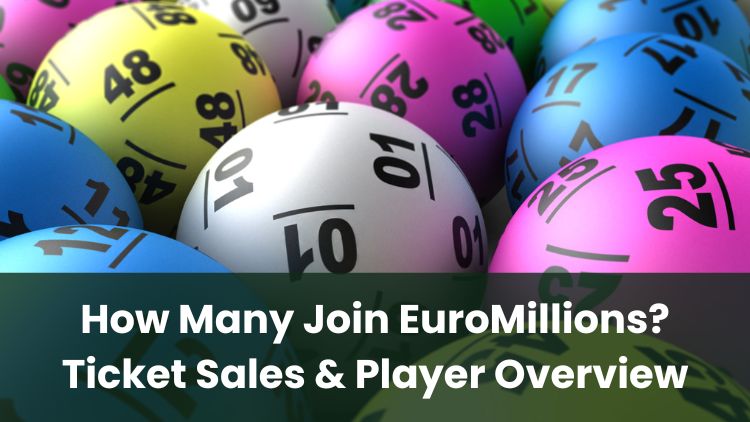
EuroMillions is one of Europe’s best-known lotteries, with participants from several countries taking part each week. Many people play sporadically, while others might enter more frequently, which naturally raises the question: how many actually join in regularly?
Ticket numbers can change considerably from one draw to the next, and each participating country shows its own patterns. Some draws attract noticeably more entries than others.
This article explores how EuroMillions works, who tends to play most often, which countries contribute the most entries, and how ticket numbers fluctuate over time. There is also a closer look at the typical number of tickets per participant.
Read on to learn more.
What EuroMillions Is And How It Works
EuroMillions has been played since February 2004 and is available in nine European countries. Draws are usually held twice a week, on Tuesday and Friday evenings. By pooling players from multiple national lotteries into one draw, EuroMillions has become a widely recognised game of chance.
Players fill in a ticket by selecting five main numbers from 1 to 50, plus two additional “Lucky Stars” from 1 to 12. A draw then determines the winning combination, and prizes are awarded based on how many numbers match. The top prize – the jackpot – is won by matching all main numbers plus both Lucky Stars. There are 13 prize tiers, ranging from matching two numbers up to the jackpot.
Prizes vary depending on the draw. For example, in the UK, matching five main numbers might win roughly £13,500, while smaller prizes could be around £7 for matching three numbers and one Lucky Star. UK tickets also enter the Millionaire Maker draw, which guarantees that at least one UK entrant wins £1 million each draw.
All outcomes are determined entirely by chance. The numbers drawn are random, and there is no method that might ensure a win. Jackpot odds are extremely low, at around one in 139,838,160. Players are encouraged to participate responsibly, and lottery games should be considered a form of entertainment rather than a way to make money.
With the basics covered, we can now look at how many people typically participate.
How Many People Play EuroMillions Regularly?
Millions of tickets are sold across Europe for each draw. In the UK, four to six million lines are often entered for a standard draw, with figures rising when the jackpot is especially high.
Across all nine countries, total entries might reach tens of millions. A typical draw may see roughly 30 million lines entered, although this number can change depending on the jackpot or media coverage.
It’s worth noting that ticket numbers do not directly equal unique participants. Some players buy multiple lines, while syndicates – groups pooling money to purchase tickets – appear as multiple entries despite representing a collective group.
Participation varies widely: some people enter every draw via subscriptions or manual purchase, while others only join occasionally, often when a jackpot attracts more attention. High-profile jackpots might increase participation, with notable spikes sometimes resulting in thousands of tickets being sold each minute during certain UK draws.
Which Countries Contribute Most Players To EuroMillions?
EuroMillions is played in the United Kingdom, France, Spain, Portugal, Ireland, Belgium, Switzerland, Austria, and Luxembourg.
The largest numbers of entries usually come from the UK, France, Spain, and Portugal. These countries combine larger populations with well-established lottery traditions. Smaller countries such as Belgium, Switzerland, Austria, Ireland, and Luxembourg contribute less overall, though they still consistently participate.
When jackpots rise or special events occur, ticket numbers might temporarily shift. Large advertised jackpots often draw in occasional players, and national holidays or promotional campaigns may also affect participation. In per capita terms, countries like Portugal and Luxembourg sometimes show particularly high engagement relative to their population.
How Do Ticket Sales Fluctuate Between Draws?
Ticket sales are rarely steady. One major influence is the jackpot size: higher jackpots might attract more participants, while standard draws may see more typical ticket numbers.
Special events, such as “Superdraws” with guaranteed large prizes, might generate noticeable spikes in entries. Media coverage of these events also encourages more people to consider entering.
Other influences include public holidays, weekends, and seasonal patterns. For instance, draws near major holidays might have slightly fewer entries if people are away or preoccupied, whereas paydays may coincide with increased ticket purchases.
Over sequences of draws, numbers often show a cyclical pattern: building up during extended high jackpot runs, then falling once the jackpot is won. These trends reflect how publicity, jackpot levels, and player behaviour interact across Europe.
Average Tickets Bought Per Player
Data on total tickets is easier to find than information on individual participation, so estimates are often used. Most players might buy a single line per draw, though some enter two or more.
Regular participants sometimes use subscription services, which automatically enter them in each draw. Others join syndicates, where a group pools money to buy multiple tickets and share any winnings. This spreads entries across several individuals.
Buying extra lines increases total entries for a draw but does not change the likelihood of winning with any single line, as each entry has the same probability of matching the winning numbers. The odds are dictated by the total number combinations in the game, rather than the number of tickets sold or participants.
It’s important to keep personal spending in mind and to treat lottery participation as a form of entertainment rather than a financial plan. Organisations such as GamCare and GambleAware offer free, confidential support if participation begins to affect well-being or finances.
*All values (Bet Levels, Maximum Wins, etc.) mentioned in relation to this game are subject to change at any time. Game features mentioned may not be available in some jurisdictions.
**The information provided in this blog is intended for educational purposes and should not be construed as betting advice or a guarantee of success. Always gamble responsibly.