
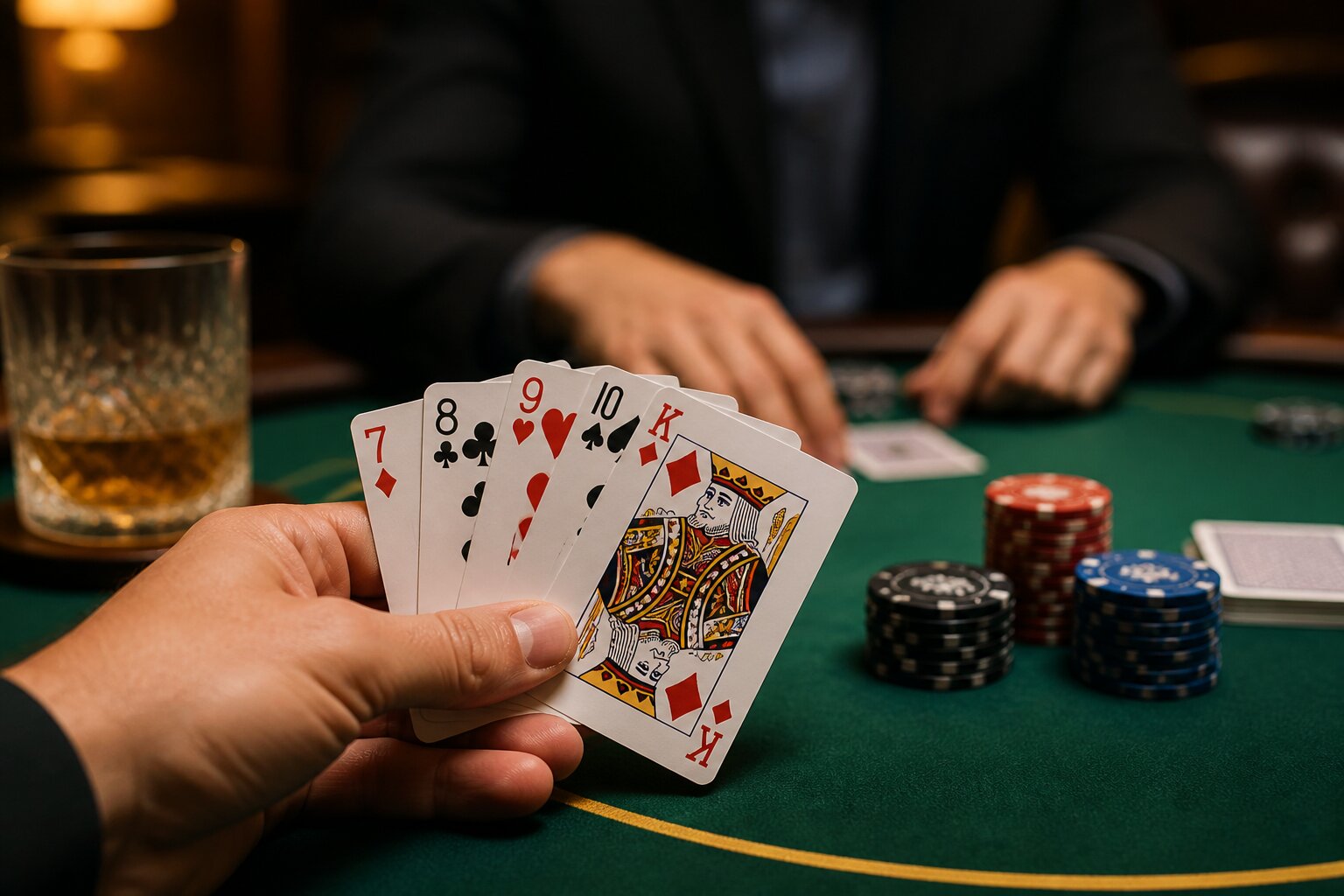
Looking for a classic card game that rewards observation, decision-making and a bit of strategy? 5 Card Draw Poker is one of the easiest poker variants to learn, making it ideal for home games and online play.
With straightforward rules and quick rounds, it’s a great way to practise reading opponents and refining hand-selection. This guide explains how the game works, how hands are ranked and what to expect at the table, all in clear, practical terms.
Read on to learn the key rules and tactics that will help you play 5 Card Draw confidently.
What Is 5 Card Draw & How Does It Differ From Other Poker Games?
5 Card Draw is a traditional poker variant where each player receives five private cards and aims to make the best five-card poker hand. There are no community cards on the table, so every decision comes down to what’s in your own hand and how you interpret the betting around you.
The signature feature is the draw: after an initial betting round, players may discard and replace up to five cards. This exchange allows hands to be improved or disguised, and it brings a different flow compared with community-card games such as Texas Hold’em, where shared cards create visible possibilities for everyone.
Because all hands are private, reading opponents from their betting patterns and timing becomes more important here than in games with community cards. That interplay between private information and public behaviour is central to how 5 Card Draw is played and enjoyed, and it leads naturally into the practical rules that follow.
Basic 5 Card Draw Poker Rules Explained
A single standard 52-card deck is used and each player receives five cards dealt face down. Many games use forced bets to seed the pot — these can be antes (everyone contributes) or blinds (two players contribute different amounts from set positions). Play typically begins to the left of the big blind or the player designated to act first.
Following the deal, a round of betting takes place in turn. Players may fold, call (match the current bet) or raise (increase it). After that betting round, the draw phase allows each remaining player to discard and replace any number of cards, drawing replacements from the deck. Once new cards are received, a second round of betting happens. If two or more players remain after that, a showdown reveals the hands and the highest-ranking five-card hand wins the pot; ties split the pot.
All players must meet the table’s age and eligibility requirements and set personal spending limits before play begins to keep sessions controlled and enjoyable. With the basic rules in place, the next section outlines how a single hand typically unfolds.
Step-by-Step: How to Play a Hand of 5 Card Draw
A hand begins with blinds or antes posted to create the pot, then the dealer shuffles and deals five cards to each player. Players look at their hands privately and decide whether to enter the first betting round. That betting round establishes the stakes and begins to shape how players will approach the draw.
During the draw phase, players choose which cards to discard and draw replacements. Some players will aim to protect a made hand, while others will abandon weak holdings to chase a new combination; recognising which approach an opponent takes is part of the strategy. After drawing, a second betting round gives another opportunity to build the pot or force opponents to fold.
If multiple players remain after betting, they show their hands and the best five-card combination takes the pot. The way the hand evolved — who bet, who drew and how many cards they changed — gives clues that matter in later hands too. Next, learn which hands beat which, so you can evaluate the showdown with confidence.
Common 5 Card Poker Hand Rankings
Understanding hand rankings is essential because every showdown is settled by them. From highest to lowest:
- Royal Flush: ten through ace of the same suit.
- Straight Flush: any five consecutive cards of the same suit.
- Four of a Kind: four cards of the same rank.
- Full House: three of a kind plus a pair.
- Flush: five cards of the same suit, not in sequence.
- Straight: five consecutive cards of mixed suits.
- Three of a Kind: three cards of the same rank.
- Two Pair: two separate pairs.
- One Pair: a single pair.
- High Card: no combination, decided by the highest card.
Knowing these rankings helps with decisions during both betting rounds and gives context to opponents’ likely holdings when they take particular actions. With the ranking order clear, the next section explains how betting rounds are usually structured and how they influence choices at the table.
How Are Bets & Betting Rounds Structured?
Betting in 5 Card Draw typically follows two main rounds — pre-draw and post-draw — and may begin with either antes or blinds depending on the house rules. Betting proceeds in turn, with each active player choosing to fold, call or raise relative to the current stake. Table limits determine how large raises can be and whether the game is played as fixed-limit, pot-limit or no-limit.
These betting choices serve two purposes: they build the pot and convey information. A strong bet can represent confidence in a good hand, while a quick fold signals weakness; similarly, the number of cards a player takes during the draw may confirm or contradict that earlier action. Observing this interplay helps form a reading of opponents’ strategies and shapes later decisions.
It’s sensible to agree table rules and personal spending boundaries before play begins, so the betting framework stays clear and the session remains responsible. Clear expectations here make for smoother action and better-informed choices when the game moves on to table conduct and etiquette.
Essential Table Etiquette in 5 Card Poker
Polite, consistent behaviour keeps the game fair and enjoyable. Players should act only when it’s their turn, avoid discussing hands that are still live and keep cards and chips handled in a straightforward way that others can see. Announcing moves clearly, avoiding long pauses and not trying to influence others’ play all help the table run smoothly.
Respect for the dealer and other players is important: aggressive language, trying to expose another player’s cards or arguing over routine calls undermines the experience for everyone. When disputes arise, follow the house rules or the dealer’s ruling rather than escalating. Good etiquette also includes protecting your hand visibly on the table and making intentions unambiguous when betting.
Observe these courtesies and the session will feel fair and relaxed, allowing players to focus on strategy and reading behaviour rather than procedural distractions. The final section answers common questions many players have about the practical limits and variations of 5 Card Draw.
How many cards are dealt in 5 Card Draw?
Each player is dealt five cards face down at the start of the hand; these are the cards used to form the final five-card combination, apart from any replacements made during the draw.
Can you exchange all five cards?
Yes, players can discard and replace anywhere from zero to all five cards during the drawing phase, subject to the dealer having enough cards in the deck.
What is the minimum and maximum number of players?
The game works well with two to six players; up to eight can be accommodated in many settings, though very large tables may limit available cards for draws and slow the game.
Are jokers used in 5 Card Draw?
Standard play uses a 52-card deck without jokers unless the house rules explicitly include them.
Is bluffing part of 5 Card Draw?
Bluffing is an element of play because hands remain private; betting patterns, draw behaviour and timing all contribute to whether a bluff is likely to succeed. Outcomes are not guaranteed, so interpreting these signals carefully is essential.
Can I play 5 Card Draw online?
Yes, many regulated online platforms offer 5 Card Draw. Choose sites that are properly licensed and set deposit and time limits before playing so your session stays within your personal boundaries.
**The information provided in this blog is intended for educational purposes and should not be construed as betting advice or a guarantee of success. Always gamble responsibly.