
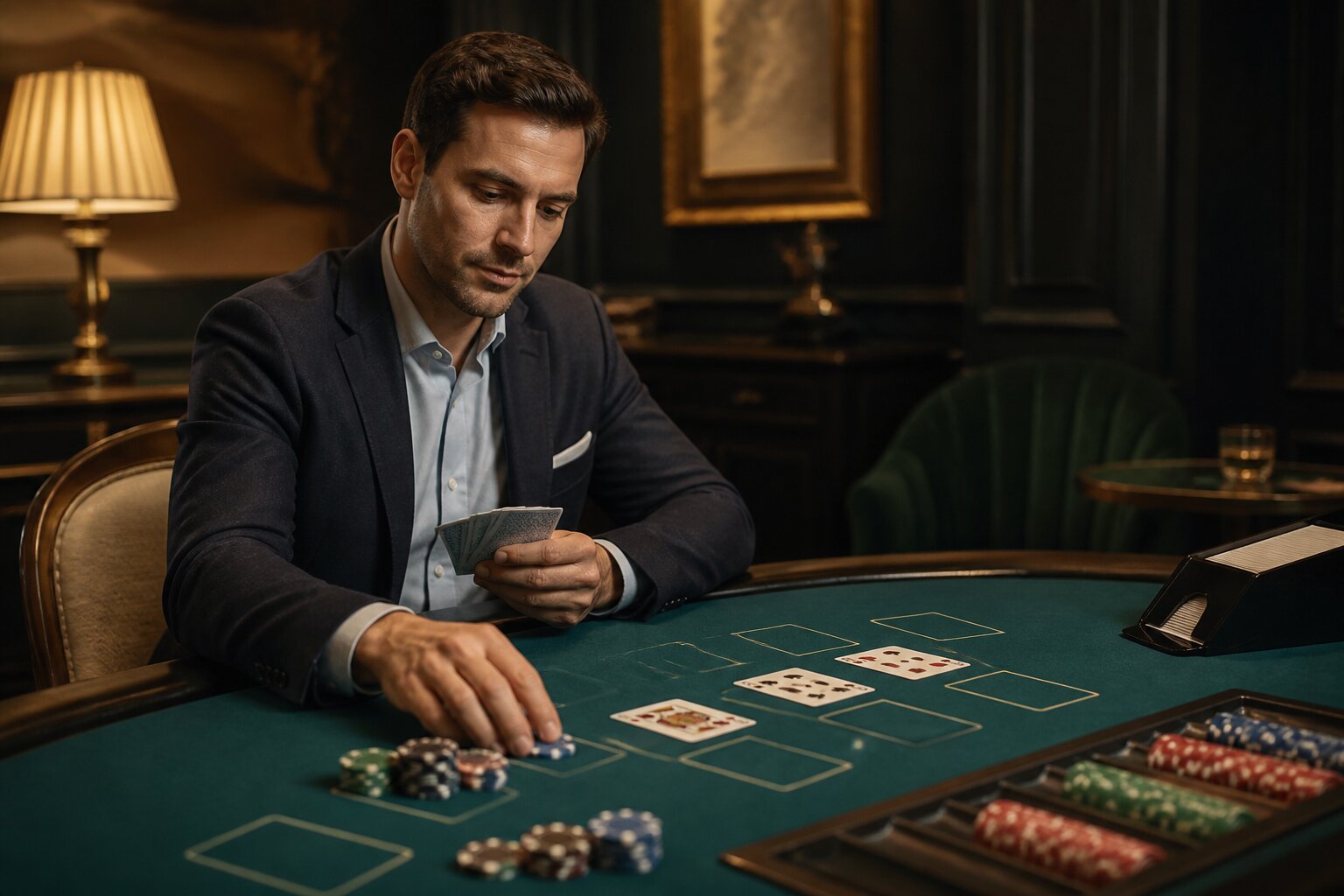
Ever wondered what it is like to play blackjack all by yourself, with no other players at the table? Solo play has become more common, especially as online platforms make it easy to join a single-player game.
Being alone changes more than just the number of people in your seat; it alters pace, interaction and how you experience each decision. Read on to see how those shifts play out in practice and what they mean for your session.
How Does Playing Blackjack Alone Differ from Group Play?
Playing solo speeds up the game because there is no waiting for other players to act. Hands move at the pace you set, which can be useful when you want a focused session or have limited time. That same speed does, however, change the atmosphere: without the shared reactions that come with group play, the experience is quieter and more concentrated.
Group tables bring social elements that some players enjoy, such as light conversation, shared celebrations and the occasional tip or remark about a play. These interactions can make the game feel less formal, but they also introduce variability in tempo and decision-making as players respond to one another.
You also gain clearer control over your own rhythm when no one else is present. Decisions can be made deliberately without outside pressure, and you can pause or finish a session exactly when you choose. This difference in tempo and tone sets the scene for how psychology comes into play next.
What Psychological Factors Influence Solo Blackjack?
Alone at the table, concentration often rises. With fewer external stimuli, it is easier to focus on cards, strategy and bankroll management. For some players this clarity makes it simpler to stick to preferred tactics and to review outcomes between hands.
At the same time, isolation can feel more intense for others. Without social feedback, wins and losses are experienced privately, which can amplify emotional responses. That heightened personal focus means players need good self-awareness to recognise when fatigue, frustration or overconfidence begin to affect choices.
The quieter environment also changes how pressure is felt. Where group settings can bring subtle cues to speed up or conform, solo sessions place responsibility squarely on the individual to set limits and recognise when to step away. Thinking ahead about these aspects will help when considering how dealers behave at a single-player table.
Table Dynamics: Does Playing Alone Affect Dealer Behaviour?
When you are the only player, interactions with the dealer become more direct and concise. Dealers remain bound by standard procedures, so the rules, shuffling and dealing follow the same protocols as with multiple players. What does change is the style and tempo of communication; discussions tend to be brief and tailored to a single player rather than addressing a group.
In live casino settings, this can create a smoother rhythm because the dealer responds to only one set of decisions. The result is a streamlined exchange that can make it easier to follow the flow of play and learn from patterns in your own hands. That clearer rhythm often makes personal decision-making feel more immediate, which leads naturally into how autonomy shapes the solo experience.
Player Autonomy and Control in Solo Blackjack
Solo play emphasises individual control. Every choice about hitting, standing, splitting or betting rests entirely with you, and the game moves at the pace you prefer. This autonomy supports deliberate play and can make it simpler to pursue a consistent approach across multiple hands.
With that control comes responsibility for managing the session. Setting a bankroll for the visit and deciding in advance how long to play are practical ways to preserve enjoyment. The freedom to stop or change tactics without coordinating with others is one of the main attractions of solo play and it also influences how the overall pace and flow of the game feel.
Does Solo Play Change Game Pace and Flow?
The pace of solo blackjack is flexible. You can choose to play quickly, running through many hands in a short time, or to take extra moments over each decision. That flexibility lets players adapt the session to their own needs: a brief, focused set of hands when time is tight, or a slower, more analytical session when studying strategy.
Playing solo often encourages a more deliberate rhythm because there are no other players influencing decisions or urging you on. That can make each hand feel more like a discrete exercise in decision making, with space to review past hands and adjust tactics. At the same time, without the social interaction of a table, some players find it easier to concentrate and maintain a steady tempo.
However you set the tempo, regular breaks are useful to keep concentration high and prevent errors that come from fatigue. Short pauses between rounds help clear the mind and reduce the chance of making impulsive or emotionally driven choices. A measured approach to session timing helps maintain the clarity described earlier and keeps the experience enjoyable.
Managing your bankroll and being aware of how speed affects your mindset also supports sensible play. When you slow down to think through each hand you are more likely to follow your chosen strategy, while playing too fast can lead to small mistakes that add up. Balancing speed and reflection ensures the session remains both productive and pleasant.
Social Aspects Lost or Gained When Playing Solo
Playing alone removes most of the social noise that accompanies group tables. Some players appreciate the privacy and the ability to play without distraction, finding it easier to reflect on strategy and results. Others miss the camaraderie and shared moments that make group sessions feel lively.
There is a trade-off between uninterrupted focus and the energy of a social table. Choosing solo or group play is largely a matter of what a player wants from the session — a quiet study of technique or a social outing with others. That choice also colours perceptions of fairness, which is the next topic to consider.
Perceived Fairness: Are Outcomes Different in Solo Play?
Fairness in blackjack is governed by game rules and by how cards are dealt. Whether you play alone or with others, outcomes are determined by randomised card distribution and established procedures for each hand. The experience of fairness may feel different when play is more focused, but the underlying mechanics do not change.
Licensed operators and regulated venues follow standards to ensure dealing and shuffling meet accepted practices. Because the rules and payouts are consistent, any change you notice between solo and group play is about perception and pace rather than an alteration in odds.
Casino House Edge: Is It Affected by Solo Play?
The house edge is a feature of the game's rules and payouts and remains constant regardless of table size. How a player approaches decisions can influence short-term results, but the built-in mathematical advantage for the house does not vary with the number of people at the table.
Myth-Busting: Do Solo Players Have Better Odds?
Some believe that being alone at the table can improve the odds. In reality, card distribution is randomised and the probabilities for decisions are unchanged. Solo play offers a different environment for making choices, yet it does not alter the statistical odds embedded in blackjack.
Overall, solo play simply presents an alternative way to experience the game: faster or slower tempo, more private decision-making and a different emotional tone. Those differences can shape how satisfying a session feels, but they do not change the core fairness or the house edge that define the game.
**The information provided in this blog is intended for educational purposes and should not be construed as betting advice or a guarantee of success. Always gamble responsibly.