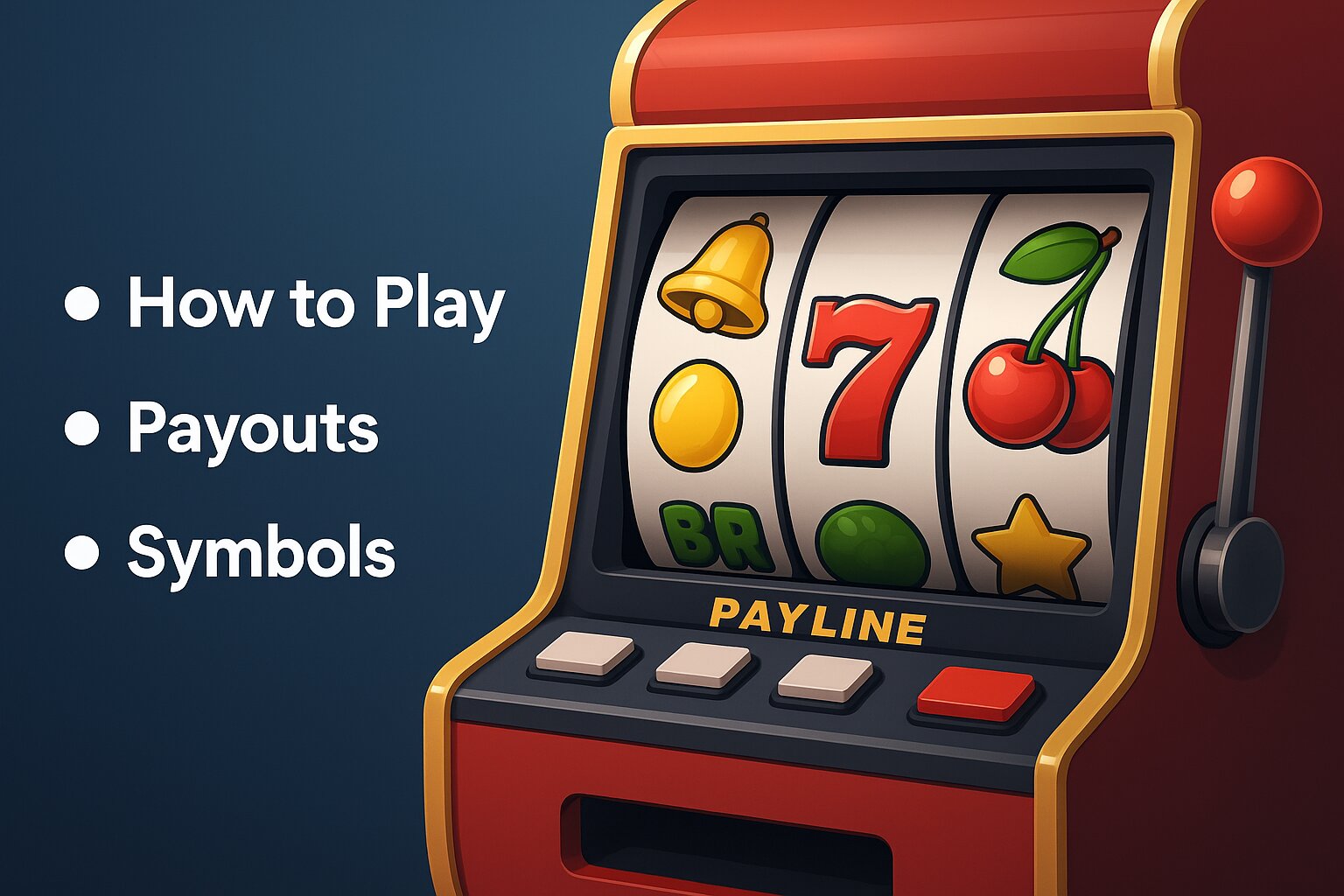
Curious about how slot machines work? Whether you are new to online slots or want a clearer picture of the basics, this guide walks you through the essentials in plain language.
You will learn how to get started, what the common symbols mean and how payouts are calculated. The aim is to make the games easier to understand so you can choose ones that suit your style.
Slots are a form of entertainment and should be played within your means. Online gambling is for those aged 18 and over.
What Are the Basic Slot Machine Rules?
Playing a slot is straightforward and does not require prior skill. The core steps are familiar across most games, even though individual features can vary.
First you pick a game and set a stake. Many slots let you change the bet size and the number of active paylines, while some use a fixed system where every spin uses all lines. After choosing your stake, you press the spin button and the reels rotate. If symbols line up in a winning pattern on an active payline you receive a payout shown in the paytable.
Outcomes are determined by a Random Number Generator. This system makes each spin independent from earlier results. Because of that, no previous spin affects the next one.
Knowing these basics makes it easier to understand the more detailed topics below, such as how payouts are shown and how special symbols influence play.
How Do Slot Machine Payouts Work?
Every slot includes a paytable that lists winning symbol combinations and their associated prizes. The paytable is the single best reference for how payouts are calculated in any particular game.
When symbols form a winning combination listed on the paytable, the game credits the corresponding amount to your balance. Some symbols pay more than others, and many games multiply payouts by the bet per line or the total stake, so it helps to check how bet size affects returns.
Another key figure to look for is RTP, or Return to Player. RTP is a theoretical percentage that indicates how much of the stakes a game may return over a long period. For example, an RTP of 96% suggests £96 might be paid back for every £100 wagered across many spins. RTP does not predict short-term results; it is a long-run average.
Licensed and regulated operators make payout information available so you can compare games and set expectations before you play.
Understanding Slot Symbols: What Do They Mean?
Symbols are the building blocks of how a slot plays and pays. Each type serves a different purpose, and knowing them helps you spot features and value in a game.
Every slot shapes its symbols around a theme and assigns roles such as:
- basic paying icons
- substitutes
- special triggers
The paytable explains what each symbol does and how many you need for a prize, so start there if anything is unclear. It will also show how much each symbol pays, whether it needs to land on a payline, and any extra effects it brings.
Some symbols appear in variants that alter how they behave. Examples include wilds that expand or stick, or scatters that trigger free spins without needing to line up on a payline. These variations can change both how often wins happen and how large they can be.
Below are the common categories and what they typically do.
Common Types of Slot Symbols Explained
After a brief look at the general role of symbols, here is a closer description of the most common types and how they influence play. Read these sections alongside the paytable for the specific game you are playing.
Standard Symbols
Standard symbols are the regular icons that form the bulk of winning combinations. Their values range from low to high and are usually tied to the game theme, so familiar themes will often use recognisable symbols to represent different values.
Matching several of these on an active payline produces the basic payouts shown in the paytable. Low-value symbols often appear more frequently, while high-value symbols are rarer but pay more when they do land.
Wild Symbols
Wild symbols substitute for other symbols to complete winning combinations. They are primarily used to help form wins that would otherwise be missing one or more symbols.
They can appear in different forms:
- single-position wilds that occupy one symbol space
- stacked wilds that cover several positions on a reel
- expanding wilds that grow to fill an entire reel
Some wilds also come with multipliers that increase the value of a win they help produce, or with behaviour such as sticking in place for a number of spins to give repeated chances at a winning combination.
Scatter Symbols
Scatter symbols usually trigger features such as free spins or bonus rounds when a required number appears anywhere on the reels. Because they do not need to land on a payline, scatters can unlock extras even when standard paylines do not show wins.
Scatters often pay a prize in their own right, and the paytable will state how many scatters are needed to trigger the associated feature and what that feature includes.
Bonus Symbols
Bonus symbols often start specific side-games or interactive features, such as pick-and-reveal rounds or bonus wheels. These symbols typically require a minimum number to activate the bonus, and the paytable will spell out the trigger conditions and potential rewards.
Bonuses can offer different kinds of value to a session: guaranteed prizes, additional spins, or chances to win larger multipliers. Because bonus rules vary widely, checking the game’s rules and paytable is important before you play.
A quick scan of the paytable is the best way to understand how each of these symbol types behaves in the particular slot you are about to play. That information tells you not just what symbols do, but how they interact with paylines, features and any special mechanics.
Are There Any Myths About Slot Machine Rules?
Slots attract plenty of myths. Clearing them up helps separate fact from fiction so you can approach games with a realistic perspective.
A persistent misconception is that machines show patterns or that they are “due” to pay after a run of losses. Because outcomes are produced by a Random Number Generator, each spin is independent and previous results do not alter future ones. Timing does not change chances either; playing at a particular time of day will not affect results.
Other myths suggest certain button presses or betting patterns influence outcomes. In reality, only the game’s rules, paytable and stake determine how much a spin can pay. Special symbols and bonus features add variety and can lead to larger prizes within the rules of the game, but they do not guarantee a win.
Understanding how randomness and the game rules interact is the best defence against misconceptions and poor choices.
What Should Players Check Before Playing a Slot Machine?
Taking a moment to check key details before you start spinning can help you set sensible expectations and select a game that fits your budget and preferences.
Begin with the paytable to learn symbol values, special features and any conditions for bonus rounds. Look at the stake options to ensure the minimum and maximum bets are suitable. Checking RTP gives a long-term reference point for a game’s theoretical returns, and the rules or help pages will explain feature mechanics in more detail.
It is also sensible to confirm that the site or operator is licensed and regulated. Licensing provides assurance that independent standards are applied to fairness and payouts. Finally, use any available account tools to manage spending, such as deposit limits or session reminders, to keep play within personal boundaries.
These checks take little time and give you a clearer sense of what to expect from any slot.
Glossary of Common Slot Machine Terms
A compact glossary helps when you see unfamiliar terms in a game’s help pages or paytable. Below are widely used terms to look out for.
Before using any unfamiliar feature, consult the paytable and rules so you know how it operates in that game.
Payline
A line across the reels where matching symbols need to land for a win.
Reels
The vertical columns that spin and show symbols. Most online slots use three or five reels.
RTP (Return to Player)
A percentage that indicates the theoretical long-term return of a slot to players.
RNG (Random Number Generator)
The system that produces random outcomes for each spin, ensuring independence between spins.
Wild Symbol
A symbol that substitutes for other symbols to help form winning combinations.
Scatter Symbol
A special symbol that can trigger features like free spins without landing on a payline.
Bonus Round
An extra feature within the game, often providing alternate ways to win or higher payouts.
Bet Size
The amount wagered on a spin, which can affect payouts and eligibility for certain features.
Jackpot
A large prize available in some games, which may be a fixed amount or linked to a progressive pool.
Use the information above to read paytables with confidence and choose slots that match how you want to play. With the basics clear, you can explore different games and features while keeping expectations realistic and informed.
**The information provided in this blog is intended for educational purposes and should not be construed as betting advice or a guarantee of success. Always gamble responsibly.