
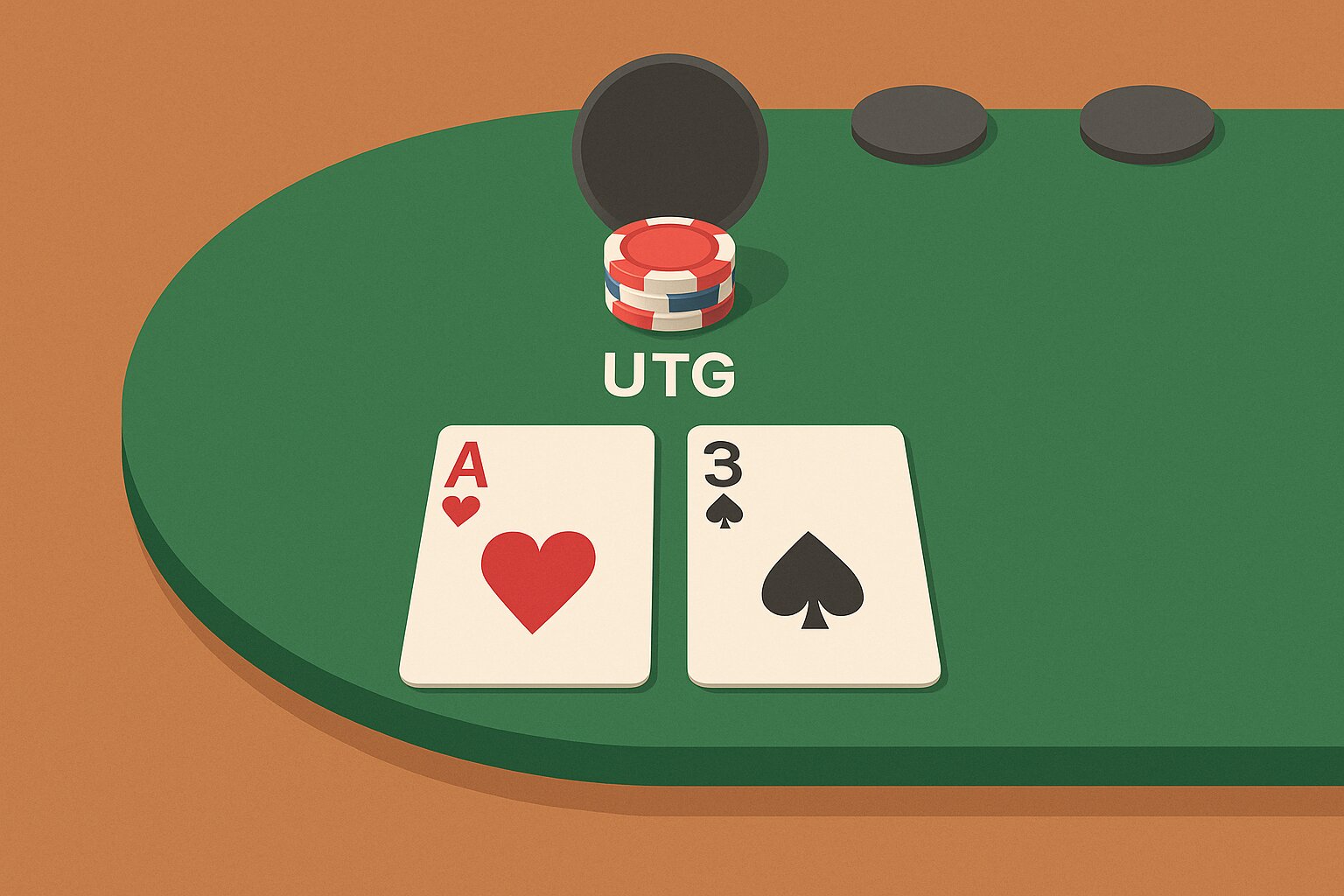
If you've ever played a hand of poker, you may have heard the term ‘Under the Gun’, or UTG. This early seat at the table matters because it dictates when you act in the betting round.
Knowing what UTG means helps you make clearer choices from the very start of a hand. Whether you are learning the basics or brushing up on position play, understanding UTG gives you a practical edge in how you approach each decision.
Play should always stay within your limits. With that in mind, this guide looks closely at UTG, what it means, and how it influences the rest of the hand.
What Does Under the Gun Mean in Poker?
‘Under the Gun’ refers to the seat immediately to the left of the big blind. In games such as Texas Hold’em and Omaha, this player is the first to act when betting begins before the flop.
Being first to act shapes the information you have available. You must decide without knowing how others will respond, which makes the position inherently more cautious. It is simply a label for the order of play rather than a judgement on skill or outcome.
Knowing who is UTG at your table makes it easier to follow the rhythm of each hand and to anticipate how subsequent positions will react.
Why Is Under the Gun Considered Early Position?
Early position describes seats that act near the start of the betting sequence, and UTG is the earliest of these. After the blinds have posted, the player to the left of the big blind begins the action, so they act with less information than those later in the rotation.
This limited information raises the level of uncertainty. You do not know whether players to your left will fold, call, raise, or re-raise. Because of that, decisions from UTG usually require more selectivity and awareness of the table state.
Understanding the label “early position” gives context to why playing from UTG often involves tighter choices and an expectation of facing more opponents before the action returns to you.
How Does Being Under the Gun Affect Your Options?
Acting first changes the range of sensible options. Without knowing how others will behave, players in UTG typically favour hands that perform well against multiple opponents and that hold value through later betting rounds.
The practical implications include being more cautious with speculative hands, since the chance of facing raises or several callers is higher. You may find yourself folding more often or choosing hands that can stand up to pressure when the flop appears.
This position can also influence the size of bets you consider. Knowing you will face players with more information encourages measured choices that keep subsequent decision-making flexible.
Now that we have covered what UTG looks like in practical terms, it helps to address some common misunderstandings before moving on to how UTG sits among other seats.
Common Myths About the Under the Gun Position
Several misconceptions about UTG persist and can affect how players approach the seat. One myth says UTG is a seat that automatically brings poor results. In truth, UTG is simply early position; success depends on how you adapt your choices to that role.
Another myth suggests aggression from UTG is always necessary. While the first to act can sometimes apply pressure effectively, many experienced players prefer selectivity and patience in this seat. A different misconception is that only advanced players should occupy UTG. Every player will find themselves in early position, and gaining familiarity with it is part of developing sound play.
Finally, the idea of a single trick or formula for UTG is misleading. The best approach is situational: consider the table, stack sizes, and how opponents have behaved. Clearing up these myths helps you make decisions that fit the reality of the position.
From here, it is useful to see how UTG connects to the rest of the table and why position order matters.
Table Dynamics: How Under the Gun Relates to Other Seats
UTG is the start of the betting sequence. After UTG acts, play moves through middle positions and into late positions, with each seat gaining more information before they act. This shifting information advantage affects hand selection and strategic options.
Late positions benefit from seeing much of the table’s reaction, allowing for more flexible plays such as speculative calls or well-timed raises. Middle positions sit between these two extremes and adjust their choices depending on how UTG and later players behave. The blinds have already invested chips but act toward the end of the round, which also shapes the way they respond.
Recognising how each seat feeds into the next clarifies why UTG decisions set the tone for the hand. With that perspective, you can better weigh when to be conservative and when to apply pressure.
Key Mistakes to Avoid When Acting Under the Gun
Common errors in UTG stem from the seat’s demand for careful judgement. One frequent mistake is playing too many hands; wide ranges often encounter trouble when several opponents still have to act. Another is moving too quickly without considering how the table makeup might affect later betting.
Failing to account for stack sizes and table tendencies can also lead to poor choices. For example, speculative holdings that look acceptable in late position become riskier from UTG if you expect multiple callers. Emotional decisions are another hazard; letting frustration push you into marginal plays usually makes outcomes harder to manage.
Being aware of these pitfalls helps you maintain control over your play and make clearer, more consistent decisions from early position.
How Can Understanding Early Position Improve Your Game?
Grasping what early position means gives structure to your decision-making. It encourages you to select hands that perform well against many opponents and to think about how your actions influence the hand’s later stages.
This awareness supports steadier bankroll management and helps you set sensible boundaries during play. As you become more comfortable reading the table and adapting your choices, your overall game becomes more coherent. You may find that smaller, well-timed adjustments to how you act from UTG produce clearer results than dramatic changes in style.
Taken together, understanding UTG and early position contributes to a more informed, controlled approach at the table and makes each session easier to manage.
Final thought: learning the patterns of position, starting with UTG, gives you practical tools to make steadier decisions and to enjoy poker on your own terms.
**The information provided in this blog is intended for educational purposes and should not be construed as betting advice or a guarantee of success. Always gamble responsibly.