
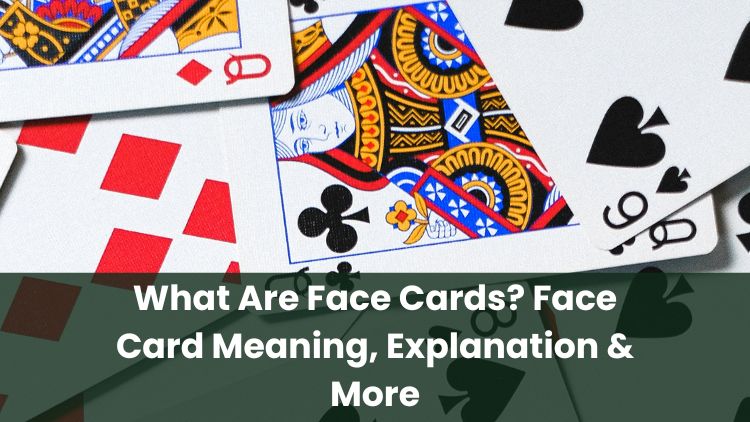
Face cards appear in many card games and are easy to recognise due to their distinctive portraits. They show people rather than numbers, which sets them apart in a deck. Depending on the game, they might play a notable part in how rounds develop.
Understanding which cards are face cards and why they matter helps newcomers follow play more easily. This guide covers the basics, including their position in the deck, typical significance, and their use in popular games like poker and blackjack.
By the end, you will see how these familiar illustrations influence the flow of many card games.
Which Cards Are Considered Face Cards?
In a standard 52-card deck, certain cards are distinct because they depict people. Each suit—hearts, diamonds, clubs, and spades—contains three of these illustrated cards. Their appearance makes them easy to spot, and they often have a particular standing in gameplay.
Noticing which cards are different from the numbered ones may help you follow hands more clearly. Unlike numbered cards, these are recognised by both rank and portrait.
Jack, Queen, King Explained
Each suit has three face cards, though the first mention here keeps the focus on identification rather than their impact. Later sections expand on their functions.
Jack: Usually shows a young courtier and is positioned just above the 10 in rank. Historically, it was sometimes called a “knave.” Modern decks denote it with a “J.”
Queen: Follows the Jack and precedes the King. Typically represented with the letter “Q,” she is portrayed as a female royal, often holding items like sceptres or flowers.
King: The highest-ranking face card in each suit, marked with a “K.” Kings are usually illustrated with crowns and symbols of authority, such as swords.
Why Are Face Cards Important in Card Games?
While face cards were introduced earlier mainly as illustrations, they carry added weight in gameplay. In some games, they might influence outcomes more strongly than most numbered cards. For instance, sequences like 10-J-Q or J-Q-K can appear in certain games and may be useful for forming specific combinations.
Some games give face cards particular roles that can affect a round or scoring. For example, in certain solitaire variations, a King is needed to begin a foundation. Recognising these cards helps players follow hands and anticipate potential developments.
Even casually, players might respond differently to face cards because of their distinct portrayal, which can subtly affect decisions at the table.
Do Face Cards Have Special Roles in Casino Games?
In casino-style play, face cards often have set values or functions that influence outcomes.
Blackjack: Each face card is worth ten points. For instance, a King combined with an Ace forms what is commonly known as a natural blackjack, usually the strongest hand in a round.
Baccarat: Face cards and tens count as zero. Only the last digit of a hand matters, so multiple face cards might still yield a low total.
Other table games may use face cards to complete pairs, straights, or other combinations. Some house rules even assign them additional functions, such as forcing players to draw extra cards or activating bonus features. Knowing these roles ahead of time helps players understand why certain hands may have higher potential.
If you choose to play casino games, it is advisable to set personal limits and to seek support if gambling starts to feel problematic. Organisations such as GamCare and GambleAware offer free, confidential guidance.
How Are Face Cards Used in Poker and Blackjack?
Here, the discussion expands on face card values and their influence on hands, building on earlier mentions.
Poker
In many poker variants, face cards rank above numbered cards. Hands that include Kings, Queens, or Jacks often outrank lower-ranked hands. Certain combinations highlight their importance:
- Royal flush: 10, J, Q, K, A of the same suit, including three face cards.
- High card: If no other combination exists, the highest face card might determine the winner.
- Straights and full houses: Face cards may complete these hands, forming sequences or sets that could otherwise be incomplete.
Blackjack
In blackjack, every Jack, Queen, and King counts as ten points. This may help reach totals close to 21. Pairing an Ace with a face card forms a natural 21, which usually wins unless the dealer also achieves the same. Knowing these fixed values helps players make decisions about whether to take another card or stay and to consider the likely strength of a hand.
What Symbols and Designs Are Common on Face Cards?
Face cards are decorated with portraits and symbols that hint at rank and role:
- Kings: Crowns, swords, or sceptres.
- Queens: Flowers, jewellery, or sceptres.
- Jacks: Feathers or tools representing service.
Colours and suit marks help distinguish the suits: hearts and diamonds are red, clubs and spades are black. Many decks use double-headed artwork so the card appears the same when turned upside down, reducing the chance of mistakes.
While historical or regional decks may vary, most UK decks follow a standard pattern. The London pattern deck, also called the English pattern, is widely used and ensures cards from different decks may be recognised without confusion.
Play Casino Games Online at Clover Casino
If you’re curious about trying casino games online, Clover Casino is licensed and regulated by the UK Gambling Commission (UKGC). That means the games, account features, and player support on our site meet strict standards for fairness and security.
We offer a wide range of bingo and slot games with clear rules and easy-to-navigate layouts, so you can explore something new or stick with a favourite. To help you manage your time on the site, we provide tools such as deposit limits, session reminders, and self-exclusion options—all accessible within your account.
If this sounds like a good fit, you’re welcome to join Clover Casino, deposit funds, and explore the games at your own pace.
**The information provided in this blog is intended for educational purposes and should not be construed as betting advice or a guarantee of success. Always gamble responsibly.