
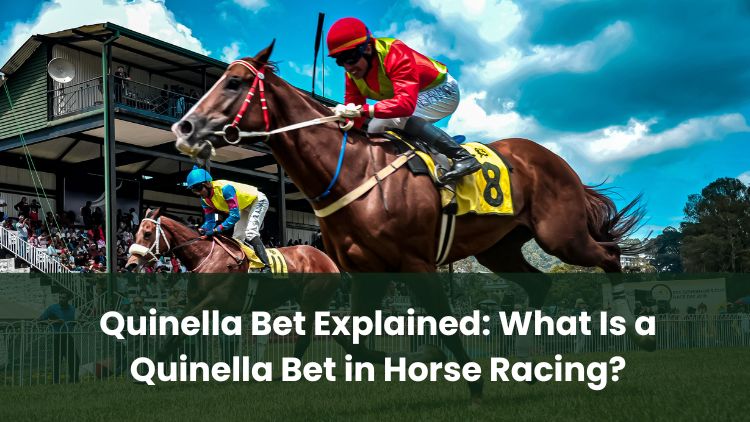
Quinella bets are a popular option for horse racing fans who want something beyond a straight win. They can look complex at first, but the basics are easy to pick up.
This blog post explains how a quinella works, how it compares with forecast and exacta bets, and how payouts are calculated, with a simple worked example.
You’ll also find practical notes on placing a quinella online or in a shop, stakes and minimums, when this bet can make sense, common pitfalls, how odds and results are shown, and key UK legal points around tax. Bet only what you can afford to lose and keep control of your spending.
How Does a Quinella Bet Work?
A quinella bet involves selecting two horses in a single race. For the bet to win, both must finish in the first two places, in any order. It does not matter which one finishes first or second, as long as they fill the top two positions.
This differs from a straight win, as the focus is on pairing two placed runners rather than finding a sole winner. If either horse finishes third or lower, the bet loses.
Quinella markets are commonly available for major meetings, both online and in betting shops. Settlement and returns depend entirely on the official race result.
Curious how that compares with similar two-horse bets? The next section puts them side by side.
Quinella Versus Forecast And Exacta: What's The Difference?
Quinella, forecast and exacta all revolve around predicting the first two finishers, but they handle the finishing order differently.
With a quinella, you pick two horses and they must fill the top two places in any order. A straight forecast requires naming the first and second in the correct sequence. An exacta mirrors that requirement: your chosen pair must land first and second exactly as stated. Some operators offer variations such as a reverse exacta, but the standard exacta is order-specific.
So the key distinction is order. Quinella offers flexibility on sequence, while forecast and exacta demand precision.
With the rules clear, the natural next question is how returns are calculated.
How Are Quinella Payouts Calculated?
Most UK operators settle quinella bets via a pool, often known as Tote betting. All stakes on the race’s quinella market are combined, the operator deducts a published commission, and the remaining pool is shared equally among all winning tickets on the correct pairing.
Because the pool changes as bets come in, the potential return is not fixed. Sites and shop screens usually show a projected dividend, which is the estimated return for a £1 unit based on the current pool and selections. This figure can move right up to the off, then the official dividend is declared once the race result is confirmed.
It is worth checking how the operator presents dividends, whether there are minimum unit sizes, and how any deductions are applied, so you know what to expect before placing a stake.
Step-By-Step Calculation Example
Here is a simplified illustration of a pool-based quinella payout.
Suppose the total amount staked on quinella bets for a race is £1,000. If the operator takes a 20% commission, £800 remains in the pool to be shared among winners. If there are 80 winning tickets on the correct combination, each winning ticket is worth £10, because £800 divided by 80 equals £10. A £1 winning unit would therefore return £10.
Actual returns vary with the final pool and the number of winners, so always check the declared dividend after the result.
How To Place a Quinella Bet Online Or In-Branch?
Online, the process typically starts by heading to the race market and choosing the quinella option. Select the two horses you want to pair for the top two, confirm the stake shown on the betslip, then place the bet. The confirmation screen will show the details and your total outlay.
In a betting shop, a completed slip should clearly show the race, the two horse numbers or names, the bet type as quinella, and the stake. Hand it to the cashier to print a receipt, which serves as proof of your bet.
Whichever way you bet, take a moment to double-check the race and horse numbers before confirming. If you are using our site, the quinella market appears under the race header and your betslip will confirm the unit size and total stake before you proceed.
How Are Stakes, Units And Minimum Bets Handled For Quinella Bets?
The stake is the amount you choose to bet. In pool betting, each unique quinella pairing counts as one unit. If the unit size is £1 and you stake £2 on a single pairing, that counts as two units on that selection.
Operators usually set a minimum per unit, commonly £1, though it can vary. If multiple pairings are added, the total outlay is the sum of all units. It is sensible to match the number of combinations to a budget you are comfortable with.
Knowing how units translate into total stake helps you avoid overspending without noticing.
When Is a Quinella More Suitable Than a Straight Win Or Forecast?
A quinella fits best when two runners look most likely to dominate the finish, but there is no strong view on which of them will be ahead. That often happens when the pair have similar form, recent speed figures, or conditions that suit both.
Compared with a forecast, the quinella keeps both outcomes onside if the two principals could finish either way around. In large, competitive fields, it can also suit scenarios where the top pair stand out from the rest but the exact pecking order is uncertain.
Equally, if your analysis points to a solid one-two between a consistent front-runner and a reliable stalker, the quinella covers both possible sequences without needing to commit to the precise order.
Common Mistakes Punters Make With Quinella Bets
Confusing the quinella with order-specific bets is a regular error. The quinella only cares that your two horses fill the top two spots, not which way around they finish.
Another common pitfall is pairing two short-priced favourites without considering how popular that combination might be. In a pool, widely backed results tend to produce lower dividends because more tickets share the same pot.
Some bettors zero in on the headline contenders and overlook credible alternatives who could split the pair. A quick scan of pace maps, draw, ground preference and late-sectionals can highlight spoilers worth factoring into the assessment.
Practical mistakes matter too. Mis-typing horse numbers, picking the wrong race time, or adding unintended combinations can happen online or in-shop. Slow down, check the slip or betslip summary, and make sure the stake reflects the number of units you intend.
How Do Bookmakers Display Quinella Odds And Results?
For quinellas, bookmakers usually display a projected dividend for a £1 unit rather than fixed odds. You will see this on racecards online and on shop screens, and it may update repeatedly before the off as the pool grows and selections shift.
After the race is made official, the winning pairing is published along with the final dividend. If there is a dead-heat for a place, settlement follows the pool’s stated rules, which the operator publishes in its betting information.
Results and dividends are typically available within minutes on the operator’s site, in-shop screens and standard racing results pages, so it is easy to confirm the outcome of your ticket.
Tax And Legal Notes For UK Punters
In the UK, gambling winnings, including quinella returns, are not taxed as personal income. HMRC does not require individuals to declare profits from betting placed online or in shops.
Licensed operators must follow rules set by the UK Gambling Commission, which cover fairness, security and customer protections. You should only bet with licensed firms, whose licence details are displayed on their websites and in shops.
Keep your betting within a personal budget and take breaks. If you need support, organisations such as GamCare and GambleAware provide free, confidential help. With the essentials covered, you are in a good position to judge when a quinella fits your view on a race and to approach it with clear expectations.
**The information provided in this blog is intended for educational purposes and should not be construed as betting advice or a guarantee of success. Always gamble responsibly.