
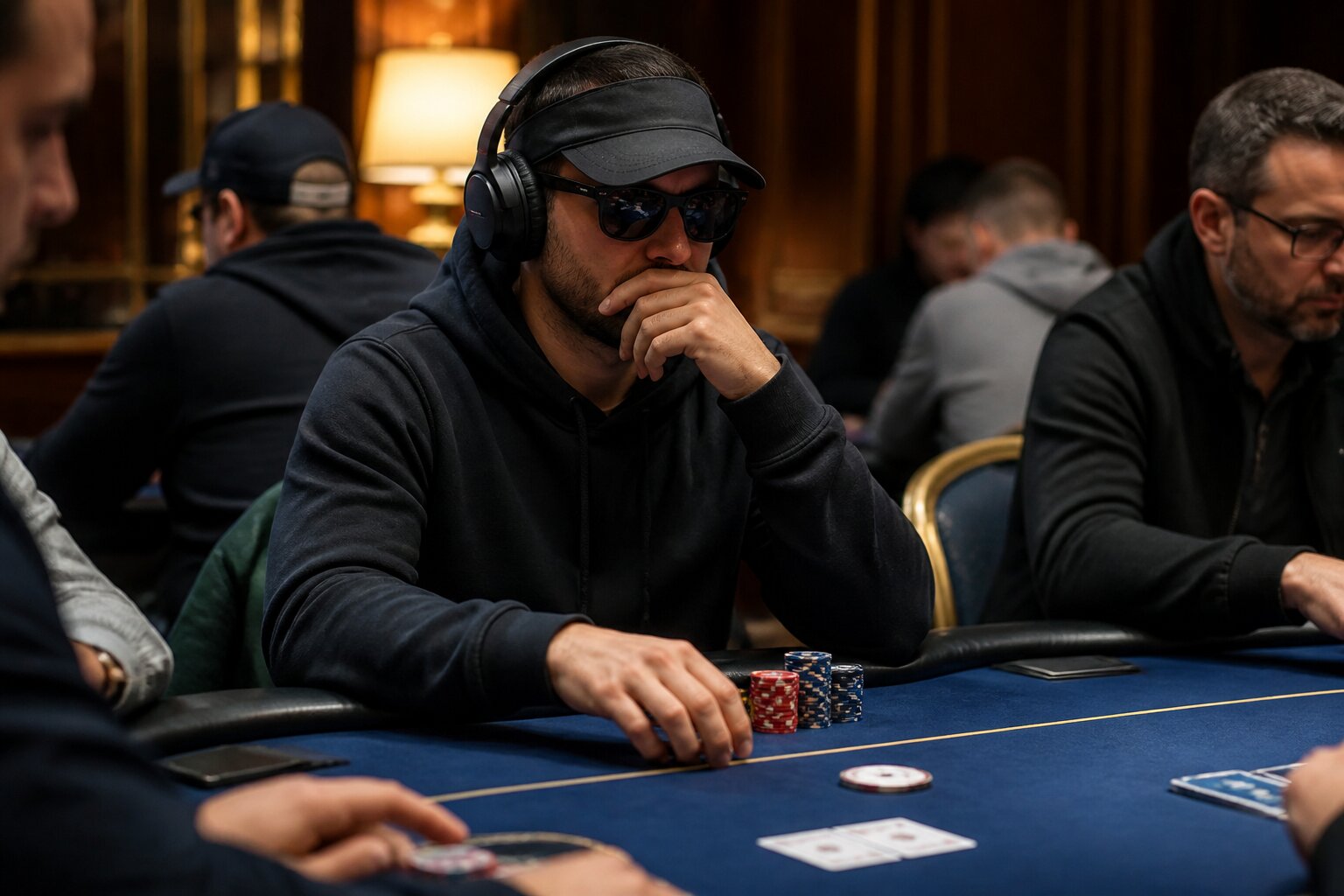
If you’ve watched a poker tournament, you’ll have seen players hiding behind dark sunglasses, pulling down the brim of a visor, or tuning out the table with chunky headphones. These items are a common sight, from televised events to local games.
They aren’t just fashion statements. Each accessory serves practical and psychological purposes that affect how a player feels and how opponents perceive them. This article explains the reasons behind the trend and what to consider if you decide to use them at the table. Please remember to play within sensible limits and treat poker as entertainment.
Do Sunglasses Give Poker Players an Advantage?
Sunglasses can change the dynamics of a hand, but they do not alter the fundamentals of poker strategy. By obscuring the eyes, they reduce the cues opponents might use when trying to size up a player. That can make it harder for others to read reactions linked to surprise or hesitation.
At the same time, sunglasses can interfere with the wearer’s vision in certain lighting and make it harder to read the board or nearby players. Some venues limit their use at crucial moments to ensure clear communication and fairness. In short, sunglasses can be a useful tool for some players, but they are not a substitute for sound decision-making and table awareness.
A player should weigh the small psychological benefit sunglasses can provide against potential downsides such as reduced vision or strained interactions with others at the table.
The Psychological Impact of Sunglasses at the Table
The decision to cover the eyes often comes from wanting to feel less exposed under pressure. Sunglasses can lower social anxiety, making it easier for a player to maintain composure during tense hands. That steadiness can help with consistent decision-making across a long session.
Conversely, sunglasses introduce a social distance. Since poker relies on a mix of competition and social cues, hiding the eyes can reduce rapport or make other players more suspicious. That change in table atmosphere can be an advantage for some and a disadvantage for others, depending on the style of play at that table.
Sunglasses are therefore as much about self-regulation as concealment. They alter emotional state as well as signalling, and those effects vary by individual and setting.
Why Are Visors Popular Among Poker Players?
Visors offer a simple, practical benefit: they control light without covering the eyes completely. In bright rooms or under strong overhead lamps, a visor reduces glare and helps a player see chips, cards and community cards more comfortably.
They also provide a middle ground between no headwear and a full cap. Visors preserve peripheral vision while giving the wearer a sense of personal space, which can help sustain focus during long sessions. Because they are less obtrusive than sunglasses, visors tend to be more socially neutral at the table.
For players who prioritise sightlines and comfort, a visor can be an effective, unobtrusive choice.
How Do Headphones Affect Focus and Gameplay?
Headphones are commonly used to manage the environment rather than conceal information. In busy rooms, music or ambient sound can block distractions and help a player keep a steady pace. Some players use them to maintain routine; others find a familiar soundtrack aids concentration during lengthy stints.
There is a trade-off: over-immersion in audio can detach a player from table dynamics. Important verbal announcements and dealer instructions might be missed, and opponents can exploit a distracted player. Many venues expect players to remain reachable and responsive, so those using headphones often keep one ear free or use lower volumes.
Used thoughtfully, headphones can support sustained focus without cutting a player off from the practical needs of live play.
Are There Any Rules About Wearing Accessories in Poker?
Rules around sunglasses, visors and headphones vary by venue and event. Most card rooms permit them, but some restrict their use during televised play or when a player is involved in a key hand. The aim is to ensure clear communication, accurate broadcasting, and fair play.
Headphones are more frequently subject to limits because they can prevent a player from hearing essential announcements. Dealers or floor staff may ask players to remove headsets at certain times to confirm bets or rulings. Before you sit down, it is sensible to check the room’s expectations so you avoid surprises.
Being aware of local rules helps keep play smooth and fair for everyone at the table.
Common Misconceptions About Poker Accessories
A number of myths surround table accessories. One is that they guarantee better results for the wearer. In reality, success in poker depends on reading the game, making informed decisions, and adapting to opponents; accessories only influence perception and comfort, not mathematical outcomes.
Another misconception is that accessories eliminate all tells. While they can hide some facial cues, body language, timing and betting patterns still reveal information. Accessories can be one part of a psychological approach, but they cannot replace technical skill.
Finally, using headphones or a visor is not a reliable indicator of ability. Players of every skill level wear them, and motives range from habit to comfort to a deliberate psychological tactic.
Should You Wear Sunglasses, a Visor, or Headphones When Playing Poker?
Deciding what to wear at the table comes down to personal preference and the context of the game. Consider these points as you choose:
Personal Comfort
Think about what helps you maintain focus without impairing vision or awareness. A visor can protect against glare while preserving sight; sunglasses may help reduce anxiety; headphones can filter distractions. Choose what supports sustained, clear thinking.
Awareness and Etiquette
Keep one ear or eye open enough to catch announcements and dealer instructions, and be mindful of how your accessories affect other players. Accessories should not intentionally obstruct the flow of the game or create confusion.
Responsible Play
Make choices that support your enjoyment and wellbeing. Poker is a form of entertainment and should be approached with clear limits and sensible expectations.
If you select an accessory, match it to the setting and the rules of the room. With the right balance of comfort, awareness and respect for others, accessories can be a small but useful part of your approach to the game.
**The information provided in this blog is intended for educational purposes and should not be construed as betting advice or a guarantee of success. Always gamble responsibly.