
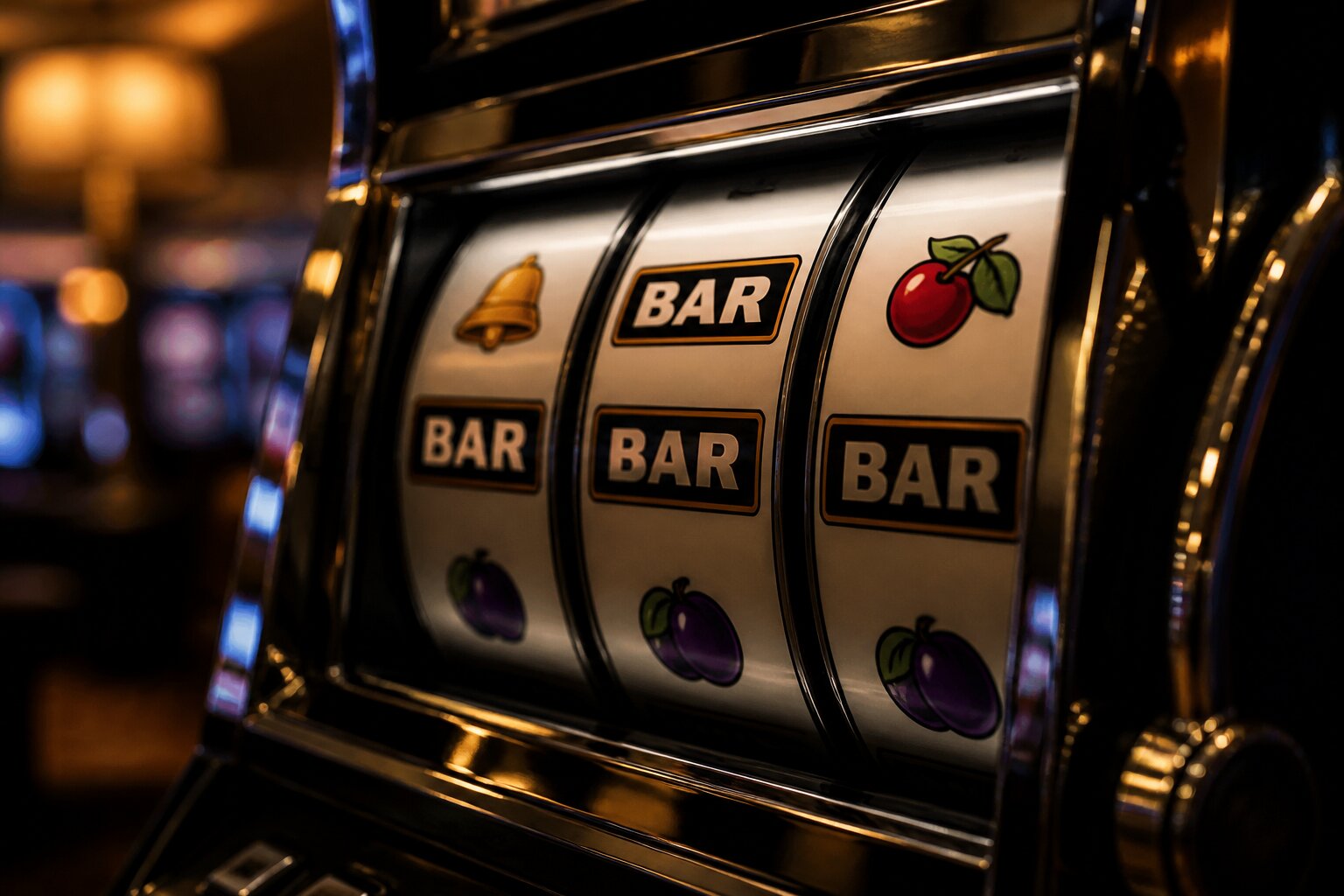
If you’ve ever played a slot machine, whether in a lively casino or online, you’ve probably noticed the BAR symbols spinning across the reels. Have you ever paused to wonder what those simple rectangles stand for?
The BAR symbol is one of the most recognised icons in slot games, sitting alongside cherries, sevens and bells. Its story links the machines we play today back to an earlier era of gambling and advertising.
In this post we explore where the BAR came from, how it compares with other classic symbols and why it remains a familiar sight on reels around the world. Read on to discover the history and meaning behind the BAR, and why it still matters to players.
What Does The BAR Symbol Mean On Slot Machines?
At its simplest, the BAR is a stylised logo rather than a picture of fruit or an object. Early versions were basic rectangles with the word BAR inside. Over time the design evolved into single, double and triple BARs, often shown as stacked bars or as different-sized rectangles that indicate different pay levels.
Visually, BARs are a design choice that helps machines read clearly at a glance. A single BAR might pay a small amount, a double BAR more, and a triple BAR more again. Modern slots can use these variations in many ways: sometimes the different BARs are separate pay symbols, other times they combine with wilds or multipliers in themed mechanics. The important point is that the BAR helps communicate value on the reel without being tied to any special game mechanic beyond the paytable.
You will also see purely graphical takes on the BAR: metallic bars, neon-style strips or brand logos that echo the original shape. These are stylistic updates that preserve the symbol’s recognisability while fitting new game themes.
Where Did The BAR Symbol Originate?
The BAR symbol traces back to the early 1900s in America, when many machines were known as fruit machines and prizes were often non-cash items. The Bell-Fruit Gum Company used machines as a way to distribute chewing gum, and its logo — a rectangle resembling a stick of gum — appeared on the reels. Players traded the machine’s outcomes for gum, so the company’s mark became a familiar symbol of winning.
As cash prizes replaced gum, the rectangular logo remained because manufacturers and players were used to it. Its advertising origin explains why the BAR is not a fruit icon but a logo that slipped naturally into game design. What began as a commercial mark became an enduring part of slot imagery, carried forward into both mechanical machines and the digital slots of today.
BAR Symbols Compared To Other Classic Slot Icons
BARs often share the reels with cherries, bells and sevens, and each symbol brings a different historical note. Cherries and other fruit reflect the earliest payout mechanics that used sweets and fruit prizes. Bells recall the Liberty Bell machine, one of the seminal early models in the industry. Sevens became common later and are widely recognised as a high-value symbol.
Where symbols once hinted at prize types, they now function mainly as visual shorthand for payouts and game style. Unlike the BAR’s advertising origins, fruit and bell imagery owe their presence to the practical payoff systems of early machines. In modern game design, these symbols are mixed and matched to suit a game’s theme, creating a familiar aesthetic that many players find appealing.
If you remember the BAR’s advertising roots from the previous section, this helps explain why the symbol feels different from fruit images: it started not as a depiction of a prize but as a brand mark.
Are BAR Symbols Still Used In Modern Slots?
Yes, BARs remain a common feature in both physical and online slots. Some games lean into a classic look, keeping single, double and triple BARs as core symbols, while others rework the idea into contemporary art styles or theme-specific logos. Developers use the BAR both as a nod to slot history and as a clear way to structure paytables.
Design changes do not alter how outcomes are determined. Modern regulated games use random number generation and meet oversight standards to ensure fairness. That means the presence or styling of a BAR does not change the underlying odds of a game; it is a design and payout element rather than a factor that affects result generation.
If you move between regions you might notice stylistic differences. Fruit machines in British pubs often preserve a particular look, while casino floors in other countries may favour different symbol mixes or additional variations of BAR-style icons suited to local tastes.
Common Myths About The BAR Symbol
Several myths surround the BAR, and separating them from fact makes the game clearer and less confusing. One persistent idea is that seeing BARs frequently means a machine is “hot” or will soon pay out more. In reality, machines are designed so that previous spins do not influence future outcomes, and symbols do not carry special triggering powers.
Another misconception is that a combination of BARs somehow signals a larger prize is incoming. Any pattern you notice is a result of random outcomes and paytable structure rather than a coded message from the machine.
A final myth is that BARs make a slot inherently easier or better. While a BAR-led design can suggest a classic, straightforward paytable, the actual odds, return-to-player and volatility depend on the game’s internal settings and mechanics, not on whether BARs appear on the screen.
Why Is The BAR Symbol So Recognisable?
The BAR’s longevity comes down to a few practical strengths: a simple, high-contrast shape that reads easily on small reels; an origin tied to mass-produced machines; and repeated use across generations of games. Those factors combined to make BARs an instantly identifiable part of slot design.
Because the BAR links modern games with their early mechanical ancestors, it carries a nostalgic value for many players and a clear visual language for designers. Developers who want to evoke a traditional feel will use BARs to signal “classic slot” while still building modern features around them.
In short, the BAR survives because it works as both a visual cue and a piece of slot history. It helps players understand a game’s style at a glance and provides a familiar anchor as themes and graphics change.
This article has explained where the BAR came from, how it functions on the reels and why the symbol endures; if you enjoy classic slot aesthetics, spotting a BAR is a little reminder of the game’s long history.
**The information provided in this blog is intended for educational purposes and should not be construed as betting advice or a guarantee of success. Always gamble responsibly.