
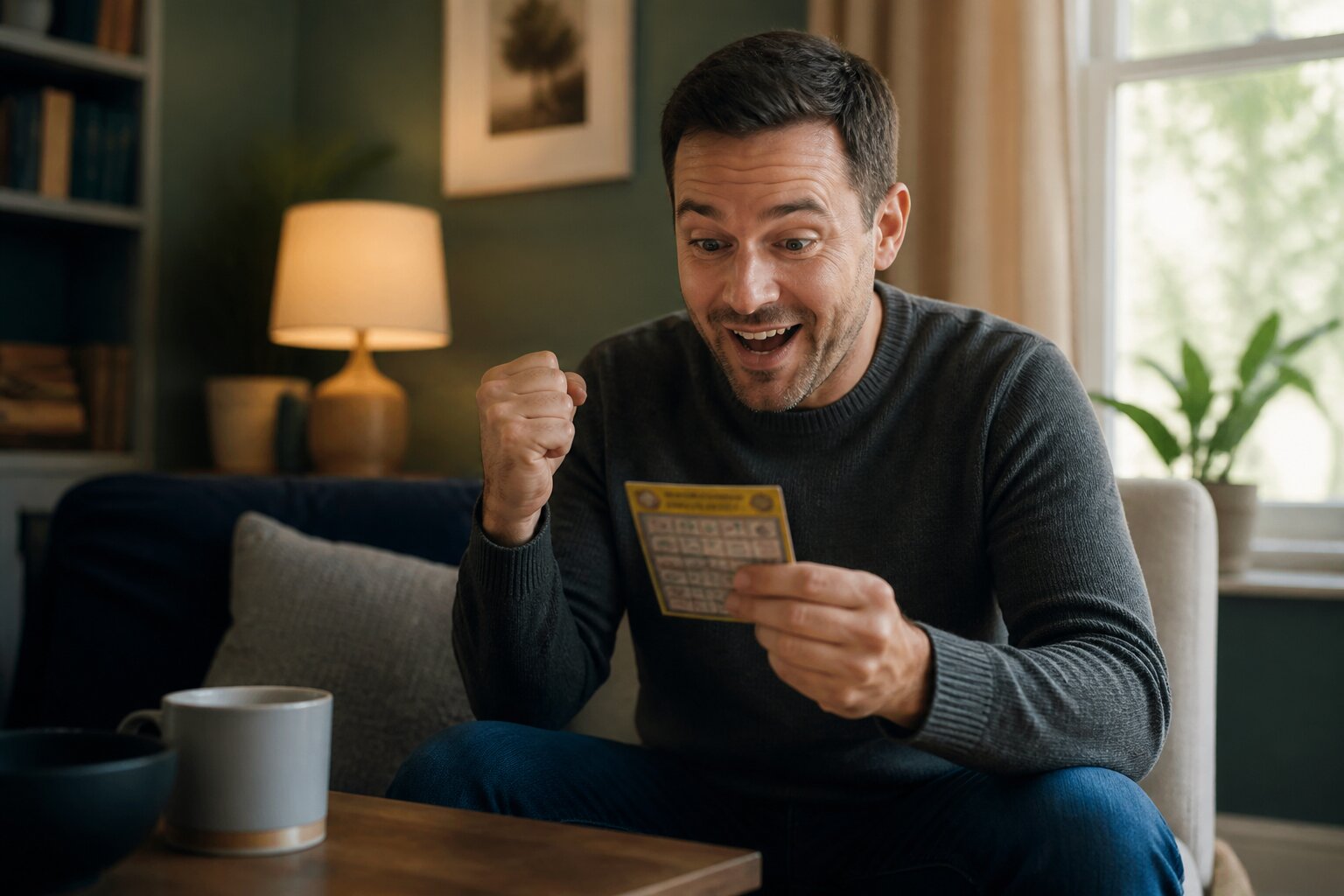
Ever stood in a shop, scratch card in hand, wondering whether this could be the one that pays out a life-changing sum? Stories about huge wins are common, but the reality is more about probability than headlines.
Scratch cards offer quick, straightforward play and the chance to win prizes instantly. If you want to understand what the numbers really mean for your pocket and expectations, read on—this guide walks through how the games work, what the odds mean, and what to expect if you do win.
How Do Scratch Cards Work?
Scratch cards are instant-win games sold in shops and online, typically for a small price. Each card has a play area covered by a removable film. When you scratch off the coating, symbols, numbers or prize amounts beneath are revealed. Many cards require matching three symbols or identical amounts to claim a prize, and some include bonus areas or special symbols for extra rewards.
Every physical card is printed with a result already determined, and each digital card result is generated when played. That means you cannot influence the outcome once you hold the card or open the game. The outcome is established before a purchase is completed.
These games are intended as entertainment. Set a budget and stick to it; only spend what you can afford to lose. With that in mind, the next section explains precisely how the odds published on the cards translate into real chances of winning different prizes.
What Do the Odds Show About Winning Big?
Odds printed on scratch cards indicate the statistical likelihood of finding a winning ticket among all those printed for that game. They typically refer to the chance of winning any prize, which combines small amounts with larger prizes. For a common £2 card, the overall odds of winning any prize might be around one in four, but that figure masks a wide spread of possibilities.
Smaller prizes—refunds, a few pounds, or free plays—make up the bulk of wins and occur much more frequently than the highest prizes. The odds of landing a top prize, for example £100,000, can be several orders of magnitude longer. In some games, the top prize may appear only once in a few million tickets. That means buying many tickets still produces the same individual odds for each card. Mathematically, purchasing multiple tickets increases the number of independent chances but does not change the per-ticket probability.
Understanding payback percentage helps put odds into context. A game with a headline payout rate of 60% returns, on average, £60 in prizes for every £100 taken in, but that return is distributed unevenly—few players will collect a large share while many receive nothing or small amounts. With this in mind, the next section looks at how different card types alter prize sizes and odds.
Types of Scratch Cards & Their Payout Potential
Scratch cards vary by price, prize structure and how organisers allocate payouts. Common categories include standard low-cost cards, higher-priced premium cards with larger top prizes, and online progressive games that build a growing jackpot.
Standard cards, typically £1 to £3, offer modest top prizes and relatively frequent small payouts. Their overall payout percentages often fall within a range that reflects steady small prizes and occasional larger ones. Premium cards cost more and usually host much higher top prizes. These can include million-pound tiers, but the odds for those top amounts are very long. Progressive games pool a portion of each ticket sale into a single growing prize, which can reach large sums before being won; the likelihood of winning the progressive pool is usually much lower than for fixed-prize cards.
Choosing between types depends on whether the appeal is a higher chance of a small return or the possibility of a very large prize. Whichever type you prefer, remember that the statistical structure of the game determines how often different prize sizes appear. The following subsection contrasts standard and premium cards to make these differences clearer.
Standard vs Premium Cards: What’s the Difference?
Standard cards are designed for frequent, low-cost play. Ticket prices are commonly £1 or £2, with top prizes that might range from a few thousand pounds up to mid-six-figures on some games. These cards tend to give more frequent small wins but very rare top prizes. Their odds of winning any prize are generally much shorter than the odds of claiming the highest payouts.
Premium cards come with higher entry prices, such as £5 or £10, and advertise larger top prizes. Because the prize pool is larger, these games can include more substantial middle-tier prizes and slightly improved odds for mid-level wins. However, the chance of winning the very largest prize remains extremely low. The higher ticket cost increases the financial risk for each play, so players should weigh the trade-off between bigger jackpots and the greater outlay required to play.
Having established the main distinctions between card types, the next subsection explains progressive jackpot cards and how their structure changes the prize dynamics.
Progressive Jackpot Scratch Cards Explained
Progressive scratch cards operate online and add a portion of each sale to a single accumulating jackpot. As more tickets are sold, the pool grows until a winning ticket is drawn or generated and the jackpot is paid out. These games can reach impressive sums, but the rarity of the jackpot win means that a large prize is offset by very long odds.
Because the progressive amount depends on sales volume, the jackpot can fluctuate and is not fixed in advance. Operators normally publish terms that explain how the progressive element works and any rules around the jackpot payout. Given their design, players seeking the progressive prize should be aware they are chasing an infrequent outcome and that the overall return profile differs from fixed-prize cards.
Next, the article explains how outcomes are determined and why predictability is not possible.
Are Scratch Card Winnings Really Random?
Yes. Physical scratch cards are printed with a mix of winning and losing tickets and distributed without a pattern that can be tracked by retailers or players. The order in which cards reach shops bears no relationship to the prize structure. For digital games, licensed operators use random number generators to produce results at the moment of play. These systems are subject to testing and certification by independent laboratories to confirm fairness.
Regulatory oversight requires operators to adhere to strict standards that ensure the integrity of the games and that payout percentages match published figures. The combination of regulated printing, distribution practices and certified random number generation means outcomes cannot be predicted or manipulated by a player or a retailer.
Understanding that outcomes are governed by random processes helps explain why some beliefs about improving chances are unfounded. The next section examines common myths and clarifies why they do not change the mathematics of a game.
Common Myths About Scratch Card Chances
Several persistent myths suggest ways to improve the chances of winning, but the underlying processes make these ideas incorrect.
One frequent belief is that buying multiple cards from the same roll increases the likelihood of finding a big prize. In reality, each card is an independent chance; the printed distribution of winners across all sold cards determines overall availability, but no purchase order changes an individual card’s outcome.
Some players assume particular shops or regions are more likely to sell winners. Distribution is handled so that winning tickets are spread without a detectable pattern, so a retailer’s location does not affect a card’s chances.
Other myths claim that a run of non-winning cards makes a winning card more likely next, or that scratching in a certain style will reveal better results. Because results are set before sale or generated at play time, previous outcomes do not influence future ones. Believing otherwise can encourage unnecessary spending in search of patterns that do not exist, so keeping expectations aligned with the game’s statistical nature helps avoid overspending.
Having addressed misconceptions, the following section covers what to expect if a winning ticket is found.
What Happens If You Win?
How you claim a prize depends on the amount and whether the card was physical or digital. Retailers can usually pay small prizes, commonly up to around £100, directly in cash if the shop has sufficient funds. For somewhat larger sums, you may be directed to a post office, retailer’s head office or the operator’s claims service; some outlets can process mid-range claims on behalf of the operator.
Major prizes require formal claims, which include completing a claim form and providing proof of identity and age. Operators verify large wins before releasing funds, typically settling payments by bank transfer or another secure method. For online wins, smaller prizes usually credit automatically to a player account, while larger amounts trigger identity checks and formal verification.
Claim deadlines apply, often in the order of months from the date of the ticket or the win, so keeping the card and any purchase receipts safe is important. Legal age restrictions apply to both buying and claiming, so providers will ask for identification as part of the verification process.
With the practicalities of claiming explained, you can now gauge whether scratch card play fits your expectations and budget, and make informed choices about the types of games you prefer.
**The information provided in this blog is intended for educational purposes and should not be construed as betting advice or a guarantee of success. Always gamble responsibly.