
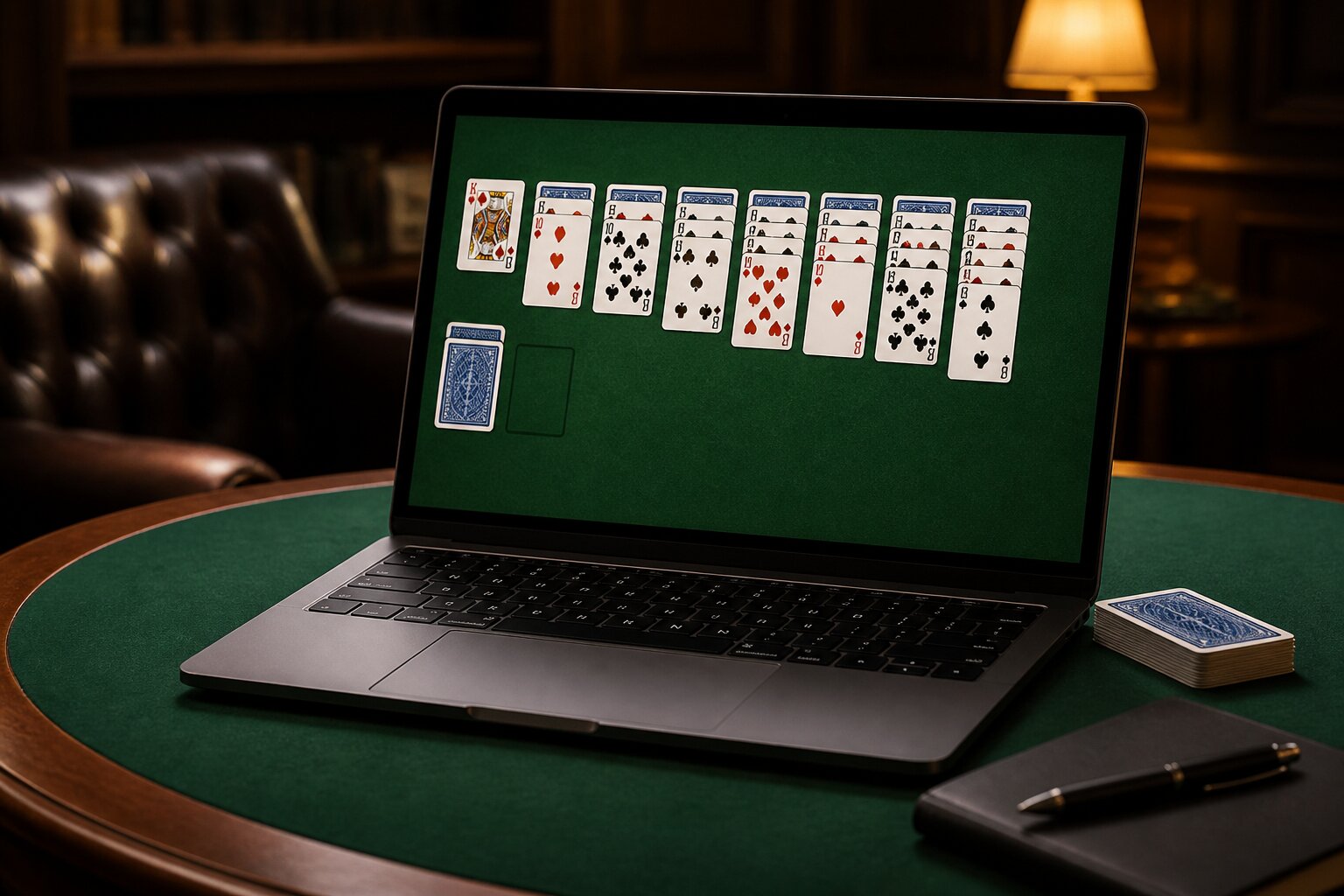
Ever wondered how card counters get so good at tracking the cards in blackjack? The answer is practice—and plenty of focused repetition. Practising in a casino can be costly and uncomfortable, so many people turn to online simulators to develop their skills at home.
A card counting simulator recreates the flow of blackjack rounds and gives immediate feedback, so you can see where you make mistakes and where you improve. It’s a practical, low-pressure way to learn the mechanics and sharpen the speed and accuracy that card counting demands.
If you want to understand what these tools do and how to use them effectively, the next section explains the simulator in plain terms and sets the scene for how it will help your technique.
What Is a Card Counting Simulator?
A card counting simulator is a digital training tool that recreates blackjack play to let users practise tracking the cards without wagering real money. It presents virtual decks, deals cards in sequence and shows the running count as the round progresses, replicating the rhythm and visual cues of a live table.
The simulator’s aim is educational: it helps users learn counting systems, refine their timing and test accuracy. Many offer adjustable options such as the number of decks, the speed of dealing and different counting systems, so you can practise at a level that matches your experience.
Good simulators provide clear feedback on performance — for example, accuracy scores or post-round summaries — so you can pinpoint mistakes and measure improvement. This creates an efficient learning loop where each session builds on the last. Next, we’ll look under the bonnet at how these tools work in practice.
How Does a Card Counting Simulator Work?
At its core a simulator uses a virtual deck and a randomiser to deal cards in a sequence that resembles live play. As cards are dealt, you observe and update a running count according to the system you have chosen. Some simulators show the running count only after you submit a response, while others display ongoing metrics so you can compare your tally to the true count or to ideal play.
Many simulators also calculate a “true count” when multiple decks are in use, converting the running total into a figure that reflects the remaining deck composition. This is important for strategies that require adjusting to deck depth, and effective simulators let you switch between running-count-only modes and true-count practice.
The software keeps track of your speed and accuracy and can display trends over time, such as hit rates at certain speeds or common miscounts. That data helps you target specific weaknesses. With these mechanics in mind, the next section describes the features you should expect from a quality simulator.
Essential Features of a Quality Card Counting Simulator
A high-quality simulator aims to mimic the visual and timing cues of a real blackjack table while staying focused on training goals. Clear card graphics, realistic dealing intervals and an intuitive table layout help you practise under conditions that test both concentration and timing.
Immediate, actionable feedback is vital. This might come as post-round summaries, accuracy percentages or error highlights that explain why a count went wrong. Those tools shorten the learning curve by turning mistakes into teachable moments rather than just marking them as failures.
Customisation is also important. Look for options that let you change the number of decks, alter dealing speed and select different counting systems so practice stays relevant as skill improves. Some simulators also include drills specifically for speed or for practising the true-count calculation, which can be useful once basic accuracy is established.
Clear guidance on safe use and age restrictions should be visible, and training content must be presented as informational rather than a route to financial gain. With the right feature set in hand, practising online can deliver several advantages over learning in person.
Advantages of Practising Online Versus in Person
Practising online is more convenient and private than trying to learn at a live table. You can fit short, focused sessions into a busy schedule, reduce the stress that comes from being watched, and repeat particular scenarios without needing to wait for them to happen naturally.
Simulators offer controlled environments where you can increase difficulty in small steps and receive instant corrective feedback — capabilities that are cumbersome to replicate in a casino. They also allow you to experiment with multiple counting systems and see comparative results, which helps decide which method suits your pace and memory style.
Because practice uses no real money, it avoids the financial pressure that often interferes with learning. That environment encourages deliberate, repeatable training that you can tailor to gradually increase complexity. Having explored the advantages, we’ll now consider the main counting systems commonly practised online.
Types of Card Counting Methods Practised Online
Online simulators support a range of counting systems so users can match training to their goals. Each method balances simplicity and precision differently, and simulators typically offer modes that help you learn both the counting values and how to apply them during play.
Hi-Lo System Explained
The Hi-Lo system assigns simple integer values to cards: high cards such as tens and aces score -1, low cards like twos through sixes score +1, and sevens, eights and nines count as 0. As the cards are dealt you keep a running total. When playing with multiple decks, that running total is converted into a true count by dividing by the number of decks remaining; that adjusted figure helps indicate when high cards are more prevalent in the remaining shoe.
Hi-Lo is popular because its simplicity makes it easier to maintain accuracy at speed, and simulators often provide specific drills that focus on the true-count step once the running count is comfortable.
Other Popular Counting Systems
Simulators also include systems such as KO, which removes the need for a true-count conversion by using an unbalanced count, and more complex options like Omega II or Wong Halves that assign different weights to specific cards for finer-grained assessments. These systems demand more calculation and memory but can offer greater theoretical precision for those prepared to invest the practice time.
Choosing a system depends on how much time you can dedicate to training and whether you prefer a straightforward method that supports fast, reliable counting or a more intricate technique that trades simplicity for potential accuracy. With systems covered, the next section looks at who benefits most from these tools.
Who Can Benefit From Using a Card Counting Simulator?
Simulators are primarily aimed at adult learners who want to understand card counting mechanics without the pressures of a live setting. They suit people who enjoy problem-solving, want to sharpen observational skills, or simply prefer structured practice rather than learning by trial and error at a table.
Beginners gain from drills that isolate individual skills such as speed or accuracy, while more experienced users can refine true-count calculations or practise switching between strategies. The private format also helps those who find live settings distracting, letting them focus on improving technique in a calm environment.
These tools are not appropriate for minors or people vulnerable to gambling harms; they are designed for controlled educational use by adults. If you fall into a higher-risk group, it is sensible to avoid this kind of training. Next, we’ll address some common myths so expectations stay realistic.
Common Myths About Card Counting and Simulators
There are several misconceptions about card counting and what simulators can deliver. One is that counting is illegal; in most places, learning and using counting skills for personal education is not unlawful, although venues may discourage or refuse play if they detect systematic advantage play.
Another myth is that counting guarantees profit. No system ensures a steady outcome; the variability of card distribution and game rules means results vary from session to session. Simulators help by isolating skill elements, but real-world conditions introduce additional factors that affect performance.
Some believe a simulator alone prepares someone fully for live play. While simulators build essential technique and mental speed, they cannot replicate every live-table element, such as table talk, distractions or the psychological pressure of wagering real funds. Treat simulators as targeted training rather than a complete substitute for broader experience.
Clearing these misconceptions helps set sensible goals for practice. The final sections outline practical ways to structure training so improvement is steady and measurable.
Start Simple and Build Gradually
Effective practice begins with straightforward systems and short, regular sessions that focus on accuracy before speed. Starting with the basics reduces cognitive load, letting the brain encode counting values and recognise card groupings. As accuracy becomes automatic, incremental increases in speed and complexity become more productive.
Set realistic session lengths and frequencies so practice remains consistent rather than sporadic. Regular, short sessions tend to build reliable skill faster than infrequent, long ones. Many simulators include reminders or session controls that help maintain a sustainable routine.
Tracking progress is useful: recording accuracy and average response time shows clear markers of improvement and highlights which elements need more attention. Use simulator feedback to guide this process rather than relying on intuition alone. Practise with defined boundaries and stay within those limits, keeping the focus on learning and controlled development.
Set Realistic Limits
Decide on a practical schedule that fits with other commitments, and choose session durations that leave you alert rather than fatigued. Short sessions reduce error rates and help maintain concentration, which is crucial when learning a new counting method.
Track Your Progress
Keep simple records of accuracy and speed after each session. Over time patterns will show where technique is solid and where further training matters most. Use this data to plan the next stage of practice, whether that is increasing speed, introducing more decks or switching to a different counting system.
Stay Responsible
Training tools should be used by adults for education and skill development within predefined personal limits. Respect those limits and make use of any built-in session controls to avoid over-practice. Practising responsibly keeps the focus on steady improvement and prevents training from becoming harmful.
Consistent, measured practice will lead to improvement; when you are ready, apply what you have learned in contexts that suit your comfort level and objectives.
**The information provided in this blog is intended for educational purposes and should not be construed as betting advice or a guarantee of success. Always gamble responsibly.