
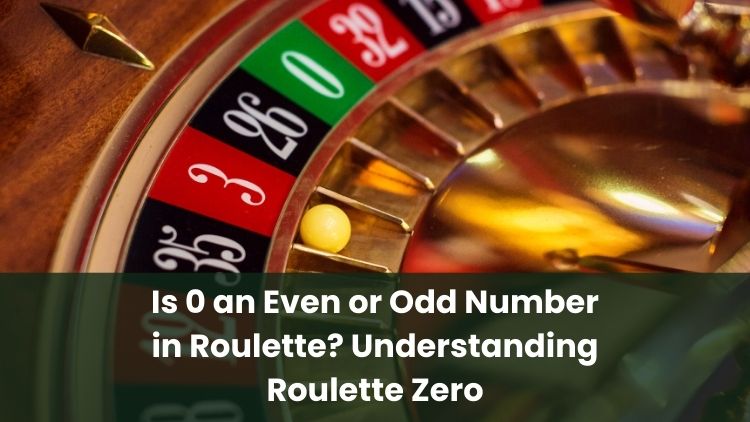
Roulette is one of the most recognisable casino games, yet zero often raises questions. It sits apart on the wheel and on the layout, which leads many players to wonder how it is treated in different bets.
Zero matters because it shapes how even-money bets are settled, alters the range of betting options, and helps define the house edge. Once you know how it works, the rest of the rules make far more sense.
This guide explains how zero is handled on common bets, why it is treated differently, what changes between European and American wheels, and what happens if zero lands. It also looks at how zero influences the house edge so you can read a roulette table with confidence.
How Is Zero Treated On Even/Odd Bets?
Even/odd bets are simple: you back all even numbers or all odd numbers. Zero does not belong to either group for betting purposes. If the ball lands on zero, even/odd bets are not successful.
That same approach applies on both single-zero and double-zero tables. Some tables use special rules that soften the outcome on even-money bets when zero appears. These are covered in the section on en prison and la partage, as they can change how your stake is handled.
So why is zero kept separate from the rest? The next section explains the thinking behind its special status.
Why Zero Is Neither Even Nor Odd In Roulette
Zero has a distinct role in roulette design. While zero is divisible by two in pure mathematics, the game treats it as a separate category, which is why it is excluded from even, odd, red, black, high, and low.
This separation is deliberate. By placing zero outside the usual groups, the game creates outcomes where broad, even-money bets do not cover every pocket. That gap is a key part of the house edge and explains why zero has its own pocket, colour, and set of bets on the layout.
Once you see zero as a feature rather than an exception, the differences between roulette variants become easier to follow.
How Does European Single Zero Differ From American Double Zero?
European and American roulette differ in the number of zero pockets. European wheels have 37 pockets in total, covering 1 to 36 plus a single green zero. American wheels add a second green pocket for double zero, taking the total to 38.
That extra double zero widens the range of outcomes and generally increases the casino’s advantage. You will also notice the layout reflects this difference, with a space for 00 on American tables and additional bets that can include it.
Knowing which wheel you are playing is important, as the version in use affects both available bets and the overall edge. With that distinction in mind, what happens when the ball actually stops on zero?
What Happens To Your Bet When Zero Lands?
If zero lands, most outside bets, such as even/odd, red/black, and high/low, do not win. Some European tables offer rules that change what happens to even-money stakes in this situation, giving a small concession to the player.
En Prison Rule Explained
With en prison, an even-money stake is held on the layout for the next spin instead of being settled immediately when zero lands. If the selection then wins on that next spin, the original stake is returned without profit. If it loses or zero appears again, the stake is lost.
For example, a £10 bet on black is imprisoned when zero lands. If black wins on the following spin, the £10 is returned. If red wins, the £10 is lost. This rule is not universal, so always check the table conditions.
La Partage Rule Explained
With la partage, if zero lands on an even-money bet, half the stake is returned and the other half is taken. There is no follow-up spin for that bet.
Using the same example, a £10 bet on black would see £5 returned and £5 collected by the house when zero appears. Like en prison, availability depends on the table.
Being familiar with these rules helps you understand why some even-money bets feel less punishing when zero arrives.
Bets That Include Zero And Their Payouts
Zero can be backed directly or as part of a small group.
A straight-up bet on zero typically pays 35 to 1 if it hits. You can also split zero with 1, 2, or 3 by placing a chip on the line between the numbers; a winning split typically pays 17 to 1.
On single-zero tables, the trio bets 0-1-2 and 0-2-3 pay 11 to 1. There is also a first four bet that covers 0-1-2-3 together, paying 8 to 1. On American tables, the basket bet covers 0, 00, 1, 2, and 3 and typically pays 6 to 1.
Table layouts can vary slightly, so it is worth checking which zero-related bets are allowed before you start.
Does Zero Affect Red/Black And High/Low Bets?
Yes. Zero is neither red nor black, and it does not belong to the low numbers 1 to 18 or the high numbers 19 to 36. If zero lands, these outside bets do not win.
On some European tables, en prison or la partage may apply to even-money bets when zero appears. If offered, those rules affect how the stake is settled, as explained earlier.
How Zero Impacts The House Edge
Zero is central to roulette’s house edge. On a European wheel, there are 37 pockets. Even-money bets cover 18 of them, so the single zero gives the house an edge of about 2.7%. On an American wheel with 38 pockets, the addition of double zero lifts the edge to around 5.26%.
If a table uses la partage or en prison, the effective edge on even-money bets is reduced because zero is less costly when it appears. On single-zero tables, that reduction typically brings the edge on even-money bets down to about 1.35%.
Zero is not just another pocket; it shapes the odds across the game. Understanding that role helps you read the table, choose your bets, and set your expectations before you play.
If you choose to play roulette, do so with responsible gambling in mind and never wager more than you are willing to lose. Set personal limits that suit your circumstances, take regular breaks, and keep betting as an occasional form of entertainment.
If gambling starts to affect your well-being or your finances, seek support early. Independent organisations such as GamCare and GambleAware offer free, confidential help for anyone who needs it.
**The information provided in this blog is intended for educational purposes and should not be construed as betting advice or a guarantee of success. Always gamble responsibly.