
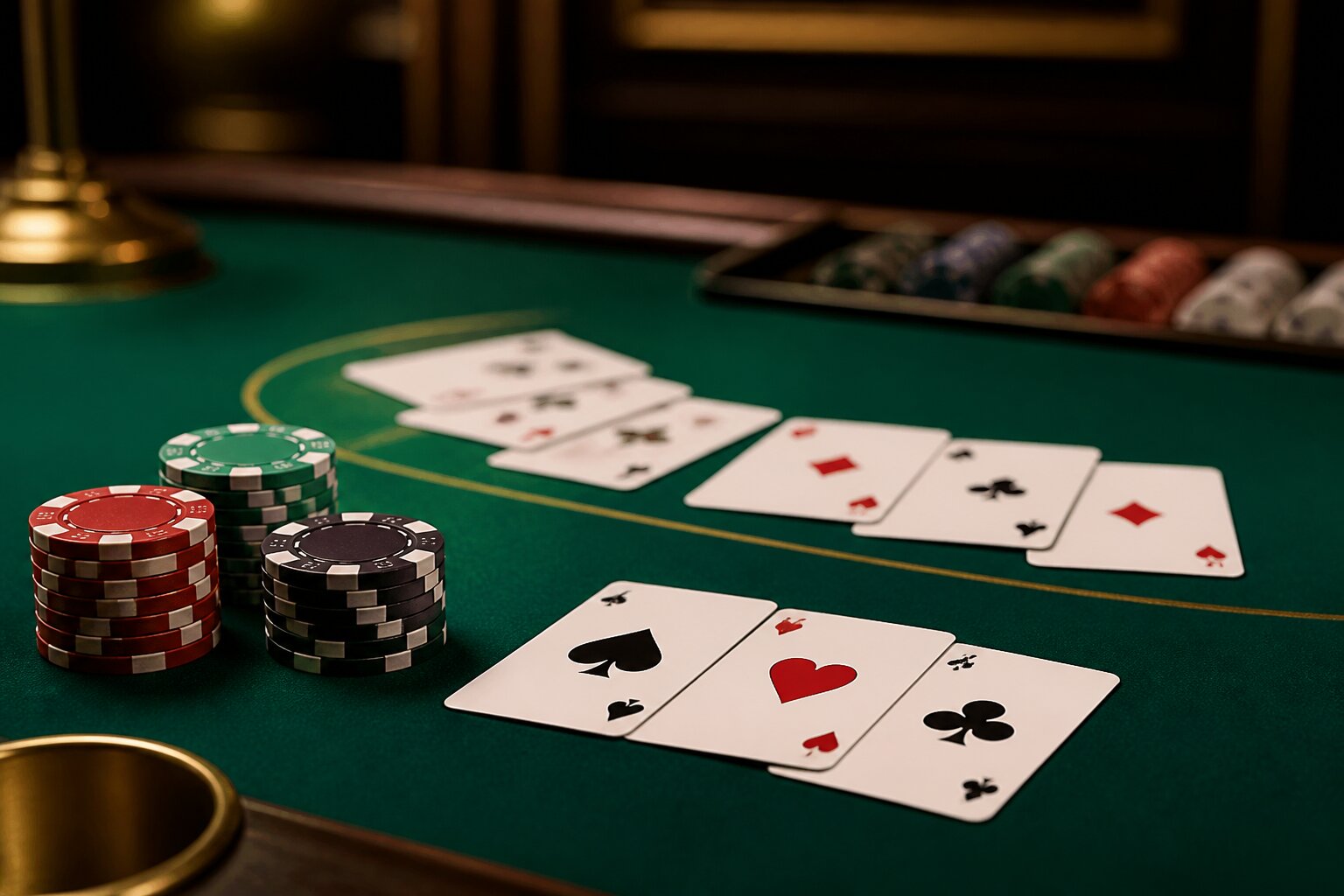
Blackjack is an exciting game with room for extras, and the 21+3 side bet is one that often draws attention. If you’ve noticed this wager at a table or online and wondered what suited trips are, this article will take you through the mechanics, payouts and how the hand compares to other 21+3 outcomes in a clear, practical way.
You don’t need to change how you play basic blackjack to try the 21+3; it’s an optional bet placed before the hand begins. Read on to learn exactly what counts as suited trips, why they pay so highly, and how to weigh the bet against other 21+3 possibilities—so you can decide whether it’s the sort of extra you want to add to your game.
What Is the 21+3 Side Bet in Blackjack?
The 21+3 side bet is an optional wager that evaluates a three-card poker-style hand composed of your first two cards plus the dealer’s face-up card. It sits alongside your main blackjack stake in a separate betting area and does not influence your decisions during the main game.
Payouts are determined solely by the three-card combination and follow familiar poker hand ranks adapted for three cards. Because this bet is independent of the main blackjack outcome, a winning 21+3 hand can occur whether your blackjack hand wins, loses or pushes. Players should be aware of age restrictions and local rules before placing any wagers.
How Do Suited Trips Work in the 21+3 Side Bet?
Suited trips are the top-paying 21+3 outcome because they require the three cards to match in both rank and suit. In multi-deck blackjack—which is the norm in casinos—a player can receive, for example, the queen of hearts from one deck, another queen of hearts from a different deck, and the dealer’s upcard as the same queen of hearts from a third deck; collectively these form suited trips. In single-deck contexts this hand cannot occur, so suited trips rely on games that use multiple decks.
Because suited trips demand an exact rank-and-suit match across three dealt cards, they occur very infrequently. That extreme specificity is the reason casinos reward them with the highest payout among the 21+3 outcomes. Understanding this sets the scene for how casinos price the payouts, which is the next topic.
How Are Suited Trips Formed?
In practice, formation depends on the shoe size. In a six-deck game, there are multiple copies of each rank-suit combination, which makes suited trips possible though still rare. The three cards involved are strictly your two initial cards and the dealer’s exposed card; any later dealings do not affect the 21+3 result. This precise composition is what makes suited trips distinct from other three-card hands.
Why Are Suited Trips So Rare?
The scarcity comes from two constraints at once: all three cards must share the same rank and the same suit, and they must appear within those three specific positions (your two cards and the dealer’s upcard). Even with several decks, the number of favourable combinations is tiny compared with all possible three-card combinations drawn from the shoe. That imbalance between possible combinations and the few that qualify explains the hand’s high payout.
With the mechanics clear, the following section explains how casinos typically reward suited trips and other 21+3 hands.
21+3 Side Bet Payouts Explained
Payouts for 21+3 hands follow poker-style rankings adapted for three cards, with suited trips usually at the top. A common payout table looks like this: suited trips pay 100 to 1, straight flush 40 to 1, three of a kind (same rank, mixed suits) 30 to 1, straight 10 to 1, and flush 5 to 1. So a £1 wager that hits suited trips would return £100 plus the original stake in the standard structure.
Casinos may vary these figures slightly, so it is worth checking the table rules where you play. The payout sizes reflect how frequently each hand appears: the rarer the combination, the greater the payout. Bear in mind that higher payouts are balanced against a larger house edge on these side bets, so they are offered as an occasional high-return possibility rather than a dependable source of profit.
Next, we’ll look at how suited trips compare with the other hands you can make in the 21+3 bet and what that means for choosing whether to play it.
Comparing Suited Trips to Other 21+3 Hands
Suited trips differ from other three-card 21+3 outcomes because they require both identical rank and identical suit across all three cards. A straight flush, by contrast, needs three cards in sequence all of the same suit; three of a kind requires the same rank but permits different suits; a straight is three consecutive ranks of mixed suits; and a flush is three cards of the same suit without sequence. Each of these is progressively easier to form than suited trips, hence the descending payout scale.
This ranking explains why players who chase the highest returns target suited trips specifically, while others prefer the lower-risk hands that appear more often. Deciding which bets to make depends on whether the priority is a chance at a big payout or a steadier, albeit smaller, return. With that in mind, the next section shows where you can find the 21+3 option and what to look for when choosing a game.
Where Can You Find the 21+3 Side Bet in the UK?
The 21+3 side bet is available at many online blackjack tables and at a number of land-based casinos in the UK. Look for a marked 21+3 betting area at the table or a dedicated option in a game’s rules screen online. Availability varies between tables and software providers, so it is sensible to check the specific game details before sitting down.
Playing at regulated sites offers protections: licensed operators are required to provide clear game rules, fair dealing, and player safeguards. Confirm an operator’s regulatory status via the licence information shown on the site if you choose to play online. Knowing where and how the bet is offered helps you decide whether to include it in your play.
Common Myths About Suited Trips and Side Bets
A number of misconceptions surround suited trips and other side bets. One persistent myth suggests that previous hands influence future outcomes; in reality, each deal in a properly shuffled shoe is an independent event, and there is no way to predict or force a suited trips result. Another mistaken belief is that side bets can be turned into a reliable profit source. Side bets typically carry a higher house edge than the main game, so they are not suited to steady income expectations.
Some players think patterns or timing can improve their chances, but no pattern changes the underlying probabilities. Accepting these realities helps set reasonable expectations and keeps play focused on enjoyment rather than unrealistic goals. The next section considers whether chasing suited trips fits into a sensible approach to blackjack.
Are Suited Trips Worth Chasing in Blackjack?
Suited trips appeal because of the substantial headline payout, but whether they are worth betting on depends on what you want from your session. For players who treat the bet as an occasional high-reward feature that adds excitement, the 21+3 side bet can be an entertaining supplement. For those seeking a dependable edge, it is less appropriate: the higher payouts are balanced by much lower hit rates and a larger house advantage.
Keeping wagers small relative to your overall bankroll and viewing the 21+3 as an optional extra lets you experience the thrill without upending your main-game strategy. Setting limits and playing within them preserves the fun while avoiding undue risk. If the occasional big payout is the aim, the 21+3 offers that possibility; if steady, lower-variance play is preferred, sticking to main-game strategies will better suit those goals.
**The information provided in this blog is intended for educational purposes and should not be construed as betting advice or a guarantee of success. Always gamble responsibly.