
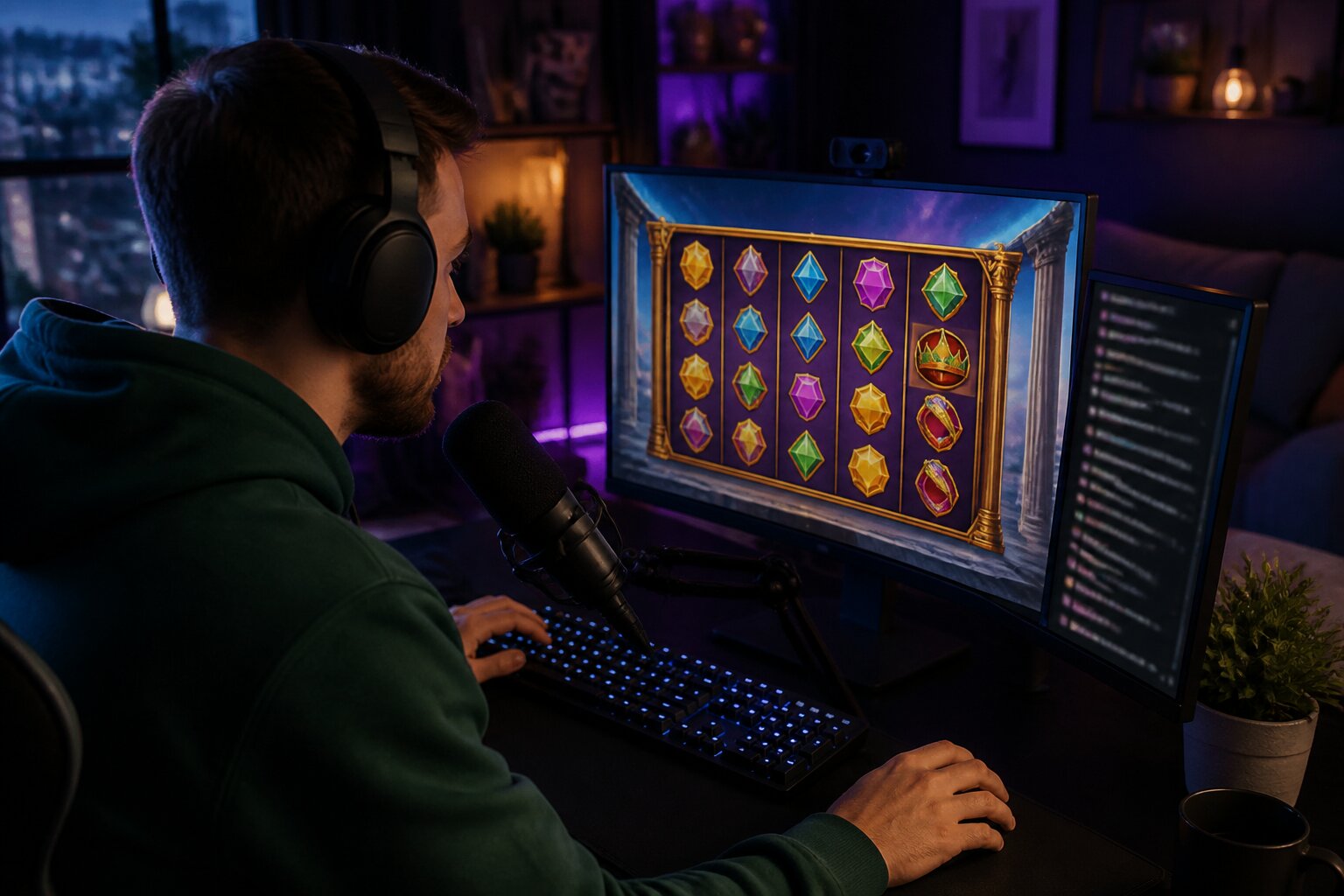
Ever wondered why thousands of people tune into Twitch every day just to watch others play online slots? It has become one of the platform’s biggest trends, drawing viewers who enjoy real-time reactions, chat banter and the drama of bonus rounds.
Slot streams combine gameplay with personality: the streamer’s commentary, audience interaction and the mechanics of the games themselves all come together to create an entertainment format distinct from playing alone. If you want to see how a typical stream unfolds and what keeps people watching, this article walks through the whole process and finishes with a clear live example.
Read on to learn what Twitch slots are, how streamers set up and manage broadcasts, how viewers can judge a stream’s trustworthiness, and how the community shapes the experience.
What Are Twitch Slots?
Twitch slots are live broadcasts in which creators play online slot games while viewers watch and interact. The streamer shares their screen so every spin, feature and bonus round is visible, and a webcam and microphone capture their reactions and commentary. Chat is a central element: viewers respond instantly, ask questions and shape the tone of the stream.
These broadcasts are presented as entertainment rather than instruction or investment. Streamers may explain game mechanics and features as they play, helping viewers understand what triggers bonuses or how different bet settings affect play. Age restrictions apply: streams are intended for adults only, and creators typically highlight the need to be of legal age before participating in any real-money activity.
A clear sense of the format helps set expectations; next, we’ll look at the technical side and what happens during a live broadcast.
How Does Online Slot Streaming Work?
Streamers capture gameplay and their own video feed using broadcasting software, which combines the two into a single live output. The setup also includes a webcam and a microphone so viewers see and hear the streamer’s live reactions and commentary alongside the slot interface.
During a broadcast, the streamer logs into the operator, selects a game, and chooses bet levels while narrating features, bonus mechanics and outcomes. Chat interaction is continuous: viewers post messages, ask questions and react to spins in real time, which keeps the stream lively and conversational.
Only the streamer places bets on the broadcast; observers are watching, unless they separately choose to play outside the stream. With that technical groundwork in place, the next section explains why these streams attract such large and committed audiences.
Why Are Slot Streams So Popular?
Slot streams offer a mix of spectacle and social interaction that many viewers find compelling. The combination of immediate feedback, varied game features and a streamer’s personality makes for content that’s easy to follow and hard to switch away from.
Another draw is the communal element. Chat creates a shared viewing experience where viewers can compare notes, ask about mechanics and enjoy the present moment together. For people curious about new titles, streams provide practical demonstrations of how features work and what to expect from certain mechanics.
Now that you can see what draws people in, the next question is whether watching these streams is permitted — especially under UK rules — and what that means for viewers.
Is Watching Slot Streams Legal in the UK?
Adults in the UK may legally watch slot streams. The main regulatory concerns are that content must not facilitate underage participation or breach advertising standards, and that any actual gambling remains restricted to adults who have passed operator checks such as age and identity verification. Operators offering live streams must also be licensed and subject to the UK Gambling Commission rules, which aim to protect vulnerable people and uphold fair play.
Streamers are expected to mark content as intended for adults and to avoid messaging that could appeal to under-18s. That includes avoiding imagery, language or promotions that might attract younger viewers, and ensuring any sponsorship or affiliate links comply with advertising codes. Responsible gambling messages and clear disclaimers about the risks involved are increasingly common on streams to meet regulatory and platform expectations.
With a sense of the legal framework in place, let us move on to what typically happens during a slot stream and how the broadcast is managed from start to finish. The next section outlines the typical structure of a stream, how bets and wins are shown, and how interaction with viewers is handled while staying within legal and platform rules.
What Goes On During a Typical Slot Stream?
A typical stream blends technical setup, real-time play and audience engagement, and aims for transparency about outcomes. Before going live, the streamer ensures any required checks with the operator are complete and configures their software so the game screen and webcam are clearly visible to viewers.
During play, the streamer explains game features and adjusts bets while chat responds. Wins and losses are shown plainly, and the broadcaster may point out any player protection features such as deposit controls or session reminders. The stream often includes pauses to answer questions or to highlight how a game’s bonus round works, giving viewers both entertainment and understanding.
This practical view of a broadcast lays the groundwork for judging whether a stream is trustworthy, which is the next important topic.
Setting Up the Stream: Equipment & Platform Overview
Streamers generally use a desktop or laptop with reliable internet, broadcasting software to capture the game and webcam, and a decent microphone so commentary is clear. The software allows scene layout control so the game, streamer and chat are arranged in a way that’s easy for viewers to follow. Platform rules require age gating for gambling content and adherence to community standards.
Interacting With the Audience
Engagement is driven by chat. Streamers read messages, respond aloud and often tailor play based on viewer questions about features or bet sizes. This interaction is what turns a solitary game into a social show, with viewers influencing the tone and pace of the session.
Handling Wins, Losses, and Responsible Gambling
Throughout the broadcast, outcomes are presented honestly without implying that play is a way to recover money or as a source of income. Streamers may reference tools available to manage play and set boundaries and are expected to avoid messaging that normalises excessive spending. The focus is on entertainment, not financial expectation.
With that in mind, the following section looks at how to tell a genuine stream from one that’s less reliable.
Can You Trust Live Slot Streams?
Trust varies between streams, so viewers should look for signs of transparency and sensible behaviour. Credible streamers are open about whether they are using their own funds or playing under another arrangement, make clear any sponsorships, and avoid exaggerated claims about outcomes.
Reliable streams also display or discuss the player protection measures available on the operator’s side. Claims that a streamer can predict results or has special insight into a game are warning signs; slot outcomes are governed by the game’s internal systems and cannot be guaranteed. If a broadcaster hides payment sources or avoids answering basic questions about how they play, it’s sensible to be cautious.
That said, many streams are entirely above board and provide useful demonstrations of game mechanics; next, we walk through a real example of a session to show how those elements come together in practice.
Transparency and Verification
A trustworthy broadcast clarifies the relationship between the streamer and the operator, notes whether real money is being used, and highlights any relevant verification that was completed before play began. These factors help viewers assess the stream’s openness and reliability.
Common Myths and Misconceptions
Some viewers expect streams to reveal patterns or methods for consistent wins. In reality, outcomes are governed by the game’s programmed systems, so no broadcast can reliably predict results. Also, not all streamers fund every session themselves; sponsorships or other arrangements sometimes apply, and clear disclosure is a mark of professionalism.
Having covered trust and transparency, we now present a live example that follows a session from start to finish so you can see how setup, gameplay and community interaction fit together.
Live Example: Step-by-Step Breakdown of a Slot Stream
A typical session begins with pre-stream checks: the streamer confirms account verification is complete, configures broadcasting software, and advertises the stream’s adult-only status to comply with platform rules. On air, the streamer introduces the game, explains any relevant features and sets bet sizes while keeping commentary conversational.
Play unfolds with each spin visible to viewers; bonus rounds and special features are explained as they happen, not as formal instructions but as part of the narrative. Chat steers portions of the session, offering suggestions or asking about mechanics, and the streamer pauses at times to answer questions or to demonstrate a particular feature in more detail.
Throughout, the streamer remains candid about outcomes and points out the operator tools that can help manage play. Near the end of the broadcast, the streamer summarises the session’s highlights and low points, reinforcing the focus on entertainment and sensible limits. This complete walkthrough shows how the technical, social and regulatory pieces align in a well-run stream.
The Role of Community in Twitch Slot Streaming
Community shapes the character of slot streams. Regular viewers develop norms around tone, acceptable chat conduct and how to discuss gambling responsibly. These groups often share practical advice about features and player protection tools, and the collective presence can make the viewing experience feel more interactive and supportive.
Communities also act as gatekeepers: they help keep the chat age-appropriate, flag problematic behaviour and encourage respectful interaction. That shared responsibility keeps streams accessible for adults who want to learn about games, enjoy commentary or simply be part of a conversation. With the format and community in place, the entire streaming experience becomes greater than the sum of its parts.
This final view of community brings the topic full circle: slot streaming is a technical production, a social event, and a regulated activity presented for adult entertainment. Whether you watch once or follow a channel long-term, understanding how streams work and what to look for will help you make informed choices about where and how to engage.
**The information provided in this blog is intended for educational purposes and should not be construed as betting advice or a guarantee of success. Always gamble responsibly.