
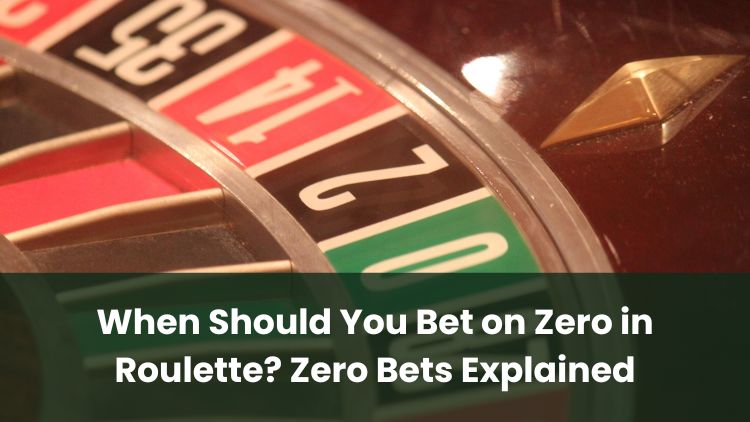
For many, the green zero on a roulette wheel raises a simple question: Is it worth backing? Understanding what zero does, how it pays, and how it interacts with other bets goes a long way towards understanding the game as a whole.
This guide explains how zero bets work, the odds and payouts involved, and how zero affects outside bets such as red or black. It also looks at neighbour and call bets that include zero, clears up common beliefs, and gives practical examples so everything clicks into place.
Use the information to make informed decisions, set limits that suit you, and keep play within your means.
What Is A Zero Bet In Roulette?
A zero bet is a straight-up wager on the single green zero on the roulette layout. On most European wheels, there is one zero. American wheels also have a double zero, but here the focus is on the single zero common to European tables.
To place the bet, a chip goes directly on the 0 square before the spin. If the ball lands on zero, the bet pays according to the table’s payout rules. Zero is separate from red or black, odd or even, and the usual number groups, which is why some players choose to cover it specifically.
Zero can also appear within special wagers that cover nearby numbers on the wheel, such as neighbour bets. With the basics covered, it helps to understand the numbers behind the payout.
How Do Odds And Payouts Work For Zero?
On a European wheel, a straight-up bet on zero pays 35 to 1. Stake £1, and a hit on zero returns £35 in winnings plus the £1 stake. The chance of zero landing is 1 in 37 because there are 37 pockets.
On an American wheel, the chance changes to 1 in 38 due to the extra double zero, with the same 35 to 1 payout. That difference increases the house edge. For context, European roulette carries a house edge of 2.70%, while the double-zero version is higher.
If zero is part of a split, street, or corner bet, the payout follows the standard rate for those bet types, adjusted for how many numbers the chip covers. Those figures also explain why outside bets react as they do when zero turns up.
How Does Zero Affect Outside Bets Like Red/Black Or Even/Odd?
Zero is not red or black, and it is not counted as even or odd. If the ball lands on zero, even-money outside bets such as red or black, odd or even, and high or low do not win.
Some European tables use rules that soften this. With La Partage, half of an even-money stake is returned when zero lands. With En Prison, the even-money bet is held for the next spin. If that next outcome would have won the original bet, the stake is returned; if not, it is lost. Always check the table because rules vary.
On American wheels, the extra double zero makes a zero outcome more disruptive to outside bets, as there are more pockets that do not count for them. With that in mind, when might a direct zero bet still appeal?
When Should You Consider Betting On Zero?
A zero bet can make sense for someone who wants to include the one outcome that even-money bets leave uncovered. It also suits players who like wheel-section strategies, because zero acts as a useful anchor point for certain neighbour or call bets.
Adding zero does not reduce the house edge or improve long-term returns. It simply includes an outcome that some patterns and spreads miss. Whether it earns a place in a betting approach is a matter of preference, table rules, and how much coverage is already on the layout.
If zero does earn a place, the next decision is how much to allocate to it.
How To Size Zero Bets Relative To Your Bankroll
Many players keep individual bet sizes small relative to their total bankroll so they can make consistent decisions across a session. As a rough guide, some keep each spin to a small fraction of their funds, such as around 0.5 to 2% in total across all bets, with zero taking only a slice of that.
For example, with a £100 bankroll, a modest zero stake might sit between 50p and £2, depending on what else is on the table. The aim is to stay within personal limits, avoid chasing outcomes, and keep stakes steady so results do not dictate decisions.
Another way people include zero is by using wheel-based wagers that naturally cover it.
How Do Neighbour And Call Bets Include Zero?
Neighbour bets cover a chosen number on the wheel plus numbers immediately to either side of it. Selecting zero as the anchor means nearby wheel pockets are included as part of the same idea, giving coverage of that section for a single spin.
Call bets, often used on European tables, formalise this. Voisins du Zéro, for instance, covers the arc of numbers surrounding zero from 22 through to 25 on the wheel. Chips are spread across splits, a corner, and a straight-up in a set pattern so that the entire section around zero is represented. Some tables also offer Jeu Zéro, a tighter group that focuses on zero and its closest neighbours.
These wagers do not change the underlying odds, but they give a structured way to include zero within a wider section. With those options in mind, it is worth cutting through a few common beliefs.
Are Common Zero Betting Beliefs True Or False?
The idea that zero is “due” after a long gap is false. Each spin is independent, so the chance of zero appearing is the same every time, regardless of recent outcomes.
Including zero does not increase overall chances of profit. It simply adds another number to the set you are covering, with the same payouts and house edge that already apply.
Views about “hot” or “cold” wheel sections do not hold in a fair game. Over time, results settle towards the probabilities set by the wheel, not by recent patterns. With that cleared up, it helps to see where a zero bet can fit in practice.
Practical Examples Of When A Zero Bet Might Make Sense
Someone who prefers even-money bets might add a small straight-up wager on zero so that an occasional zero result is not completely uncovered. The outside bets still behave as usual, but the direct zero bet can return a payout if that single pocket lands.
A player who likes straight-up spreads could add zero to a handful of favourite numbers to round out coverage. Likewise, anyone using neighbour or call bets that already include the zero section may feel no need for an extra chip on 0, while others might add a small top-up if they want a direct payout on that pocket.
Covering zero is always a choice rather than a requirement. If play stops feeling manageable or enjoyable, take a break. Free, confidential support is available from independent organisations such as GamCare and GambleAware.
Play Casino Games Online at Clover Casino
If you are considering playing casino games online, Clover Casino is licensed by the UK Gambling Commission, providing a regulated environment.
You will find table games, slots, and bingo that work on most devices, so it is easy to play at home or on the move. To help you stay in control, you can set deposit limits, use time reminders, and take short or long breaks whenever you need them. Information and support are easy to access if you want advice.
If this sounds right for you, feel free to create an account at Clover Casino, deposit some funds to play with and explore our games at your own pace. Understanding how zero fits into roulette helps you make clear, informed choices while you play.
**The information provided in this blog is intended for educational purposes and should not be construed as betting advice or a guarantee of success. Always gamble responsibly.