Ever stared at a blackjack table and wondered if there’s a way to outsmart the usual cards-and-chips routine? Picture this: you’re dealt two hands at once, with the freedom to swap your top cards between them. That’s the twist behind Blackjack Switch, a version of the classic game that’s become more common at online and land-based casinos.
It sounds like a dream for anyone who’s ever missed a blackjack by one card. But that extra freedom comes with adjustments to the rules that change how hands resolve and how much you can win. Read on to see what those changes are and how they alter the game’s balance.
By looking closely at the rule changes and how they affect play, you can judge which version suits your style best.
What Is Blackjack Switch & How Does It Differ from Classic Blackjack?
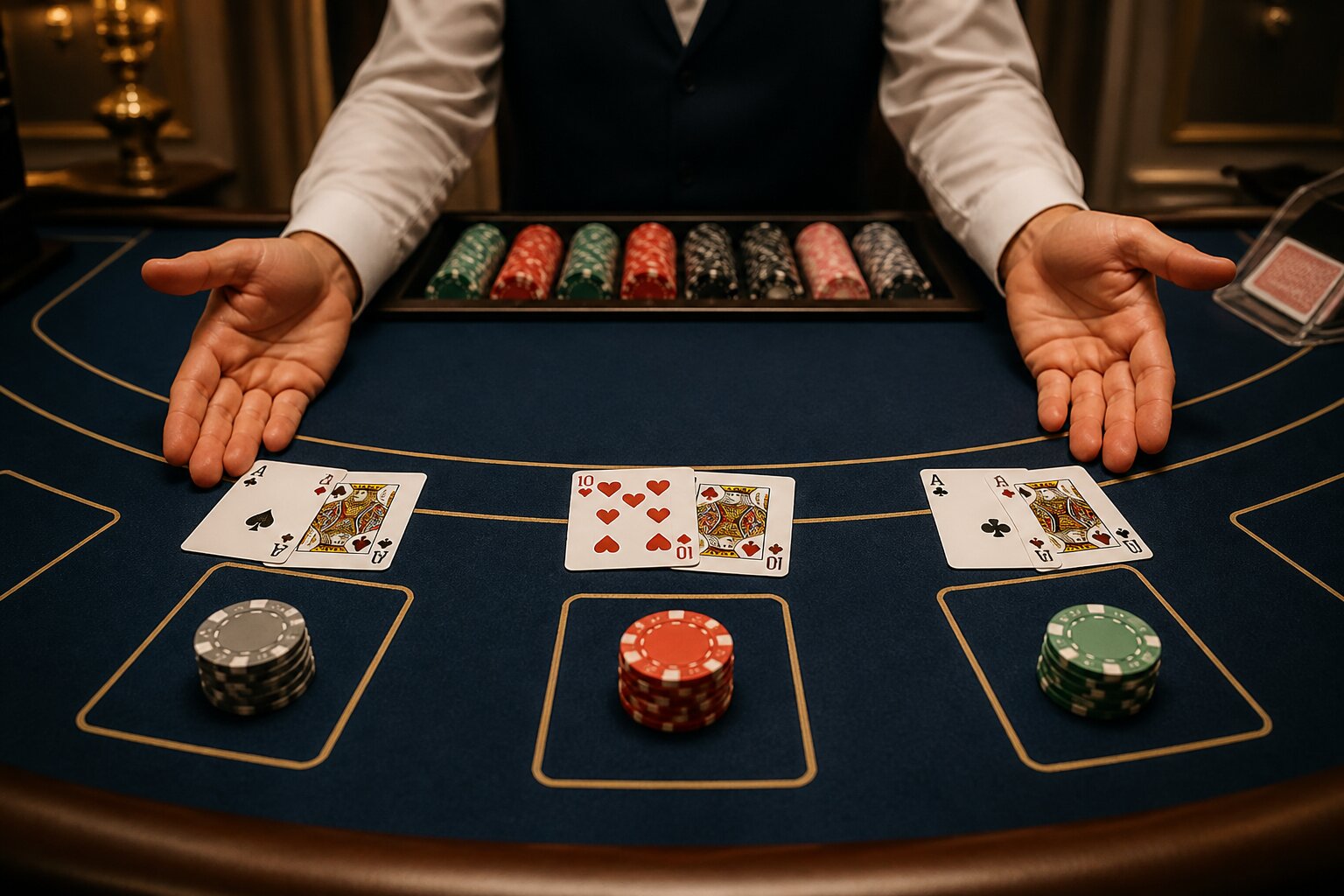
Blackjack Switch is based on traditional blackjack but deals each player two separate hands, each accompanied by its own stake. The defining feature is the option to swap the top card from each hand before choosing how to play them.
For example, if one hand is 10 and 6 and the other is 5 and Ace, swapping the top cards can create a 10-Ace blackjack and leave a 6-5 hand. That single choice can turn an ordinary round into a much stronger result on at least one hand.
Beyond the swap, play proceeds in ways familiar from classic blackjack: the aim is to reach a total as close to 21 as possible without exceeding it, and players act against the dealer rather than one another. To offset the benefit of switching, however, some rules differ. The dealer reaching exactly 22 leads to a push for surviving player hands, and blackjacks pay even money rather than the usual 3:2. These adjustments make the variant feel distinct from the standard game and affect strategic thinking going forward.
Understanding the Key Rule Differences
The feel of Blackjack Switch is shaped by three main rule differences that influence strategy and outcomes. Each change interacts with the switching mechanic in its own way, and together they determine whether switching will be advantageous in the long run.
The Card Switching Mechanic Explained
In Blackjack Switch you receive two hands and may swap the top card between them before any further action. That second card in each hand is the one you can move.
Imagine a first hand of 7 and King and a second of 6 and Queen. Swapping the top cards gives two hands totalling 17 and 16 instead of 17 and 16 in a different arrangement; sometimes the swap reshapes both hands into more playable totals, and sometimes it does not. In other cases, such as exchanging cards to form a 10-Ace, a swap can immediately create a blackjack on one hand.
This mechanic adds a tactical choice after the deal. Players consider not only the immediate totals but also the likelihood of drawing further cards, the potential to double down, and how both hands might perform against the dealer’s visible card. The swap is therefore the central decision that distinguishes this variant from classic play.
Dealer’s 22 Push Rule
One of the balancing rules is how the dealer’s hand of exactly 22 is treated. Where a dealer bust normally hands wins for remaining players, in Blackjack Switch a dealer total of 22 results in a push for any player hand that has not itself gone over 21. The stake is returned rather than a win being paid.
That rule changes the risk–reward landscape. Hands that would beat a busted dealer in classic blackjack can become neutral outcomes here if the dealer reaches 22. This reduces the value of some strong hands in the short term and influences whether a player chooses to swap cards to chase particular totals. Consider how this will affect decisions around holding a 20 or 21 versus attempting to improve both hands.
Payout Variations Between Versions
Payouts are another important adjustment. In standard blackjack a two-card 21 usually pays 3:2. Blackjack Switch reduces that reward: blackjacks pay even money at 1:1, regardless of whether a switch formed the 21.
So a £10 stake that would return £25 under classic blackjack instead returns £20 in Blackjack Switch. That reduced payout offsets the additional options players receive from switching and is a major reason the overall house advantage changes between the games.
Taken together, the switch, the dealer’s 22 rule, and the lower blackjack payout create a different strategic environment from classic blackjack. The next section looks at how those differences affect the overall edge and what a typical player can expect.
Does Blackjack Switch Offer Better Odds or House Edge?
The switching ability can produce stronger hands, but the combined rule changes alter the house edge compared with classic blackjack. Under common standard rules for classic blackjack played with multiple decks and the dealer standing on soft 17, the basic strategy when using basic strategy sits close to 0.5%. That figure is a long-run average and assumes optimal play.
Blackjack Switch typically carries a slightly higher house edge. Depending on exact table rules and the number of decks, the edge commonly ranges from roughly 0.58% to 0.72%. The main reasons are the dealer 22 push rule and the reduced blackjack payout. Those elements blunt some of the advantages gained by switching, so the extra decision-making does not translate into a clear statistical improvement over the traditional game.
For players this means that while switching creates more tactical options each round, the game’s rules are calibrated so the house advantage retains a modest advantage. Understanding those trade-offs can help when choosing which game to play and how to size stakes against the likely outcomes.
Gameplay Experience: Which Game Is More Enjoyable?
Blackjack Switch introduces regular moments that demand attention. Playing two hands every round increases the number of meaningful choices and keeps play engaging. The act of spotting a beneficial swap and then watching how both hands resolve offers a sharper sense of involvement than a single-hand game.
That extra involvement suits players who like to be active and deliberate each deal. A well-timed swap can change the course of a round, and the variety of outcomes keeps the table interesting. At the same time, this intensity can be taxing if someone prefers a steadier, less decision-heavy session.
Classic blackjack tends to feel calmer by comparison. The rules are simpler, and decisions are more familiar: hit, stand, double or split. The steady rhythm makes it easier to focus on a single hand and the established strategies that govern it.
Which is more enjoyable comes down to personal taste: if you favour variety and frequent choices, Blackjack Switch delivers that; if you prefer a straightforward, measured game, classic blackjack will likely feel more comfortable. Keep this in mind when selecting a table and set stakes you are comfortable with.
Is Blackjack Switch Suitable for Beginners?
Because it adds an extra decision layer, Blackjack Switch can be less forgiving for newcomers. Beginners must assess two hands and the potential impact of a swap rather than concentrating on one set of choices. That can lead to uncertainty when judging whether a swap genuinely improves outcomes or merely creates two middling hands.
A simple example is being faced with a Queen-6 and a 10-5. Deciding whether to swap requires some sense of which combinations are more robust against the dealer’s likely plays. If basic blackjack concepts such as the value of soft totals, when to double down, and the implications of busting are not yet familiar, this variant can feel overwhelming.
Classic blackjack usually provides a better learning environment. Its clearer, fewer rules let new players focus on fundamental decisions without the distraction of additional mechanics. Starting with that simpler format allows players to build confidence and understanding before moving to variants that require more tactical thinking.
Choosing Between Blackjack Switch & Classic Blackjack: What to Consider
Selecting between Blackjack Switch and classic blackjack should match what you enjoy and what you understand. If you like making more active choices every round and the idea of shaping two hands appeals to you, Blackjack Switch delivers novel decisions and variety. If you want a steadier game with well-known rules and fewer moving parts, classic blackjack is likely the better fit.
Think about how much mental load you want each round to carry and whether you prefer frequent decision points or a more relaxed flow. Also factor in the difference in payouts and how the dealer 22 rule might affect results over time. Playing within familiar limits helps keep the experience enjoyable and sustainable.
If you want to explore further, try both formats at low stakes to feel the contrast directly. However you choose, pick the game that aligns with your level of comfort and the kind of session you want. That way the game remains entertaining and clear from start to finish.
Play Casino Games Online at Clover Casino
We invite you to discover the enjoyment of playing casino games with us, taking your time and enjoying the experience as it suits you. Wherever you’re logging in from, our site offers a welcoming place to play at your leisure.
Starting couldn’t be easier: simply create an account, make a deposit and you’re ready to explore all we have to offer. We look forward to seeing you.
**The information provided in this blog is intended for educational purposes and should not be construed as betting advice or a guarantee of success. Always gamble responsibly.