
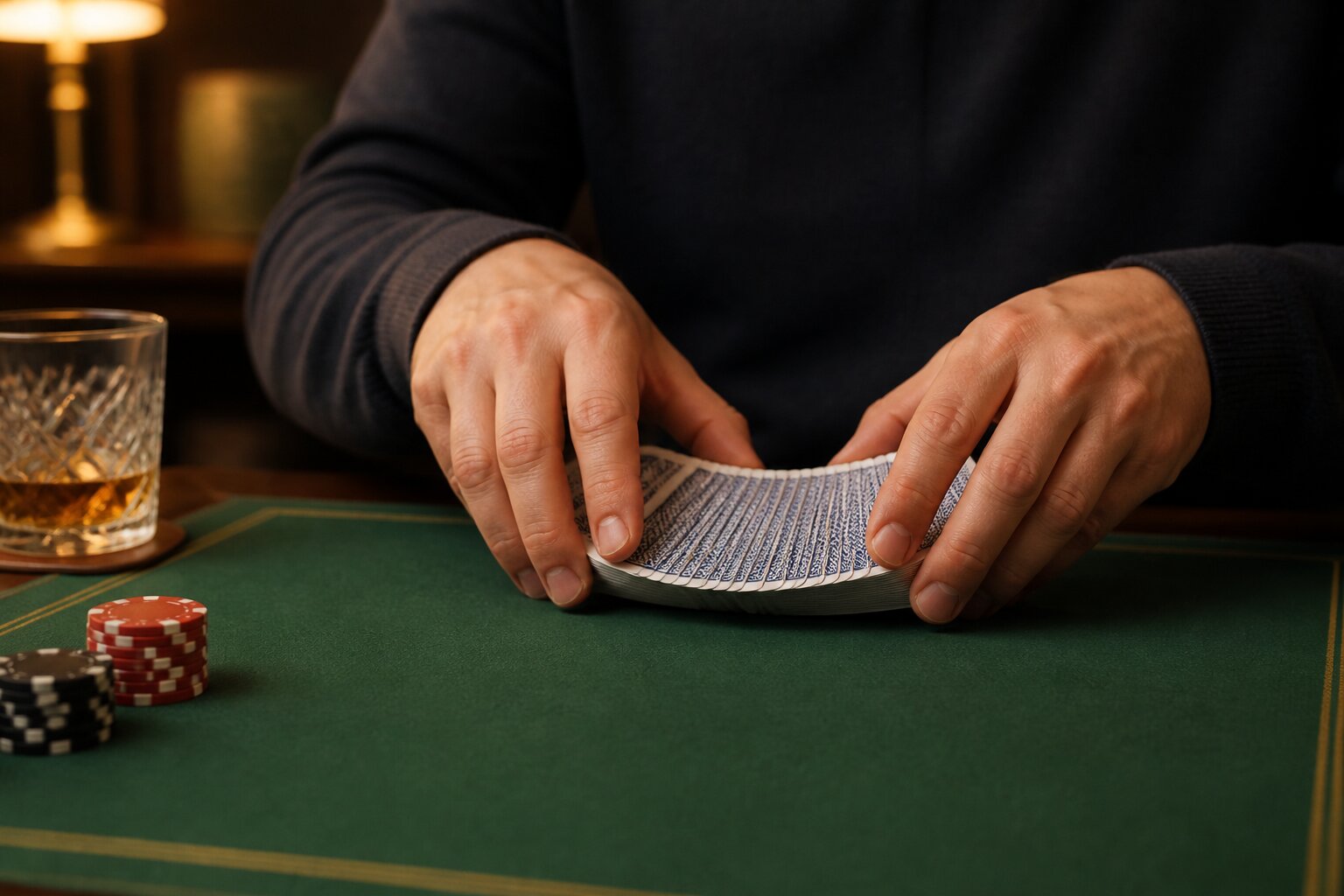
Have you ever wondered if it’s possible to beat the house at its own game with observation and technique rather than sheer chance? Some of the most notable stories from casinos involve skilled play and careful attention to detail rather than big bets alone.
Edge sorting is one such method and it has prompted intense debate between casinos and players, even reaching the British courts. From high-stakes baccarat tables to private games, it can change how people think about fairness in card play.
But what exactly is edge sorting, why do some see it as clever while others call it cheating, and how does it work in practice? The following sections unpack the technique, the law and how venues defend against it so you can understand the full picture.
Understanding Edge Sorting: The Basics
Edge sorting is a way some players attempt to identify individual cards by spotting tiny, unintentional differences on the backs or edges. These might be a faint smudge, a slightly misaligned pattern, or a small cut that makes one card look ever so slightly different from the rest.
In games like punto banco (a common form of baccarat), identifying a high-value card before it is revealed can alter betting choices and interpretation of outcomes. A player who recognises repeating anomalies can, over multiple rounds, build knowledge of where particular cards are in the remaining deck. Crucially, edge sorting does not involve physically marking cards or altering them by hand; it depends on observation and the use of those incidental manufacturing or wear differences.
For this method to be viable several things must line up: the deck needs to contain detectable irregularities, the cards must stay in play long enough for a pattern to form, and dealing procedures must allow the player to influence orientation of some cards. These conditions are increasingly uncommon in modern venues due to tighter controls and automated shuffling, but when they do occur the effect can be significant. Next, we look at how a player turns those small differences into usable information during play.
How Does Edge Sorting Work?
The technique begins with spotting a subtle flaw on the back or edge of certain cards. A player may then seek to have those cards handled in a way that makes their orientation consistent — for example, asking the dealer to rotate particular cards when they are brought to the player’s attention. Over a sequence of hands, this can result in high-value cards showing one orientation and lower-value cards the opposite orientation.
Once orientation correlates with value, a player can infer the likely nature of upcoming cards simply by viewing their backs. The practical steps that create this advantage depend on human handling: dealers turning cards, dealers dealing multiple rounds without full reshuffles, or a player repeatedly receiving specific cards to be inspected. That interaction, rather than any permanent alteration to the deck, is what distinguishes edge sorting from other forms of cheating.
This approach is fragile. Automatic shufflers, frequent deck changes and strict dealing rules break the link between back patterns and card value. The following section explains where edge sorting has been attempted and why certain games are more susceptible.
Common Card Games Where Edge Sorting Occurs
Edge sorting is most often associated with punto banco because the game’s structure can make knowledge of particular upcoming cards especially valuable. Blackjack has also seen attempts at edge sorting, with aces and tens being the primary targets for identification. Some house-banked poker variants have been mentioned in reports too, though those examples are rarer.
What makes a game vulnerable is not the name on the table but the combination of predictable dealing patterns and opportunities to influence card orientation. Modern countermeasures — automatic shufflers, shorter shoe cycles and close supervision — limit those opportunities across all table games. Understanding which games have historically been affected helps explain why casinos prioritise certain safeguards, which we’ll explore next when discussing legal and regulatory responses.
Is Edge Sorting Legal?
Edge sorting occupies a grey area in theory but, in practice, UK courts and regulators have treated it as unacceptable behaviour. The Gambling Act 2005 establishes standards for fairness and transparency in gaming. While edge sorting does not involve physically marking cards, courts have considered whether a player’s conduct undermines the honest performance of the game.
A high-profile legal dispute showed how this principle was applied: a professional player used edge sorting to win substantial sums, but the casino refused to pay once the method became apparent. The case reached the UK Supreme Court, which ruled against the player, concluding that the conduct amounted to cheating within the meaning of applicable law and the expectations of fair play. Casino terms and modern regulatory frameworks also prohibit actions intended to create an unfair advantage, and venues can refuse winnings, bar players, or take civil or criminal action in serious circumstances.
With that legal backdrop in mind, it’s useful to clear up common misunderstandings about what edge sorting is and is not.
Myths & Misconceptions About Edge Sorting
Many misconceptions surround edge sorting. Two frequent questions are whether it is cheating and whether it guarantees success. These misunderstandings are often fuelled by sensational media coverage and high-profile court cases, which can oversimplify the legal and practical issues involved. Clarifying the facts helps separate legal opinion from practical realities and shows why outcomes vary between jurisdictions and individual cases.
Is Edge Sorting Cheating?
Yes, it is treated as cheating in regulated jurisdictions when the behaviour is intended to create an unfair advantage. The legal rulings and industry practice consider more than physical tampering; they look at whether a player’s actions subvert the normal operation of the game. Courts and regulators typically assess intent and whether the player sought to exploit a feature of the cards or the dealing process to change the expected fairness of play.
That assessment can include how the player obtained information, whether they manipulated dealing or equipment, and the degree of cooperation or deception involved. As a result, even without altering cards physically, conduct that undermines the integrity of the game is commonly judged unlawful or contrary to casino rules. Regulators may also treat successful use of such methods as grounds for confiscation of winnings and other sanctions.
Does Edge Sorting Guarantee Winning?
No, it does not guarantee a win. The technique depends on specific, often temporary conditions: detectable card irregularities, dealer cooperation or inattention, and limited shuffling. Even where these conditions are present, outcomes remain probabilistic and subject to the house edge, game variation, and luck.
Casinos now use procedures designed to remove those conditions, so even where edge sorting is attempted the practical advantage can be small or fleeting. Changes such as using better-manufactured cards, frequent shuffling, Automatic shufflers, and strict dealing protocols reduce the opportunity for edge sorting to be effective. Players who rely on the technique may find that any perceived edge quickly disappears as venues adopt countermeasures.
Clearing those misconceptions helps explain why a few famous disputes attracted so much attention; the next section looks at notable cases and what they taught the industry. Understanding both the legal and practical limits of edge sorting provides useful context for why regulators and casinos respond strongly when it is attempted.
Famous Cases of Edge Sorting
The most widely reported example involved a professional player who won over £7 million at a London casino playing punto banco by using edge-sorting methods. The player had the dealer rotate certain cards under the pretext of superstition, creating a consistent orientation for particular ranks. When the casino discovered the method it withheld the payouts and the dispute went through the courts, ending with the Supreme Court ruling that the conduct amounted to cheating.
Similar incidents elsewhere produced like results: once investigated, casinos withheld winnings and applied their contractual and legal remedies. These cases emphasised that manipulating card orientation or exploiting manufacturing defects with the intent to gain an advantage falls outside the bounds of acceptable play. They also prompted venues to strengthen protections, which is the subject of the following section.
How Casinos Combat Edge Sorting
Casinos deploy several practical measures to prevent edge sorting and maintain fairness. Card suppliers now produce backs with fully symmetrical, standardised designs to remove the production quirks that make sorting possible. Automatic shufflers and continuous shuffling machines are common and break any developing pattern in the deck by thoroughly mixing cards between rounds.
Dealers follow strict handling rules that discourage or forbid requests to rotate or inspect specific cards. Surveillance teams and floor supervisors monitor play for unusual behaviour that may indicate advantage play. Decks are also rotated and replaced more frequently to avoid wear patterns becoming identifiable.
Together these steps reduce opportunities for edge sorting and protect both the business and other players by preserving the integrity of table games. With that explained, readers will have a clearer sense of why the practice is rare today and why recognised venues enforce robust safeguards.
Explore Casino Games at Clover Casino
We invite you to take a look at the wide range of casino games to enjoy on our site. There is something for everyone, so you can discover plenty of entertaining options all in one place.
Getting started with us is straightforward: simply create your account, make a deposit and you can choose from all the fun on offer. We look forward to welcoming you.
**The information provided in this blog is intended for educational purposes and should not be construed as betting advice or a guarantee of success. Always gamble responsibly.