
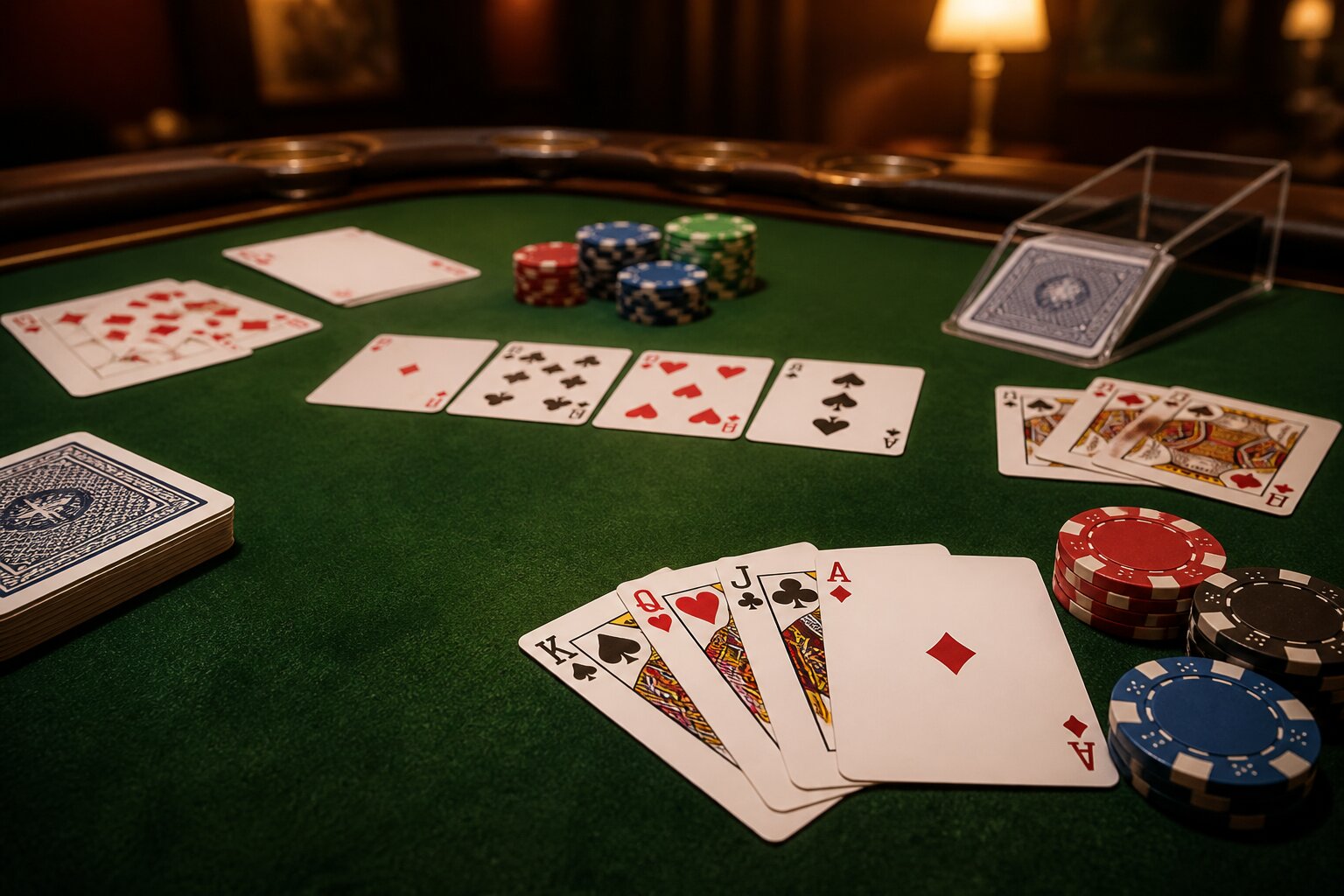
Looking for a quick way to discover the most popular card games at the casino? Whether you’re a beginner or brushing up, you’re in the right place. Classic favourites like blackjack and poker have stood the test of time, while modern twists keep players engaged.
Each card game offers something different, from simple rules to strategic play. Curious which games depend more on strategy and which depend more on chance? We’ve rounded up what you need to know in one handy guide.
Ready to find your next favourite casino card game? Let’s get started.
What Are Casino Card Games?
Casino card games are table games played with one or more decks of cards. The specific aim depends on the title and the rules, and can include:
- placing bets to beat the dealer,
- outplaying other players at the table,
- forming the best hand according to the game’s ranking system.
These games are found in land-based casinos, private clubs and on online platforms. Online options may be presented as live dealer tables with real dealers streamed in real time, or as fully digital versions that use random number generators to determine outcomes. All play should be restricted to adults aged 18 and over.
Some card games require significant strategic thinking: understanding probabilities, choosing when to hit or stand, or deciding how much to stake. Others are much simpler, relying mainly on the cards that are dealt and the luck of the draw.
Regardless of the level of skill involved, no approach guarantees a win. Outcomes are inherently unpredictable, and games are structured with built-in house edges that ensure the operator has a statistical advantage over time.
Before playing, familiarise yourself with the specific rules, betting limits and table etiquette for the game you choose. Playing responsibly and within your means is important, as losses are a real possibility.
Popular Casino Card Games Found in the UK
UK-regulated casinos offer a range of classic card games, each with its own pace and decision-making. Below are some of the most familiar options you’ll encounter.
Blackjack: Often called “21”, the objective is to hold a hand closer to 21 than the dealer without exceeding it. Play is against the house, not other players.
Baccarat: A straightforward wager on whether the player, banker or a tie will have the higher hand total, with simple drawing rules.
Poker: A family of games including Texas Hold’em and Three Card Poker, where players typically compete against each other to make the highest-ranking hand.
Casino Hold’em: Similar to Texas Hold’em in hand construction, but you play head-to-head against the dealer.
Pontoon: A British variant of blackjack with distinct rules and terminology, including different payouts and choices on taking cards.
These games appear both in physical casinos and online on licensed platforms, where their rules and fairness are subject to regular checks.
What Classic Card Games Are Played in Casinos?
Many casino card games have long histories and remain staples for good reason. They combine familiar mechanics with subtle strategic depth.
Blackjack: Dating back centuries, blackjack’s enduring popularity owes much to its straightforward goal and pace, which allow both casual players and strategists to enjoy it.
Baccarat: With European origins, baccarat has retained its simple betting format and continues to attract players who prefer minimal decision-making during a hand.
Poker: Classic formats such as Five Card Draw and Stud evolved into community-card styles like Texas Hold’em, which emphasise reading opponents and managing bets.
Pontoon: This British game shares roots with blackjack but has its own standing rules and terminology that change strategy and payouts.
Casino War: A modern, highly accessible game based on higher-card comparisons, kept simple for quick rounds.
These classics remain widely available in both live and online formats, often alongside newer variations that borrow their core mechanics.
Comparing Table Games vs Card Games: What’s the Difference?
“Table games” is a broad term for any casino game played at a table with chips and specialised equipment. Card games are a subset of table games that use playing cards as their principal element.
Table games include non-card games such as roulette and craps, which rely on wheels or dice rather than decks. So, while every card game is played at a table in casinos, not every table game involves cards. This distinction affects both gameplay and the decisions players face; card games often demand hand reading or probability assessment, while other table games may centre on different kinds of bets and outcomes.
How Do You Play the Most Well-Known Casino Card Games?
Here’s a concise guide to how the main casino card games typically run, enough to give you a clear picture of what to expect at a table.
Blackjack
Players receive two cards and aim for a hand total as close to 21 as possible without going over. The dealer acts according to set rules and each player’s final hand is compared with the dealer’s to settle bets.
Decisions made during play shape outcomes. Common choices include:
- taking another card (hit)
- standing on the current total (stand)
- splitting a pair into two hands when the first two cards match
- doubling the stake for a single additional card (double down)
House rules and the number of decks in use can affect strategy and the house edge, so it helps to check the specific table rules before playing.
Baccarat
Bets are placed on “player”, “banker” or a tie. Two cards are dealt to each side and a third card may be drawn according to a defined chart that removes most discretion from players and the dealer.
Hands are scored to a single digit by dropping the tens place, and the hand closest to nine wins. Payouts vary by the type of bet and the commission charged on banker wins.
Poker Variations
Rules vary by variant, but most poker games involve forming ranked hands from personal cards and, in some games, community cards. Betting rounds give players the chance to:
- fold and forfeit the hand
- call to match the current stake
- raise to increase the stake
Final hands are compared to determine the winner. Variants differ in how many cards each player receives, whether cards are shared, and the structure of betting, so learning the specific rules for the game you choose is important.
Casino Hold’em
Players receive two private cards and up to five community cards are dealt on the table. The objective is to make the best five-card poker hand possible from the seven available cards.
Bets are made against the dealer’s hand rather than against other players. Side bets or bonus features are sometimes available, and these can change the payout structure.
Pontoon
Pontoon is a close relative of blackjack but uses different terminology and some distinct rules. A “pontoon” (an ace and a ten-value card) is the best possible hand and outranks other totals.
Player options use different terms:
- taking a card is called “twist”
- declining further cards is called “stick”
Rule differences affect when payouts occur and how hands are valued, so it is worth checking the table rules for details.
Familiarising yourself with these mechanics helps set realistic expectations before you sit at a table or join a live stream. Many licensed platforms offer demonstrations or free-play modes so you can try games without risking money.
Which Casino Card Games Are Easiest for Beginners?
Some card games are easier to pick up because they have clear objectives and limited decision points.
Blackjack is widely recommended for newcomers: the goal of getting nearer 21 than the dealer is straightforward, and many plays are guided by simple, well-documented strategies. Baccarat is similarly easy to follow, as betting choices are limited and the dealing process is handled by the house. Casino War is the simplest of all, centred on who draws the higher card.
If you want to practise without pressure, demo versions and low-stakes tables let you learn pacing and basic choices. Choosing a game that matches your appetite for decision-making helps make the experience more enjoyable.
Are There Any Myths About Casino Card Games?
Misconceptions about card games are common, so it helps to address a few of the most persistent ones.
One frequent belief is that outcomes follow predictable patterns; reputable casinos use shuffling machines or certified random number generators so each round stands alone. Another is the idea that certain betting systems can overcome the house edge; no strategy can alter the underlying odds built into a game. Finally, the notion that earlier results influence later ones, known as the gambler’s fallacy, misunderstands how independent events behave.
Recognising these points makes it easier to approach games calmly and with realistic expectations.
Where Can You Play Casino Card Games Online in the UK?
To play online in the UK you should choose platforms that are properly licensed and regulated, where verification confirms age and identity for player protection. Many licensed sites offer both live dealer and RNG-based digital games, with independent audits to ensure fairness.
Account verification is a routine step to confirm eligibility to play. Licensed platforms typically make information about testing certificates and game providers accessible, so it’s straightforward to check that the games meet accepted standards.
A single mention of available player protections and tools is all that’s needed: many sites provide options like deposit limits, session reminders and self-exclusion to help manage play. Use these features as you see fit to keep your play within comfortable boundaries.
Choosing the Right Card Game for Your Casino Experience
Picking a game comes down to rules, experience and personal taste. Read the rules before you join a table so you know what choices you might need to make. If you’re new to card games, start with titles that have fewer complex decisions; if you enjoy reading opponents and managing bets, poker variants may suit you better.
Decide whether you prefer playing directly against the house or competing with other players, and whether you want quick rounds or longer sessions. Try different games in demo or low-stakes formats to find what feels right, and where needed, set sensible limits on spending and playtime so the activity stays enjoyable.
If you’re ready to explore further, try a few games and see which one keeps you most engaged. The right choice should match how much time you want to spend, how involved you’d like to be mentally, and the style of challenge you enjoy.
**The information provided in this blog is intended for educational purposes and should not be construed as betting advice or a guarantee of success. Always gamble responsibly.