Ever noticed how tales of big wins get all the attention, while the steady stream of profits for bookmakers, bingo halls and online casinos rarely makes the headlines? It can feel like the people running the games always come out ahead, even when big payouts happen.
You might sit in the bookies, watch a roulette wheel spin or scroll through a casino app and wonder how the overall result stays so predictable. The answer lies in how games are built and the mathematics behind them, not in any secret tricks.
This article explains those mechanics clearly, showing how games are structured, why the house keeps an edge, and what players should understand about odds, fairness and staying in control.
Understanding 'The House Edge' in Casino Games
The ‘house edge’ is the core concept that explains why gambling operators earn a profit over time. It is the mathematical advantage programmed into each game through rules and payout rates, expressed as a percentage of every pound wagered.
For example, a game with a 2.5% house edge means the operator expects to retain £2.50 for every £100 staked on average, while the remainder is returned to players as winnings. That average only emerges across many plays; any single session can deviate from it quite a lot because of random variance in results.
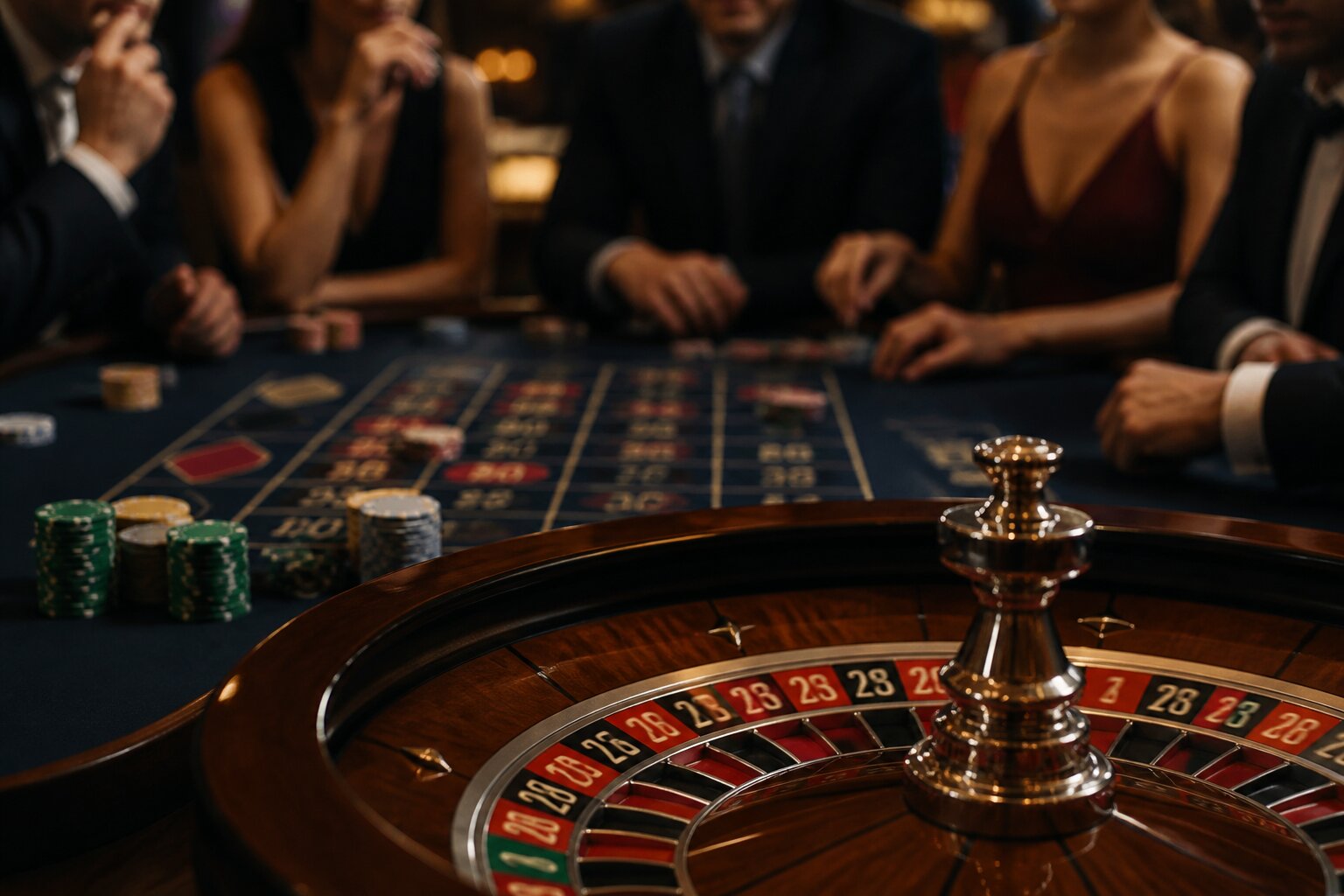
Different games carry different edges. European roulette typically shows about a 2.7% edge because of the single zero on the wheel. Blackjack can fall to around 0.5–1% for a player using perfect strategy, though most players face a higher edge in practice. Online slots vary widely but often sit around 3–5% depending on the game’s settings and return-to-player (RTP) figure.
Understanding the house edge helps set realistic expectations about outcomes and why short-term wins don’t overturn the long-term mathematics. Next, we’ll look at the concrete mechanisms that create this advantage and how they operate in specific games.
How Do Casinos Maintain an Advantage?
Operators build their advantage through transparent game design: payout structures, rule differences and system controls combine to create the house edge. This is not deception but the fundamental business model that allows venues and platforms to operate sustainably.
What Mechanisms Create the House Edge?
Payout structures are the clearest example. In European roulette, a single-number win pays 35 to 1 despite the true odds being 1 in 37; that gap across many bets produces the house percentage. In blackjack, rule variations—such as the dealer acting after players and ties resulting in player losses—shift the balance slightly towards the house. Slots use random number generators (RNGs) to determine outcomes; those RNGs are configured so that, across millions of spins, the payouts average below the total money staked, matching the game’s published RTP.
Other controls include the frequency and size of payouts built into a machine or game, and structural fees such as the rake in poker rooms where players compete against each other rather than against the house.
These mechanisms ensure predictable returns for operators while leaving individual sessions able to vary widely. Understanding these rules helps explain why the house remains advantaged even when players experience strong short-term results.
Are All Casino Games Designed This Way?
Yes. Commercial games—from roulette and blackjack to slots and scratchcards—are structured so the maths favours the operator over the long run. The only real exception is player-versus-player formats like poker, where success depends on skill relative to other players; even there, the operator usually earns from a small fee on each pot rather than a built-in edge.
All of this operates within regulatory frameworks that require transparency and independent testing, so the next section examines whether players can still find edges of their own.
Is It Possible for Players to Beat the House?
Short-term success is entirely possible and does occur, but consistent long-term profit for the average player is unlikely because of the embedded house edge. Some players and strategies can reduce that edge in certain games, while other formats allow skill to play a larger role.
In blackjack, for instance, adopting mathematically correct strategy can shrink the house edge to well under 1%; that improves a player’s chances of finishing a session ahead, though it doesn’t reverse the operator’s overall advantage. In poker, skilled players can outperform others across many sessions because they are competing against fellow players rather than the house, but the house still takes a cut of each pot.
For most casino offerings—slots, roulette, scratchcards—the outcomes are governed by random processes and fixed payout structures, so attempts to guarantee consistent profit are not supported by how the games are constructed. Keeping that reality in mind makes it easier to decide what games to play and how to manage time and money while doing so.
Common Misconceptions About Winning at Casinos
Players often carry beliefs that don’t match the mathematics or design of the games. Clearing these up helps set better expectations.
“There's a foolproof system to beat roulette or slots.”
No system can change the mathematical edge. Approaches like the Martingale may alter short sessions but can create large losses when a streak goes against the player.
“A machine or game must be due a win after a dry spell.”
Each outcome is independent; previous results do not influence the next one. RNG-based games produce results without memory of past outcomes.
“If you play long enough, you’re guaranteed a profit.”
Longer play tends to bring results closer to the house edge, which generally means more losses over time for most players.
“Hot and cold streaks show when to bet bigger.”
Apparent streaks are part of random variance and cannot be relied on to predict future outcomes.
“Watching others play or copying their bets will help you win.”
Another player’s outcomes do not change the odds of the games you play; each bet is resolved on its own terms.
With these misconceptions cleared up, it’s useful to understand the underlying probabilities and what fairness means in practice.
Odds, Probabilities & Fairness: What Players Should Know
Odds and probabilities quantify how likely specific results are and explain why sessions can swing in different directions. In European roulette, for example, the chance of landing on red in a single spin is 18 out of 37, just under 49%. That probability, combined with the game’s payout structure, produces the house edge discussed earlier.
Slots work through very large sets of possible symbol combinations, controlled by RNGs so that each spin is an independent event. The return-to-player percentage published for a slot or other game indicates the average payout expected over a long period; it is not a promise about any individual session.
Fairness is enforced through regulation and independent testing. Licensed operators must use approved testing bodies to verify that their RNGs and game software produce results consistent with the stated RTPs and rules. These checks provide assurance that the maths behind a game reflects its published design and that outcomes are not manipulated beyond the programmed probabilities.
Knowing the difference between short-term variance and long-term expectation helps with making informed choices about which games to play and how to approach them responsibly.
Responsible Gambling: What Does It Involve?
Responsible gambling is about keeping play safe, affordable and enjoyable. It means treating gaming as a form of paid entertainment rather than a way to make money, setting firm budgets and time limits, and avoiding chasing losses.
Practical tools to support responsible play include pre-set deposit limits, reality checks that remind players how long they have been active, and self-exclusion options when someone needs a break. Recognising warning signs—such as spending more than planned, hiding gambling from others, or feeling distressed about play—should prompt a pause and, where helpful, a conversation with a friend or a professional service.
Support is available through free, confidential organisations providing advice and practical help. Licensed operators are required to offer and promote these safeguards and to act where signs show a player may be at risk.
Play Casino Games at Clover Casino
We invite you to relax and enjoy the experience of playing casino games with us at Clover Casino. Discover a friendly place where you can take things at your own pace and simply have a bit of fun.
It is easy to join us: just create an account, make a deposit and you are all set to start playing. We look forward to welcoming you to our community.
**The information provided in this blog is intended for educational purposes and should not be construed as betting advice or a guarantee of success. Always gamble responsibly.