
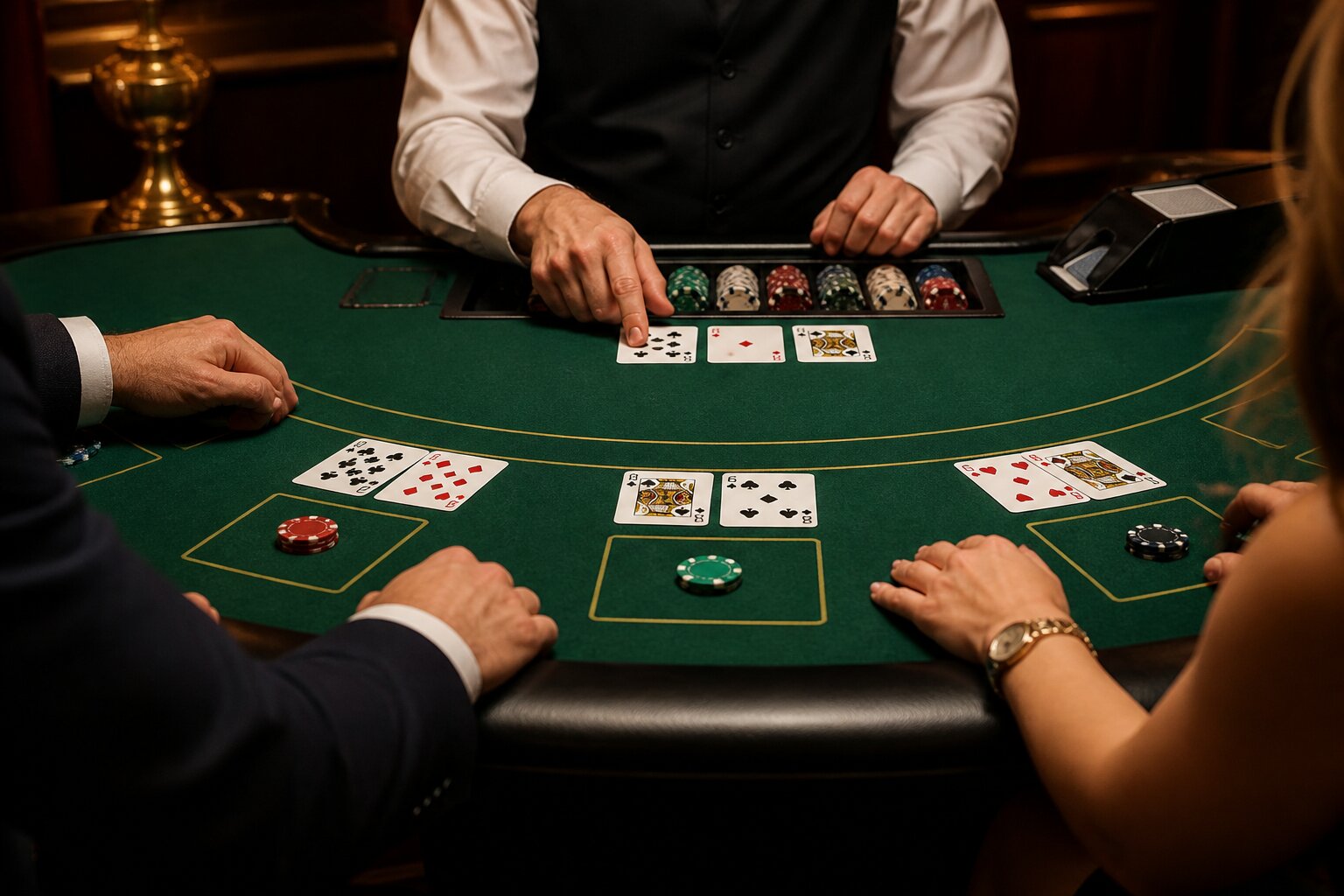
Ever found yourself staring at a busy blackjack table and wondering if the odds of winning actually change depending on how many people are playing? You’re not alone—many players feel sure their chances must shift when more seats fill up, or believe a solo game somehow gives them an edge.
Blackjack has been a firm favourite across British casinos for generations, partly because of its reputation for good odds and player skill. While the core rules are simple, the maths behind the game sparks endless debate on casino floors and online forums alike. From tales of “hot” and “cold” tables to the belief that an empty seat means it’s your night, there’s no shortage of myths doing the rounds.
So, what really happens to your odds when other players join the table, and which of those so-called facts stand up to proper scrutiny? The truth is both more fascinating and more straightforward than most people think.
How Do Player Numbers Affect Blackjack Table Odds?
The number of players at a blackjack table does not change the basic odds of any single hand. Whether you are playing heads-up against the dealer or sharing the table with six others, the house edge set by the game’s rules remains the same. Under common rule sets, and when basic strategy is followed, that edge is often around 0.5%.
What does change is the pace of play. With just two players you will be dealt more hands per hour, which magnifies short-term swings in your bankroll. At a full table of seven, fewer hands are played per hour, so wins and losses arrive more slowly. This affects how quickly your session moves, not the probability of outcome for each hand.
Each deal is a new random event, so the cards other players receive do not alter your odds on a given hand. Even when another player takes a card you wished you had, this has no lasting effect on your chance of success over many hands. The practical consequence is that table size mainly influences tempo and the social atmosphere rather than the maths of winning.
Some players prefer quieter tables for faster play, while others like the social rhythm of a full table. Next, we’ll look at common misconceptions that tend to drive those preferences.
Common Misconceptions About Blackjack Odds
Myths about blackjack odds pop up repeatedly. Many relate to table size or the idea that a certain table can be more favourable. These beliefs are persuasive, but most do not hold up to scrutiny.
Does the Number of Players Change the House Edge?
A persistent misconception is that playing alone puts the odds in your favour, or that a crowded table benefits or hinders your chances. The house edge is determined by the game rules — such as the payout for blackjack, whether the dealer hits on soft 17, and doubling and splitting options — not how many people are seated. Basic strategy remains the statistically sound approach whether the game is heads-up or full.
A faster game means more hands per hour, which can heighten short-term variance, but does not alter the expected return on each hand. Understanding that helps focus attention on rule differences that truly move the edge rather than on table occupancy.
Is It Easier to Win at a Full or Empty Table?
Some players believe an empty table lets them control the cards, while a busy table might “take” their favourable cards. There is no statistical basis for this. Each hand is independent, and other players’ choices do not change your long-term odds against the dealer.
Regulations and fair dealing practices mean hands are dealt at random, whether in a casino or online. The sensible approach is to choose a table that suits your preferred tempo and betting limits, while keeping an eye on the specific rules offered at that table. This leads us naturally into how the house edge itself is calculated.
Understanding House Edge in Blackjack
The house edge in blackjack is the casino’s long-term advantage expressed as a percentage of wagered amounts. In a typical six-deck game using common rule sets, the house edge when playing perfect basic strategy can be just under 0.5%. That means, on average over many hands, a player would lose about 50p per £100 wagered.
This percentage depends on specific rules: blackjack payouts, whether the dealer stands or hits on soft 17, doubling and splitting options, surrender rules, and the number of decks used. None of these change with the number of players at the table.
To illustrate, consider two games that share identical rules and shoe configuration:
Game A has one player and the dealer.
Game B has seven players and the dealer.
Both use the same six-deck shoe and payout structure. The house edge is the same for both. Short sessions can vary widely from the average, but over thousands of hands the statistical expectation holds steady. With this foundation in place, the next section explains how those odds are actually calculated.
How Are Blackjack Odds Calculated?
Calculating blackjack odds involves assessing the probability of different outcomes given the cards that can appear and matching those probabilities to the table payouts. Key inputs include the number of decks, specific table rules, and the probabilities of drawing particular cards or combinations. The number of other players does not appear in these calculations.
A practical consequence of more players is fewer hands per hour, which changes the tempo of wins and losses without affecting the per-hand probabilities. For example, a full seven-player table might see roughly 50 hands an hour, while a two-player game can reach 200 hands an hour. This difference affects how quickly variance shows up, and can influence a player’s session length and how bankroll swings feel.
Players often choose table size for comfort or pace rather than statistical advantage. With an understanding of how odds are computed, it becomes clearer which table features to prioritise. That brings us to how the number of decks alters those calculations.
Single-Deck vs Multi-Deck: What’s the Difference?
The number of decks used in play has a measurable effect on the house edge. Single-deck games can offer a lower house edge under player-friendly rules, but they are rarer and sometimes come with rule adjustments that reduce that advantage. Multi-deck games, such as six-deck or eight-deck shoes, are more common and generally produce a slightly higher house edge under equivalent rules.
With fewer decks, the removal of a specific card changes the composition of the remaining deck(s) more significantly. That can affect the likelihood of strong outcomes such as a blackjack or favourable doubling opportunities. In practice, a single-deck game with typical favourable rules might show a house edge around 0.17%, while a similar six-deck setup could sit near 0.5%.
However, single-deck offerings sometimes offset their theoretical benefit by changing payouts, for example by paying less for a blackjack. It is the combination of deck number and rule set that determines the true edge. Knowing that helps when choosing a table based on rules rather than on how many other players are present.
Tips for Choosing the Right Blackjack Table
Picking the right table is mainly about matching your preferred playing speed, understanding the rules, and choosing stakes that fit your budget. Since table occupancy does not change the odds, focus on rule quality and bet limits instead.
Look for tables that pay 3:2 on blackjack, have the dealer stand on soft 17, and allow doubling after splits — these features generally favour the player compared with alternatives. Check the number of decks used, and make sure the minimum and maximum bets suit how you intend to play. Atmosphere matters too: some players appreciate a social table, while others prefer a quicker, quieter game.
Play within your means and choose a table where you can stay comfortable and focused. With the right rules and a sensible approach to bankroll, you can enjoy the game regardless of how many others are seated beside you, and walk away with a clear sense of why the maths behaves the way it does.
Play Casino Games Online at Clover Casino
We welcome you to explore casino games with us in a way that suits you. At Clover Casino, you are invited to play at your own pace and enjoy what we have to offer.
Getting started is straightforward: simply create your account, make a deposit and begin playing whenever you are ready. We look forward to having you with us.
**The information provided in this blog is intended for educational purposes and should not be construed as betting advice or a guarantee of success. Always gamble responsibly.