Imagine you’re sitting at a casino table, chips in hand, with the dealer’s cards on display: someone leans over and asks, “Is 21 the same as blackjack, or are they different games altogether?” It’s a question many have wondered, as the two names appear often both online and in brick-and-mortar venues across the UK.
You might have seen both titles used interchangeably, but small rule differences and historical quirks mean the terms are not always identical. This article explains the distinctions, traces their origins, and clarifies what to expect at the table.
Before you play, it helps to know exactly what rules a table is using so there are no surprises when bets are placed and cards are dealt.
How Are Blackjack & 21 Defined?
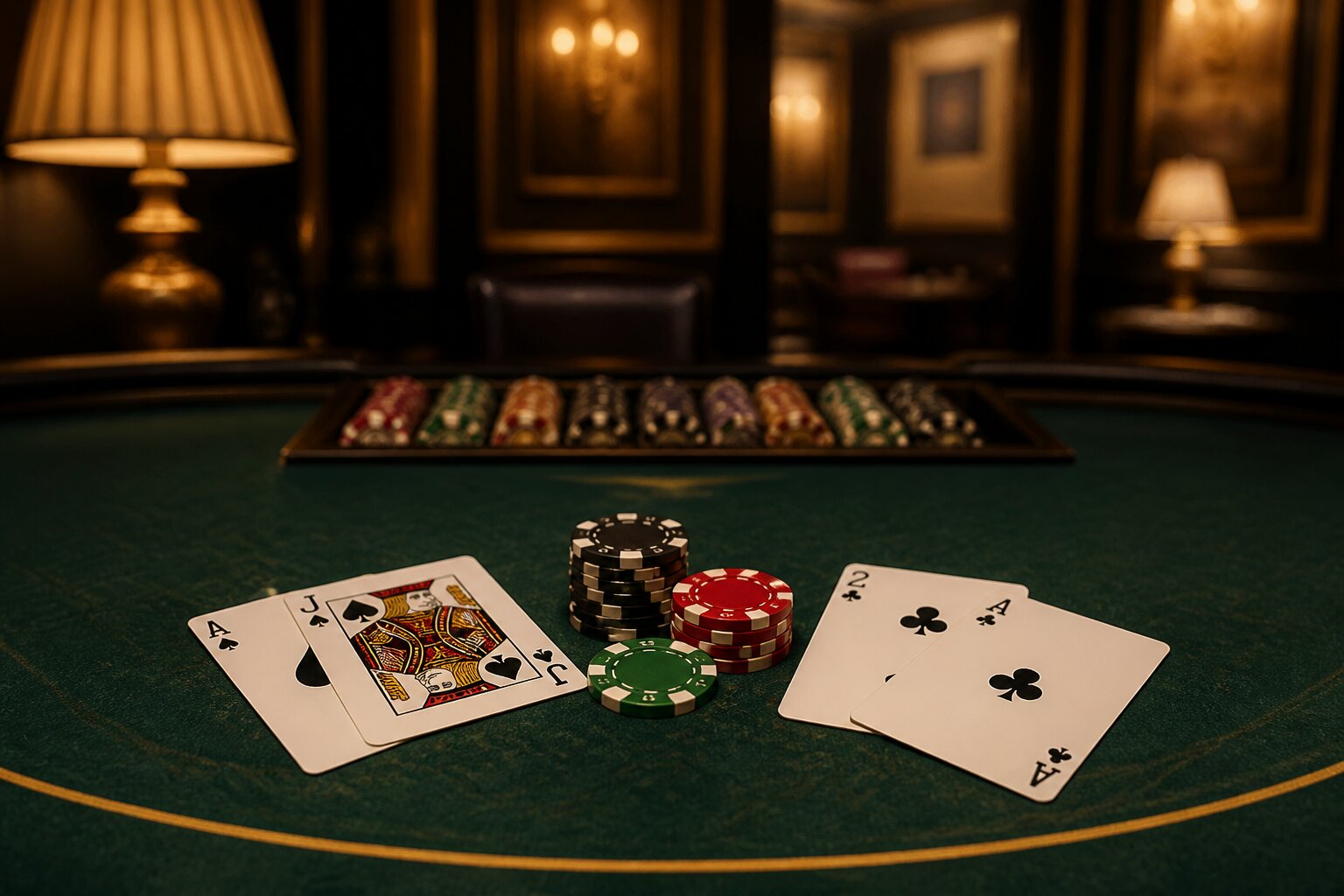
Blackjack is the standardised casino card game where each player is dealt two cards and competes directly against the dealer to obtain a hand value as close to 21 as possible without going over. Card values are straightforward: numbered cards count at face value, Jacks/Queens/Kings count as 10, and Aces can be 1 or 11. The top hand — an Ace plus any 10-point card — is called a “blackjack”.
“21” is the older name for the family of games whose common aim is to reach a hand total of 21. In informal or historic versions, the rules can vary: some treat an Ace+10 as just a normal 21 with no bonus payout, some restrict or omit options like splitting or doubling, and in a few house-rule variants players may compete directly against one another instead of against a dealer. In contemporary UK casinos, however, the term “blackjack” is the usual label for the regulated game you’ll encounter.
While the objectives overlap, the practical differences come down to specific table rules, how payouts are handled, and whether play follows formal casino regulations or local customs. The next section breaks those table-level rules down so you can see the contrasts clearly.
Comparing the Main Rules of Blackjack & 21
To see how blackjack differs from other forms of 21, it helps to look at table structure, card handling, and payouts. Though both aim for a total near 21, the regulated casino game follows a consistent set of options and payments that many informal versions do not.
Objective of Each Game
In casino blackjack, the player’s task is simple: beat the dealer’s hand by finishing with a value closer to 21 without exceeding it. Each player acts independently against the dealer rather than competing with other players at the table.
In some traditional or home versions of 21, the objective still centres on reaching 21, but who you compete against can vary. That means tactics and the social shape of the game can feel different when players are directly opposed to each other rather than all facing a dealer. Understanding whether a table is dealer-versus-player or player-versus-player affects how a hand is approached, and it also influences the available options you’ll see next.
Card Values and Dealing Process
Both blackjack and most 21 variants use the same values for cards: 2–10 at face value, face cards as 10, and Aces as 1 or 11. In casino play, the dealing and card-handling procedures are formalised: players usually receive two cards (often face up), the dealer receives two cards with one revealed depending on house practice, and additional cards are drawn only when players choose to “hit” or the rules require it.
Casual 21 games can shuffle the dealing order, hide cards, or remove options such as splitting pairs and doubling stakes. Those small procedural changes influence the strategic choices available and can make a casual session feel noticeably different from a regulated table.
Payouts and Winning Hands
In regulated blackjack, an Ace paired with any 10-point card is labelled a “blackjack” and most tables pay 3:2 for that hand; regular winning hands pay 1:1. If the dealer and player have equal totals, the result is a push and the stake is returned.
Traditional 21 variants often treat a 21 regardless of card composition as a standard win, paying even money with no special bonus for an Ace+10 combination. That difference in payouts is the clearest practical distinction players notice at the table, and it helps explain why the name “blackjack” became attached to the variant that rewards the Ace+10 combination more richly. With that clarified, it’s worth tracing where these names and rules originally came from.
Where Did Blackjack & 21 Originate?
The game family behind blackjack traces back to Europe, notably to 18th-century France where it was known as Vingt-et-Un, literally “twenty-one.” Earlier relatives appeared in Spain and Italy with similar goals of achieving a hand value of 21, though local rules varied considerably from one place to another.
When the game crossed into Britain and later into North America, commercial dealers introduced bonus payouts to attract players — one early marketing feature rewarded a specific Ace-and-black-Jack combination, and the term “blackjack” came into use even after the special payout largely disappeared. Over time, as modern regulations emerged, the casino version of blackjack became standardised: clear rules, consistent dealing procedures, and defined payouts replaced the more idiosyncratic house rules of the past.
Understanding this evolution helps explain why “21” still describes the broader family of games while “blackjack” usually refers to the formal, regulated variant you’ll find at contemporary tables. The next section lays out the key distinctions to look for when the same table is sometimes called one name and sometimes the other.
Key Differences Between Blackjack & 21 Explained
Although both games share the same numerical target, differences in opponent structure, payouts, available moves and regulation separate blackjack from many casual forms of 21.
- Opponent: Blackjack is almost always dealer-versus-player at casinos; some traditional 21 variants allow player-versus-player competition, which changes strategic incentives and table dynamics.
- Payouts: Blackjack usually rewards an Ace plus a 10-point card with a higher payout (commonly 3:2); many casual 21 rules pay only even money for any 21.
- Dealing and card visibility: Casino blackjack follows set dealing protocols, while older versions of 21 might deal cards face down or use a different sequence.
- Gameplay options: Splitting pairs, doubling down and insurance are standard options in casino blackjack under stated rules; casual 21 may omit these entirely or apply them inconsistently.
- Regulation and fairness: Regulated blackjack tables operate under clear standards designed to protect players; informal 21 games rely on house rules that should be explained before play.
For example, a player holding Ace + King at a regulated table receives the elevated “blackjack” payout, whereas in a social 21 session the same hand might simply win at even money. These practical contrasts affect expected returns and how players choose to play certain hands.
Next, we’ll clear up some of the common misunderstandings that tend to crop up around these games.
Myths & Misconceptions About 21 and Blackjack
A number of persistent misunderstandings can cloud a newcomer’s view of the games.
One widespread belief is that blackjack and 21 are always interchangeable; in reality, the specific rules and payouts define which game is in play. Another myth is that memorising a single “system” guarantees success: while understanding probabilities and basic strategy improves decision-making at regulated tables, no method guarantees outcomes because card distributions vary with shuffling and deck use. Card-counting techniques are also much less effective where casinos use multiple decks and frequent shuffling, and many venues prohibit behaviours that attempt to exploit dealing patterns.
Some think blackjack is a modern American invention, but its roots are European and it is well established in UK casinos. It’s also common to assume that any 21 will automatically pay the highest rate; as explained earlier, only a traditional blackjack hand earns the higher payout in regulated play.
Keeping these points in mind helps set realistic expectations at the table. After clearing up myths, the following section looks at how popular each name and format is today.
Which Game Is More Popular Today?
In the UK, blackjack is clearly the dominant, widely available casino card game. Most regulated venues and reputable online platforms offer several blackjack variants, including live-dealer tables that replicate the in-person experience. The standardisation of rules, transparent payouts and the availability of different formats make blackjack an easy choice for many players.
Dedicated games labelled simply as “21” are now uncommon in regulated settings; the name persists more in home games and historical references. Industry data shows blackjack consistently ranks alongside roulette among the most played table games in the UK, largely because of its familiar ruleset and the degree of player interaction it provides.
Whether choosing a casino blackjack table or playing a casual session of 21 at home, look for clear rules and payout information before placing any stake. Play with attention to the stated terms of each table, and remember that understanding the rules and differences between versions helps make informed choices at the felt.
If you’re comparing tables, focus on the rule set and payouts offered rather than the label on the table, since that determines how hands are resolved and what returns to expect.
Explore Casino Games at Clover Casino
We welcome you to explore the wide variety of casino games available at Clover Casino, offering entertainment for every taste and preference. Whether you are curious or seasoned, our site presents something to enjoy at your own pace.
Getting involved is straightforward: simply create an account, make a deposit and you can start playing with us. We look forward to seeing you at the tables.
**The information provided in this blog is intended for educational purposes and should not be construed as betting advice or a guarantee of success. Always gamble responsibly.